Which of the following is an independent variable in teaching-learning process?
A
Teacher
B
Student
C
Institution
D
Parents
Question 28Single Answer
Which of the following method should be used by each teacher?
A
Analytical-synthetic
B
Synthetic-analytical
C
Only analytical
D
Only synthetic
Question 29Single Answer
Match List I with List II
List I (Teaching maxims) List II (Main proponents)
A From whole to part I Gestalt
B Self-Study II Dalton
C Training of senses III Montessori and Froebel
Codes:
A
A-I, B-II, C-II
B
A-I, B-II, C-II
C
A-II, B-II, C-II
D
A-II, B-II, C-II
Question 30Single Answer
Which of the following reflects the nature of teaching ?
A
It is an art
B
It is a science
C
It is an art as well as science
D
It is neither art nor science
Question 31Single Answer
Passage :
The rapid advancement of technology has profoundly altered the way we communicate. Social media platforms connect billions across the globe, fostering instant interaction and the sharing of information. However, this interconnectedness also presents challenges. The spread of misinformation can occur at an unprecedented rate, impacting public opinion and even real-world events. Critical thinking and media literacy are now more essential than ever to navigate this complex digital landscape and discern credible sources from falsehoods.
What is the main idea of this passage?
A
The benefits of social media for global communication
B
The challenges posed by the rapid advancement of technology on communication
C
The importance of social media platforms in connecting people
D
The necessity of critical thinking and media literacy in the digital age
Question 32Single Answer
Passage :
The rapid advancement of technology has profoundly altered the way we communicate. Social media platforms connect billions across the globe, fostering instant interaction and the sharing of information. However, this interconnectedness also presents challenges. The spread of misinformation can occur at an unprecedented rate, impacting public opinion and even real-world events. Critical thinking and media literacy are now more essential than ever to navigate this complex digital landscape and discern credible sources from falsehoods.
According to the passage, what is a challenge of increased technological interconnectedness?
A
Slower rates of communication
B
Difficulty in sharing information
C
The rapid spread of misinformation
D
A decrease in global interaction
Question 33Single Answer
Passage :
The rapid advancement of technology has profoundly altered the way we communicate. Social media platforms connect billions across the globe, fostering instant interaction and the sharing of information. However, this interconnectedness also presents challenges. The spread of misinformation can occur at an unprecedented rate, impacting public opinion and even real-world events. Critical thinking and media literacy are now more essential than ever to navigate this complex digital landscape and discern credible sources from falsehoods.
The word "discern" in the passage most closely means:
A
Ignore
B
Understand
C
Distribute
D
Create
Question 34Single Answer
Passage :
The rapid advancement of technology has profoundly altered the way we communicate. Social media platforms connect billions across the globe, fostering instant interaction and the sharing of information. However, this interconnectedness also presents challenges. The spread of misinformation can occur at an unprecedented rate, impacting public opinion and even real-world events. Critical thinking and media literacy are now more essential than ever to navigate this complex digital landscape and discern credible sources from falsehoods.
What can be inferred about the impact of misinformation?
A
It has no effect on public opinion
B
Its impact is limited to online discussions
C
It can influence public opinion and real-world events
D
It is easily controlled by social media platforms
Question 35Single Answer
Passage :
The rapid advancement of technology has profoundly altered the way we communicate. Social media platforms connect billions across the globe, fostering instant interaction and the sharing of information. However, this interconnectedness also presents challenges. The spread of misinformation can occur at an unprecedented rate, impacting public opinion and even real-world events. Critical thinking and media literacy are now more essential than ever to navigate this complex digital landscape and discern credible sources from falsehoods.
The author's tone in this passage can be best described as:
A
Optimistic
B
Neutral and informative
C
Highly critical
D
Humorous
Question 36Single Answer
Passage :
The Amazon rainforest, often called the "lungs of the Earth," plays a crucial role in regulating global climate patterns. Its vast expanse of trees absorbs significant amounts of carbon dioxide, a primary greenhouse gas. Deforestation, driven by agriculture and logging, releases this stored carbon back into the atmosphere, contributing to global warming. Protecting the Amazon is therefore vital not only for the biodiversity it harbors but also for the health of the planet as a whole. Sustainable practices are essential to balance human needs with the preservation of this critical ecosystem.
What is the primary function of the Amazon rainforest mentioned in the passage?
A
Providing resources for agriculture and logging
B
Housing a large number of animal species
C
Regulating global climate patterns by absorbing carbon dioxide
D
Generating oxygen for the Earth's atmosphere
Question 37Single Answer
Passage :
The Amazon rainforest, often called the "lungs of the Earth," plays a crucial role in regulating global climate patterns. Its vast expanse of trees absorbs significant amounts of carbon dioxide, a primary greenhouse gas. Deforestation, driven by agriculture and logging, releases this stored carbon back into the atmosphere, contributing to global warming. Protecting the Amazon is therefore vital not only for the biodiversity it harbors but also for the health of the planet as a whole. Sustainable practices are essential to balance human needs with the preservation of this critical ecosystem.
According to the passage, what is a major cause of deforestation in the Amazon?
A
Natural forest fires
B
Sustainable harvesting practices
C
Agriculture and logging
D
The natural aging of the forest
Question 38Single Answer
Passage :
The Amazon rainforest, often called the "lungs of the Earth," plays a crucial role in regulating global climate patterns. Its vast expanse of trees absorbs significant amounts of carbon dioxide, a primary greenhouse gas. Deforestation, driven by agriculture and logging, releases this stored carbon back into the atmosphere, contributing to global warming. Protecting the Amazon is therefore vital not only for the biodiversity it harbors but also for the health of the planet as a whole. Sustainable practices are essential to balance human needs with the preservation of this critical ecosystem.
The word "vital" in the passage most closely means:
A
Unimportant
B
Necessary
C
Optional
D
Detrimental
Question 39Single Answer
Passage :
The Amazon rainforest, often called the "lungs of the Earth," plays a crucial role in regulating global climate patterns. Its vast expanse of trees absorbs significant amounts of carbon dioxide, a primary greenhouse gas. Deforestation, driven by agriculture and logging, releases this stored carbon back into the atmosphere, contributing to global warming. Protecting the Amazon is therefore vital not only for the biodiversity it harbors but also for the health of the planet as a whole. Sustainable practices are essential to balance human needs with the preservation of this critical ecosystem.
What can be inferred about the consequences of continued deforestation in the Amazon?
A
It will have no impact on global warming
B
It will help stabilize global climate patterns
C
It will contribute to the increase of greenhouse gases in the atmosphere
D
It will enhance the biodiversity of the region
Question 40Single Answer
Passage :
The Amazon rainforest, often called the "lungs of the Earth," plays a crucial role in regulating global climate patterns. Its vast expanse of trees absorbs significant amounts of carbon dioxide, a primary greenhouse gas. Deforestation, driven by agriculture and logging, releases this stored carbon back into the atmosphere, contributing to global warming. Protecting the Amazon is therefore vital not only for the biodiversity it harbors but also for the health of the planet as a whole. Sustainable practices are essential to balance human needs with the preservation of this critical ecosystem.
The author's tone in this passage can be best described as:
A
Indifferent
B
Concerned and informative
C
Enthusiastic
D
Dismissive
Question 41Single Answer
The primary purpose of teaching is to:
A
Complete the prescribed syllabus
B
Maintain discipline only
C
Facilitate meaningful learning
D
Conduct examinations
Question 42Single Answer
Teaching is best described as:
A
A one-way transmission of information
B
A method of maintaining discipline
C
A process limited to lecturing
D
A process of facilitating learning
Question 43Single Answer
Which of the following is an essential characteristic of effective teaching?
A
Rigidity
B
Complete teacher dominance
C
Meaningful interaction
D
Absence of feedback
Question 44Single Answer
The three commonly recognized levels of teaching are:
A
Primary, secondary and tertiary
B
Formal, informal and non-formal
C
Cognitive, affective and psychomotor
D
Memory, understanding and reflective
Question 45Single Answer
The memory level of teaching primarily emphasizes:
A
Critical evaluation
B
Problem-solving
C
Recall and recognition
D
Independent research
Question 46Single Answer
The memory level of teaching is generally considered:
A
The highest level of teaching
B
Equivalent to reflective teaching
C
The lowest level of teaching
D
Independent of factual knowledge
Question 47Single Answer
The understanding level of teaching goes beyond:
A
Classroom interaction
B
Evaluation
C
Recall and recognition
D
Problem-solving
Question 48Single Answer
At the understanding level, learners are expected to:
A
Memorize without comprehension
B
Understand relationships among facts and concepts
C
Avoid interpretation
D
Depend entirely on the teacher
Question 49Single Answer
Reflective-level teaching primarily develops:
A
Rote memory
B
Critical thinking and problem-solving
C
Mechanical repetition
D
Simple recall
Question 50Single Answer
Which level of teaching provides the greatest scope for independent thinking?
A
Reflective level
B
Understanding level
C
Memory level
D
Recall level
Important Questions Package
UGC NET HRM and Labour Welfare Exam Online Question Bank Package
Buy UGC NET HRM and Labour Welfare Important Questions, MCQ, question answer in Hindi & English. It will help you to score high marks in UGC NET HRM and Labour Welfare question bank 2026 in Online, PDF & Print study material.
+ Free Monthly Current Affairs, GK & more PDF Download
Sr.
Package Name
Amount
1.
UGC NET HRM & Labour Welfare Exam - Hindi
Description : 1000 Question with Answer.
₹101[₹500]
2.
UGC NET HRM & Labour Welfare Exam - Hindi
Description : 2000 Question with Answer.
₹151[₹500]
3.
UGC NET HRM & Labour Welfare Exam - Hindi
Description : 3000 Question with Answer.
₹181[₹500]
4.
UGC NET HRM & Labour Welfare Exam - Hindi
Description : 4000 Question with Answer.
₹201[₹500]
5.
UGC NET HRM & Labour Welfare Exam - Hindi
Description : 5000 Question with Answer.
₹221[₹500]
6.
UGC NET HRM & Labour Welfare Exam - English
Description : 1000 Question with Answer.
₹101[₹500]
7.
UGC NET HRM & Labour Welfare Exam - English
Description : 2000 Question with Answer.
₹151[₹500]
8.
UGC NET HRM & Labour Welfare Exam - English
Description : 3000 Question with Answer.
₹181[₹500]
9.
UGC NET HRM & Labour Welfare Exam - English
Description : 4000 Question with Answer.
₹201[₹500]
10.
UGC NET HRM & Labour Welfare Exam - English
Description : 5000 Question with Answer.
₹221[₹500]
11.
UGC NET HRM & Labour Welfare Exam - Hindi
Description : 1000 Question & Answer Download in PDF (Send by Email)
₹151[₹450]
12.
UGC NET HRM & Labour Welfare Exam - English
Description : 1000 Question & Answer Download in PDF (Send by Email)
₹151[₹450]
13.
UGC NET HRM & Labour Welfare Exam Question Bank Book - Hindi
Description : 1000 Question with Answer (Printed Material)
₹450[₹800]
14.
UGC NET HRM & Labour Welfare Exam Question Bank Book - English
Description : 1000 Question with Answer (Printed Material)
₹390[₹600]
15.
UGC NET HRM & Labour Welfare Exam - English (Old)
Description : 4000 Question with Answer.
₹201[₹500]
16.
UGC NET HRM & Labour Welfare Exam Paper 2 - English (Old)
Description : 1000 Question & Answer Download in PDF (Send by Email)
₹101[₹450]
HRM & Labour Welfare
Question 51Single Answer
Match the following Thinker Management Principle
(a)F.W. Taylor (i) uthority & Responsibility
(b)Henri Fayol (ii) Hierarchy
(c)Weber (iii) Separation of planning from doing
(d)Elton Mayo (iv) Human relation approach
A
Codes :
(a) (b) (c) (d)
(iii) (i) (iv) (ii)
B
(iii) (iv) (i) (ii)
C
(iii) (i) (ii) (iv)
D
(iii) (ii) (i) (iv)
Question 52Single Answer
Which of the following is the major element of planning process
A
Developing leadership abilities
B
Selecting right people
C
Perception of opportunities
D
Motivating people
Question 53Single Answer
Which principle of management is violated by matrix organisation structure?
A
Division of Labour
B
Unity of direction
C
Unity of command
D
None of the above
Question 54Single Answer
Which of the following involves careful analysis of inputs and corrective actions before operation is completed?
A
Feed forward control
B
Concurrent control
C
Feedback control
D
All the above
Question 55Single Answer
Which of the following is not a semantic barrier of communication ?
A
Faulty translation
B
Ambiguous words
C
Specialist’s language
D
Inattention
Question 56Single Answer
People should be regarded as assets rather than variable costs was emphasised in
A
Personnel Management
B
Human resource Management
C
Personnel Administration
D
Public Administration
Question 57Single Answer
The classical theorists fovoured organization based
A
Civilian model
B
Strategic model
C
Military model
D
None of the above
Question 58Single Answer
Job analysis Includes
A
Job description and job enlargement
B
Job enlargement and job enrichment
C
Job description and job specification
D
AII of above
Question 59Single Answer
A test which measures, what it is intended to measures is
A
Reliable test
B
Standardised test
C
Objective test
D
Valid test
Question 60Single Answer
An enquiry that is conducted afresh because of the objections raised by alleged employee is called
A
Domestic Enquiry
B
De-novo enquiry
C
Ex-parte enquiry
D
None of the above
Question 61Single Answer
Match the following
Thinker Principles
a.Mary Parker Follett i. Co-ordination
b.Henry Fayol ii. Elements of Management
c.F. W. Taylor iii. Scientific methods
d.Gilbreth and Taylor iv. Quantitative measurement
A
Codes : a b c d
i ii iii iv
B
iv iii ii i
C
iv ii i iii
D
ii iv iii i
Question 62Single Answer
Which one of the following is not the characteristic of planning ?
A
It deals with future
B
It involves selection of particular course of action
C
It is pervasive
D
It is not strategic
Question 63Single Answer
Premature evaluation is a type of
A
Semantic barrier
B
Psychological barrier
C
organizational barrier
D
personal barrier
Question 64Single Answer
Which of the following is not a feature of systems approach?
A
A system is a combination of parts
B
Parts and sub-parts are related to one another
C
It is not necessary for a system to have a boundary
D
System transforms input in to outputs
Question 65Single Answer
Which of the following organizations is a two-dimensional structure ?
A
Functional structure
B
Matrix structure
C
Line structure
D
Divisional structure
Question 66Single Answer
Job description includes information about
A
Job responsibilities, duties and working conditions.
B
Job responsibilities, duties and worth in terms of wage and salary.
C
Job responsibilities and qualifications for performance.
D
Job responsibilities, duties and qualifications for performance.
Question 67Single Answer
Differentiation between line and staff functions in necessary because it helps in
A
providing specialized services.
B
maintaining adequate checks and balances.
C
maintaining accountability.
D
All the above.
Question 68Single Answer
Which of the following refers to analysis of handwriting to determine writer’s basic personality traits ?
A
Kinesics
B
Graphology
C
Polygraphy
D
Both (B) and (C)
Question 69Single Answer
The five basic features of Scanlon plan of incentive payment are
A
control, individuality , competence , involvement and sharing of benefits
B
cooperation, identify , competence, involvement and sharing of benefits
C
control, individuality, commitment involvement, and sharing of benefits
D
cooperation identify, control, involvement and sharing of profits
Question 70Single Answer
Which of the following is a process of systematically identifying, and developing organisational leadership to enhance performance
A
Manpower planning
B
Career planning
C
Succession planning
D
Human Resource planning
Question 71Single Answer
Who identified the basic element of work known as ‘therbligs’
A
Henry L. Gantt
B
Frank B. Gilberth
C
F.W. Taylor
D
All of the above
Question 72Single Answer
Who among the following conclude that the factory was a social system and informal groups at work place play a vital role in industrial affairs ?
A
Elton Mayo
B
Henry Fayol
C
Blake and Mouton
D
Herzberg
Question 73Single Answer
Arrange the steps of decision making process in the correct sequence:
a. analysis of alternatives
b. identification of decision criteria
c. implementation of alternative
d. identification of problem
e. selection of alternative
A
d,b,a,e,c
B
d,a,b,e,c
C
d,a,b,c,e
D
d,a,e,b,c
Question 74Single Answer
Departmentation is
a. structuring work to complementation
b. visual display of organisation structure
c. grouping jobs on some basic
d. arranging jobs in hierarchy
A
a and b only
B
b and c only
C
a only
D
c only
Question 75Single Answer
The tendency of peoples to expends less efforts when work collectively that when working collectively than when working individually is called
A
Social loafing
B
socializing
C
Adjourning
D
Social Action
Question 76Single Answer
Personnel Management is essentially a
A
Matrix function
B
Line function
C
Staff function
D
Line & staff function
Question 77Single Answer
Which of the following comes under the scope of line and staff relationship?
A
The relationship between works and manager and maintenance engineer
B
The relationship between works manager and personnel managerblic
C
The relationship between personnel manager and development engineer
D
The relationship between the public relation officer and the personnel managerblic
Question 78Single Answer
The broad statement of the duties and responsibilities of a Job or position called
A
Job description
B
Job specification
C
Job analysis
D
Job evaluation
Question 79Single Answer
The function of attracting acquiring and including and including Human Resources in an organisation is called
A
Selection
B
Recuritment
C
Staffing
D
Training and Placement
Question 80Single Answer
Wage Boards Fix Wages for employees at
A
Regional level
B
Plant level
C
National level
D
Industry level
Question 81Single Answer
Match the following : Statement Approach
(a) Organisation has interconnected (i) Decision theory approach
And interrelated elements.
(b) Organisations work through (ii)Systems approach
Motivation leadership communication
And participative management .
(c) Management is essentially decision (iii) Human Behaviour approach
Making
(d) Appropriate managerial action depends (iv) Contingency approach
On external environment internal states and needs.
A
Codes :
(a) (b) (c) (d)
(ii) (III) (IV) (I)
B
(II) (III) (I) (IV)
C
(I) (II) (III) (IV)
D
(II) (IV) (I) (III)
Question 82Single Answer
Which of the following are the principle of co-ordination according to Mary parker Follett?
(a) principle of direct contact
(b) principle of reciprocal relationship
(c) principle of timing
(d) principle of dynamise
(e) principle of countinuity
(f) principle of co-ordination at early stages
A
Codes:
(a), (c) , (e) and (f)
B
(a), (b), (c), and (d)
C
(a) ,(c) , (d) and (e)
D
(a), (d) ,(e) and (f)
Question 83Single Answer
Which of the following methods of forecasting is based on the principle that decisions from a structured group of indivuals are more accurate than those from unstructured groups ?
A
Opinion poll
B
Delphi Technique
C
Extrapolation
D
Input – Output analysis
Question 84Single Answer
Which of the following is not an element of planning ?
A
Establishing leadership qualities
B
Finlising objectives
C
Evaluating alternatives
D
Establishing sequence of action
Question 85Single Answer
Which of the following is / are not the method(s) of financial control ?
(a) Break – even analysis
(b) ABC analysis
(c) Internal audit
(d) Quality circles
A
Codes:
(d) only
B
Both (b) and (d)
C
(a), (d) and (c)
D
(a), (b) and (d)
Question 86Single Answer
Which of the following statement is /are correct ?
(a) job enrichment does not need a motive to perform .
(b) job enlargement is the expansion of number of different takes performed by an employee in a single job.
(c) Moving employee one job to other adds variety and reduces boredom .
(d) participation cannot affect the enrichment process.
A
Codes:
Both (a) and (c)
B
Both (b) and (c)
C
Only (c)
D
All (a), (b) , (c) and (d)
Question 87Single Answer
Five phases constitute the strategic HRM process , they are :
(a) Identity Sources of Competitive Advantage
(b) Implementing HR Strategies
(c) Environmental Scanning
(d) Monitoring and Evaluating HR Strategies
(e) HR Strategy formulation
Identity the correct Sequence :
A
(c), (a) , (d), (b), (e)
B
(a) , (c), (d) , (b), (e)
C
(c) , (a), (e), (b), (d)
D
(c), (b), (d), (e) (a)
Question 88Single Answer
Which of the following is not an HR Demand Forecasting Techique ?
A
Managerial Judgement
B
Ratio-Trend Analysis
C
Merrick Differential plan
D
Work Study Technique
Question 89Single Answer
Which of the following statements relating to Role Systems ‘is not Correct ?
A
In a Role Set map, the occupant ‘s role will be in the center and and all other roles in the system can be located at various points of the map .
B
The role space map of an individual can be drawn by locating the self in the center and the various roles at varying distance from the self
C
As the concept of the role is center to the organisation , so the concept of the self Is central to the several roles of a person
D
The Role Set is a pattern of inter- relationship through the distance between a role and the self
Question 90Single Answer
Match the approach dimensions of Six motives: List-A List-B Motives Approach Dimensions
(a) Achievement (i) Growth
(b) Affiliation (ii) Relevance
(c) Extension (iii) Inclusion
(d) Influence (iv)Success
(e) Control (v) Impacting
(f) Dependency (vi) Order
Which of the following statements are true about Herbert A. Simon ‘s decision making process?
a. Decision making process involves intelligence design and choice activities
b. Decision –making involves choice between alternative plans of action.
c. Bounded rationality has no significance in decision making process.
d. Satisficing model brings about a balance between individual and organisational value judgement in decision making process.
A
a and b are only true.
B
a and d are only true.
C
a, b and c are true .
D
a, b and d are true.
Question 92Single Answer
Which of the following statements about communication is /are either true or false ?
a. Gang plank theory of Henry Fayol is an example of vertical communication .
b. Encoded messages are not always decoded effectively because of different fields of organism .
c. Filtering is not an intervention which vitiates communication .
d. Grapevine communication moves faster than formal communication .
A
a and c are true b and d are false.
B
a and d are true b and c are false.
C
b and d are true a and c are false.
D
a, b and c are true and d is false.
Question 93Single Answer
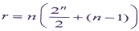
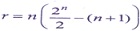
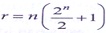
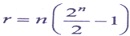
Which of the following is the correct formula for calculating the direct group relations of span of control as given by V. A. Garicuna ?
A
B
C
D
Question 94Single Answer
Which of the following pair is correctly matched ?
A
F. W. Taylor- Human Relations Approach
B
Henry Fayol- Universality og Management
C
Elton Mayo- Pyschological Approach
D
M. Parker Follet – Scientific Management
Question 95Single Answer
Read the following and mark your answer according to the answer code given below:
Wage incentive plans the following objects:
(a) Increasing workers morale
(b) Lowering unit cost
(c) Lowering capital cost
(d) Lowering depreciation charges
A
Codes:
a & d are correct.
B
a & c are correct.
C
a & b are correct .
D
c & d are correct .
Question 96Single Answer
Match the following selection errors (List-I) with their descriptions(List-II)
List-I List-II
a. True negative i. Selection score is high performance score is low .
b. True positive ii. Both selection and performance scores are low.
c. False negative iii. Selection score is low performance score is high
d. False positive iv. Both selection and performance scores are high.
A
Codes:
i ii iii iv
ii iii iv i
B
ii iv iii i
C
iv i ii iii
D
iii ii iv i
Question 97Single Answer
Assertion(A) Competency based job analysis describing jobs in terms of measurable observable and behavioural competencies is currently gaining importance.
Reason(R): Re-engineering redesigns the business process in such a manner that vsmall multi-disciplinary self-managing teams get the task done together through multi-skilled competencies.
A
Both (A) and (R) are wrong .
B
(A) is right and (R) is wrong .
C
Both (A) and (R) are right and (R) explains the (A).
D
Both (A) and (R) are right but (R) does not explain the (A).
Question 98Single Answer
Arrange the following steps in disciplinary procedure in their right order :
(a) Farming and issue of change sheet
(b) Domestic enquiry
(c) Preliminary enquiry
(d) Reporting of misconduct to disciplinary authority
(e) Notice of enquiry
(f)Findings of enquiry officer
(g) Examination of evidences
(h) Closure
A
d, e, a, c, b, g, h, f
B
d, c, a, e, b, g, h, f
C
d, e, a, c, b, g, f, h
D
d, a, c, e, b, g, f, h
Question 99Single Answer
Who among the following is associated with the types of personnel department such as independent integrated staff-coordinated and split function categories?
A
Dale yoder
B
Dale S. Beach
C
Richard P. Calhoon
D
Dalton E. McFarland
Question 100Single Answer
Assertion(A): Chronological age is rather crude measure of time since birth which can hide a multitude of individual differences in vigour energy enthusiasm fitness and so on . However cognitive age could be a facet of personality related to openness to experience.
Reason(R): Consumer psychology provides evidence that cognitive age is much better guide to people ‘s buying habits leisure pursuits and so on than chronological age .
A
Codes:
(A) is true, (R) is not true .
B
(A) and (R) both are true.(R) explains (A).
C
(A) and (R) both are true.(R) does not explain(A).
D
(A) is not true(R) is true.
Question 101Single Answer
Who is regarded as the father of Scientific Management ?
A
Albert Bandura
B
Louis D. Brandies
C
Frederick Winslow Taylor
D
Elton Mayo
Question 102Single Answer
The principle of Equifinality operates
A
within the internal environment
B
within the external environment
C
without environment
D
hostile environment
Question 103Single Answer
Max Weber developed a theory of
A
Autocratic Management
B
Democratic Management
C
Bureaucratic Management
D
Free Style Management
Question 104Single Answer
Grapevine is a type of
A
Formal Communication
B
Written Communication
C
Lateral Communication
D
Informal Communication
Question 105Single Answer
Decision making process is guided by
A
Policy
B
Procedure
C
Programme
D
Strategy
Question 106Single Answer
Ten ’C’ model of HRM architect was advanced by
A
Katz and Kahn
B
Alan Price
C
Chester I. Bernard
D
Max Weber
Question 107Single Answer
Recruitment means
A
Total number of inquiries made
B
Total number of applications received
C
Total number of persons short Listed
D
Total number of selections made
Question 108Single Answer
Arrange the following steps of job analysis in proper sequence :
A.Prepare the job description report .
B.Select the job .
C.Find out the requirements for each part of the job.
D.Break the job into various parts.
A
Codes :
(b), (a), (d), (c)
B
(b), (c), (d), (a)
C
(b), (d), (c), (a)
D
(d), (c), (b), (a)
Question 109Single Answer
Which of the following is not a factor for wage determination ?
A
Cost of living
B
Suspension
C
Purchasing power of people
D
Productivity
Question 110Single Answer
Which of the following is not a part of disciplinary action ?
A
Warning
B
Suspension
C
Transfer
D
Discharge
Question 111Single Answer
Which of the following is/are not a part of classical approach to management?
A
Scientific Management
B
Administrative Management
C
Decision Theory
D
Bureaucratic Organization
Question 112Single Answer
Match the following. Thinker Principal
(a) Henryl Fayol i. Careful design of jobs with ten efficient
Work methods
(b) Elton Mayo ii. Unity of direction
(c) F.W. Taylor iii. Organizational equilibrium
(d) Chester I. Barnard iv. Social factors and group norms
A
Codes: (a) (b) (c) (d)
ii iv i iii
B
ii iv iii i
C
i ii iii iv
D
i iii ii iv
Question 113Single Answer
Which of the following is not a barrier to to effective planning?
A
Difficulty of accurate permissing
B
Environmental changes
C
Flexibilities in management
D
Time and Cost factors
Question 114Single Answer
Gracicuna’s formula suggest that
A
the number of subordinates and relations both increase in arithmetic progression.
B
the number of subordinates increases in geometric progression ad number of relations increase in arithmetic progression
C
The number of the subordinates and relation increase in geometric progression
D
the number of the subordinates increases in arithmetic progression while the number of the relations increase in geometric progression
Question 115Single Answer
The first step in control process is to
A
measure actual performance.
B
establish objective and standards.
C
compare results with objectives.
D
take corrective action.
Question 116Single Answer
The procedure for determining duties responsibilities, working conditions and reporting relationship is known as
A
Job design
B
Job description
C
Job specification
D
Job evaluation
Question 117Single Answer
In which of the following systems, minimum wage is guaranteed but beyond a certain efficiency level, bonus is given in addition to minimum day wages?
A
Straight piece rate system
B
Differential piece rate system
C
Gantt task and Bonus system
D
Emerson’s Efficiency system
Question 118Single Answer
In line and staff organization
A
lines of authorities and instructions are vertical.
B
unity of command is maintained.
C
staff specialists advised line managers to perform their duties.
D
Staff decides without consulting the authority.
Question 119Single Answer
TAT stands for
A
Thematic Applications Test
B
Thematic Appreciations Test
C
Training Aptitude Test
D
Thematic Altitude Test
Question 120Single Answer
Which of the following is not a method of a job evaluation?
A
Ranking Method
B
Grading Method
C
Paired Comparison Method
D
Point Method
Question 121Single Answer
Match the List-I With List-II. List-I List-II
(a) Henry L. Gnatt (i) Theory of bureaucracy
(b)Max Weber (ii) Father of modern/ administrative
Management theory
(c)Alex F. Osborm (iii) Graphic methods of describing plans
and harmonious cooperation (d) Henri Fayol (iv) Father of brain storming
A
Codes: (a) (b) (c) (d)
(iv) (iii) (ii) (i)
B
(iii) (i) (iv) (ii)
C
(iv) (i) (iii) (ii)
D
(i) (ii) (iv) (iii)
Question 122Single Answer
In which year the book entitled Principles of Scientific Management was Published ?
A
1901
B
1903
C
1911
D
1912
Question 123Single Answer
Which method of training utilises equipments that closely the actual ones used on the job?
A
Role Playing
B
Vestibule Training
C
Sensitivity Training
D
Programmed Training
Question 124Single Answer
The basic objective of Manpower Planning in organisation is :
A
to ensure the skilled manpower.
B
to ensure the supply of manpower for future requirement.
C
to ensure the supply of right number and right type of manpower at the right time.
D
to ensure the increased productivity of manpower.
Question 125Single Answer
Which one of the following is an immediate Product of Job analysis?
A
Job description
B
Job rotation
C
Job enrichment
D
Job enlargement
Question 126Single Answer
The Scalar Principle of organisation implies:
A
all authority must vest in one single person
B
manager should directly supervise only a Limited number of subordinates
C
line of authority must be clearly defined
D
a subordinate should have only one superior
Question 127Single Answer
Which of the following approaches to management is a reactive approach instead of being proactive?
A
Systems approach
B
Decision theory approach
C
Quantitative approach
D
Contingency approach
Question 128Single Answer
Which of the following is /are not feature(s) of Bureaucracy as advocated by Weber ?
(a) Administrative class is responsible for maintaining coordinative activities in the organisation .
(b) Division of labour is based on specialisation.
(c)Organisation structure is adhoc and represents unstable relations.
(d) Decisions and activities are formally recorded.
A
(a) and (b) only
B
(c) and (d) only
C
(c) only
D
(d) only
Question 129Single Answer
Herzberg proposed two-factor According to him the distinction between the hygiene factors and motivators is :
A
Hygiene factors lead to dissatisfaction while motivators lead to satisfaction .
B
Hygiene factors prevent satisfaction while motivators prevent dissatisfaction.
C
Hygiene factors prevent dissatisfaction while motivators provide satisfaction.
D
Hygiene factors provide satisfaction motivators enhance satisfaction .
Question 130Single Answer
Transactional managerial styles refer to four life positions. These life position can be used to understand one’e style of working with others . Match four life Positions (List-A) with Parent (Regulating/ Nurturing) Ego States (List-B) List-A List-B Life Positions Parent Ego state
(a) I am not ok, you are not ok (i) Prescriptive/Patronising
(b) I am ok, you are not ok (ii) Normative/ Supportive
(c) I am ok, you are ok (iii) Indifferent/ Ingratiating
(d) I am not , ok you are ok (iv) Traditional/Overindulgent
A
Codes: (a) (b) (c) (d)
(iv) (i) (ii) (iii)
B
(i) (iii) (ii) (iv)
C
(iii) (ii) (i) (iv)
D
(ii) (i) (iii) (iv)
Question 131Single Answer
Which of the following principles of man – agement was not given by Fayol
A
Unity of direction
B
Subordination of individual interest to common interest
C
Stability of tenure
D
Standardisation
Question 132Single Answer
Arrange different phases of Hawthoren ex- periments in their right sequence
a.Relay assembly test room experiments
b.Bank wiring observation test
c.Illumination experiment
d.Personal counseling
e.Mass interviewing programme
A
a,b,c,d,e
B
c,a,e,b,d
C
c,b,e,a,d
D
e,d,c,b,a
Question 133Single Answer
Delphi technique is used in
A
Organising
B
Operating
C
Staffing
D
Forecasting
Question 134Single Answer
Narrow span of control results into
A
Tall structure
B
Flat structure
C
Mechanistic structure
D
All the above
Question 135Single Answer
Which of the following is correct about Grapevine ?
A
It tends to exist when members of for – mal group know one – another well
B
It is the result of social forces at work place .
C
It is more common in times of high organizational excitement
D
All of the anove
Question 136Single Answer
The following concept is developed on unitarism , individualism high commitment and strategic alignment
A
Personnel Management
B
Human Resource Management
C
Industrial Relations
D
Personnel Administration
Question 137Single Answer
Human Resource Planning include
A
Scenario Planning
B
Action Planning
C
Demand and Supply forecasts
D
All the above
Question 138Single Answer
Which one is not a part of recruitment pro-cess?
A
Determining requirements
B
planning recruitment campaign
C
Attracting candidates
D
Selecting candidates
Question 139Single Answer
Which one is not a non –quantitative job evaluation method?
A
Ranking method
B
Grading method
C
Point rating method
D
job-classification method
Question 140Single Answer
Consider the following punishments in dis- ciplinary actions
(i) Warning (ii) Demotion
(iii) Censure (iv) Dismissal
Which of the above fall under minor punishment ?
A
(i) and (ii)
B
(i),(ii) and (iii)
C
(i) and (ii)
D
(i),(ii) and (iv)
Question 141Single Answer
Which assumption most directly underlies Frederick W. Taylor's scientific management?
A
Informal groups determine productivity entirely
B
Authority originates only from employee consent
C
Work can be scientifically analyzed to discover a best method
D
Organizational structures must always remain flexible
Question 142Single Answer
Taylor's concept of a "mental revolution" primarily required what?
A
Abolition of managerial authority
B
Cooperation between management and workers rather than conflict
C
Replacement of workers by machines
D
Complete decentralization of decision-making
Question 143Single Answer
Which technique is most closely associated with determining the standard time required to perform a task?
A
Sensitivity analysis
B
Sociometry
C
Job enrichment
D
Time study
Question 144Single Answer
Motion study primarily attempts to achieve which objective?
A
Determine wage differentials among departments
B
Establish organizational hierarchy
C
Measure employee attitudes toward supervisors
D
Identify and eliminate unnecessary bodily movements
Question 145Single Answer
The differential piece-rate system proposed by Taylor was intended primarily to do what?
A
Reward employees equally regardless of output
B
Reduce managerial supervision
C
eliminate individual performance measurement
D
provide higher rates to workers achieving prescribed standards
Question 146Single Answer
Under Taylor's functional foremanship, specialization is applied mainly to which area?
A
Supervision
B
Ownership
C
Recruitment
D
Corporate governance
Question 147Single Answer
How many specialized foremen are generally identified in Taylor's functional foremanship system?
A
Eight
B
Six
C
Four
D
Ten
Question 148Single Answer
Which functional foreman prepares detailed instructions concerning how a job should be performed?
A
Route clerk
B
Speed boss
C
Gang boss
D
Instruction card clerk
Question 149Single Answer
Which foreman is primarily concerned with ensuring that machines operate at the appropriate speed?
A
Repair boss
B
Speed boss
C
Inspector
D
Disciplinarian
Question 150Single Answer
Which foreman under Taylor's system is primarily responsible for maintaining machinery and equipment?