ஒரு சொல்லை அதன் தொகுதி எழுத்துக்களாகப் பிரிக்கும் செயல்முறை தமிழ் இலக்கணத்தில் என்ன அழைக்கப்படுகிறது?
A
எதுவுமில்லை
B
இணைத்தல்
C
சாந்தி
D
பிரித்தல்
Question 2Single Answer
தமிழில் "நல்ல" மற்றும் "பையன்" என்ற சொற்களை இணைப்பதற்கான சரியான வழி என்ன?
A
நல்லப்பையன்
B
நல்ல பையன்
C
நல்லபையன்
D
எதுவுமில்லை
Question 3Single Answer
தமிழ் இலக்கணத்தில் சாந்தி விதி என்றால் என்ன?
A
சொற்களை இணைப்பதற்கான விதிகள்
B
வார்த்தைகளைப் பிரிப்பதற்கான விதிகள்
C
எழுத்துப்பிழை விதிகள்
D
எதுவுமில்லை
Question 4Single Answer
"அ" என்ற எழுத்திற்கான குறுகிய தமிழ் உயிர் ஒலி என்ன?
A
ஒலி இல்லை
B
நீண்ட "aa" ஒலி
C
குறுகிய "அ" ஒலி
D
எதுவுமில்லை
Question 5Single Answer
"ஆ" என்ற எழுத்திற்கு தமிழில் எந்த நீண்ட உயிரெழுத்து ஒலி?
A
நீண்ட "ஆ" ஒலி
B
குறுகிய "a" ஒலி
C
ஒலி இல்லை
D
எதுவுமில்லை
Question 6Single Answer
"ல" மற்றும் "ள" ஆகிய தமிழ் எழுத்துக்களுக்கு இடையே உள்ள வேறுபாடு என்ன?
A
எந்த வித்தியாசமும் இல்லை
B
அதே ஒலி
C
உச்சரிப்பு மற்றும் நாக்கின் நிலை
D
எதுவுமில்லை
Question 7Single Answer
தமிழ் எழுத்துக்களான "ன" மற்றும் "ண" க்கு என்ன வித்தியாசம்?
A
எந்த வித்தியாசமும் இல்லை
B
அதே ஒலி
C
ரெட்ரோஃப்ளெக்ஸ் எதிராகபல் ஒலி
D
எதுவுமில்லை
Question 8Single Answer
"ர" மற்றும் "ற" ஆகிய தமிழ் எழுத்துக்களுக்கு இடையே உள்ள வேறுபாடு என்ன?
A
ஒற்றைத் தட்டு எதிராகட்ரில் ஒலி
B
அதே ஒலி
C
எந்த வித்தியாசமும் இல்லை
D
எதுவுமில்லை
Question 9Single Answer
தமிழ் இலக்கணத்தில் "நட" என்ற வார்த்தையின் வகை என்ன?
A
எதுவுமில்லை
B
பெயர்ச்சொல்
C
பெயரடை
D
வினைச்சொல்
Question 10Single Answer
தமிழ் இலக்கணத்தில் "புத்தகம்" என்ற வார்த்தையின் வகை என்ன?
A
பெயர்ச்சொல்
B
வினைச்சொல்
C
பெயரடை
D
எதுவுமில்லை
Question 11Single Answer
"வீடு" என்ற தமிழ் வார்த்தையின் ஒத்த சொல் என்ன?
A
எதுவுமில்லை
B
பள்ளி
C
காடு
D
இல்லம்
Question 12Single Answer
"பெரிய" என்ற தமிழ் வார்த்தையின் எதிர்ச்சொல் என்ன?
A
எதுவுமில்லை
B
உயர்ந்த
C
நீண்ட
D
சிறிய
Question 13Single Answer
தமிழ் இலக்கணத்தில் ஒரு ஒத்த பெயர் என்ன?
A
ஒரே பொருளைக் கொண்ட சொற்கள்
B
ஒரே ஒலி, வெவ்வேறு அர்த்தங்களைக் கொண்ட சொற்கள்
C
எதிர் அர்த்தங்களைக் கொண்ட சொற்கள்
D
எதுவுமில்லை
Question 14Single Answer
"புத்தகம்"என்ற ஆங்கில வார்த்தைக்கு இணையான தமிழ் வார்த்தை என்ன?
A
எதுவுமில்லை
B
மேசை
C
நாற்காளி
D
புத்தககம்
Question 15Single Answer
"இரவு" என்ற தமிழ் வார்த்தையின் எதிர்ச்சொல் என்ன?
A
காலை
B
மாலை
C
பகல்
D
எதுவுமில்லை
Question 16Single Answer
தமிழ் மரபுத்தொடரின் உதாரணம் என்ன?
A
கை கட்டி வாய் பொத்தி
B
நல்ல பையன்
C
பெரிய வீடு
D
எதுவுமில்லை
Question 17Single Answer
தமிழில் பொதுவாக ஏற்படும் எழுத்துப் பிழை என்ன?
A
எதுவுமில்லை
B
சரியான எழுத்துக்களை எழுதுதல்
C
தவறுகள் இல்லை
D
"ல" என்பதற்குப் பதிலாக "ள" என்று எழுதுதல்
Question 18Single Answer
"கால்" என்பதற்கு ஒத்த ஒலியுடைய தமிழ் சொல் எது?
A
கண்
B
கை
C
கால் (கால்) மற்றும் கால் (கால்)
D
எதுவுமில்லை
Question 19Single Answer
இரண்டு அர்த்தங்களைக் கொண்ட தமிழ் சொல் எது?
A
கை (கை மற்றும் கைப்பிடி)
B
வீடு
C
மரம்
D
எதுவுமில்லை
Question 20Single Answer
"நான்" + "இருக்கிறேன்" என்பதற்கு சரியான சாந்தி வடிவம் என்ன?
A
நானிருக்கிறேன்
B
நான் இருக்கிறேன்
C
நான் இருக்கிறேன்
D
எதுவுமில்லை
Question 21Single Answer
"இ" என்ற தமிழ் எழுத்தின் குறுகிய உயிரெழுத்து ஒலி என்ன?
A
எதுவுமில்லை
B
நீண்ட "ஈ" ஒலி
C
ஒலி இல்லை
D
குறுகிய "நான்"ஒலி
Question 22Single Answer
"ஈ" என்ற தமிழ் எழுத்தின் நீண்ட உயிரெழுத்து ஒலி என்ன?
A
குறுகிய "நான்"ஒலி
B
நீண்ட "ஈ" ஒலி
C
ஒலி இல்லை
D
எதுவுமில்லை
Question 23Single Answer
"ழ" மற்றும் "ல" உச்சரிப்புக்கு இடையேயான வேறுபாடு என்ன?
A
எந்த வித்தியாசமும் இல்லை
B
அதே ஒலி
C
ரெட்ரோஃப்ளெக்ஸ் எதிராகஅல்வியோலர் ஒலி
D
எதுவுமில்லை
Question 24Single Answer
"வேகமாக" என்ற சொல் வகை என்ன?
A
பெயர்ச்சொல்
B
வினையுரிச்சொல்
C
வினைச்சொல்
D
எதுவுமில்லை
Question 25Single Answer
"நல்ல" என்ற தமிழ் வார்த்தையின் ஒத்த சொல் என்ன?
A
சிறந்த
B
மோசமான
C
பெரிய
D
எதுவுமில்லை
Question 26Single Answer
"உயர்ந்த" என்ற தமிழ் வார்த்தையின் எதிர்ச்சொல் என்ன?
A
எதுவுமில்லை
B
நீண்ட
C
பரந்த
D
தாழ்ந்த
Question 27Single Answer
"ஸ்கூல்" என்ற ஆங்கில வார்த்தைக்கு இணையான தமிழ் சொல் என்ன?
A
மருத்துவமனை
B
வீடு
C
பள்ளி
D
எதுவுமில்லை
Question 28Single Answer
"மேல்" என்ற தமிழ் வார்த்தையின் எதிர்ச்சொல் என்ன?
A
கீழ்
B
உயர்
C
பக்கம்
D
எதுவுமில்லை
Question 29Single Answer
"மிகவும் எளிதானது" என்று பொருள்படும் தமிழ் மரபுத்தொடரின் உதாரணம் என்ன?
A
எதுவுமில்லை
B
கையை கட்டி வாயை பொத்தி
C
மூக்கின் மேல் நுனி
D
இடியாப்ப சிக்கல்
Question 30Single Answer
"நாளை" என்ற தமிழ் வார்த்தையின் பொதுவான எழுத்துப் பிழை என்ன?
A
சரியான எழுத்துக்களை எழுதுதல்
B
"ண" என்பதற்குப் பதிலாக "ன" என்று எழுதுதல்
C
தவறுகள் இல்லை
D
எதுவுமில்லை
Question 31Single Answer
"மரம்" என்பதற்கு ஒத்த ஒலியுடைய தமிழ் சொல் எது?
A
மலை
B
மரம் (மரம்) மற்றும் மறம் (தைரியம்)
C
மனம்
D
எதுவுமில்லை
Question 32Single Answer
இரண்டு அர்த்தங்களைக் கொண்ட தமிழ் சொல் எது?
A
எதுவுமில்லை
B
புத்தககம்
C
வீடு
D
வாய் (வாய் மற்றும் வாய்ப்பு)
Question 33Single Answer
"பெரிய" மற்றும் "வீடு" ஆகியவற்றின் சரியான இணைப்பு என்ன?
A
பெரிய வீடு
B
பெரியவீடு
C
பெரியவீடு
D
எதுவுமில்லை
Question 34Single Answer
"நான்" மற்றும் "எழுதுகிறேன்" சேர்வதற்கான சாந்தி விதி என்ன?
A
எதுவுமில்லை
B
நான் எழுதுகிறேன்
C
நான்எழுதுகிறேன்
D
நானெழுதுகிறேன்
Question 35Single Answer
"உ" என்ற தமிழ் எழுத்தின் குறுகிய உயிரெழுத்து ஒலி என்ன?
A
நீண்ட "ஓ" ஒலி
B
குறுகிய "உ"ஒலி
C
ஒலி இல்லை
D
எதுவுமில்லை
Question 36Single Answer
"ஊ" என்ற தமிழ் எழுத்தின் நீண்ட உயிரெழுத்து ஒலி என்ன?
A
எதுவுமில்லை
B
குறுகிய "உ"ஒலி
C
ஒலி இல்லை
D
நீண்ட "ஓ" ஒலி
Question 37Single Answer
உச்சரிப்பில் "ர" மற்றும் "ற" இடையே உள்ள வேறுபாடு என்ன?
A
அதே ஒலி
B
மென்மையான தட்டு எதிராககடின ட்ரில்
C
எந்த வித்தியாசமும் இல்லை
D
எதுவுமில்லை
Question 38Single Answer
"மகிழ்ச்சி" என்பதன் சொல் வகை என்ன?
A
பெயர்ச்சொல்
B
வினைச்சொல்
C
பெயரடை
D
எதுவுமில்லை
Question 39Single Answer
"பயம்" என்ற தமிழ் வார்த்தையின் ஒத்த சொல் என்ன?
A
எதுவுமில்லை
B
மகிழ்ச்சி
C
தைரியம்
D
அச்சம்
Question 40Single Answer
"வெளியே" என்ற தமிழ் வார்த்தையின் எதிர்ச்சொல் என்ன?
A
உள்ளே
B
மேல
C
கீழே
D
எதுவுமில்லை
Question 41Single Answer
"டேபிள்"என்ற ஆங்கில வார்த்தைக்கு இணையான தமிழ் சொல் என்ன?
A
எதுவுமில்லை
B
நாற்காளி
C
புத்தககம்
D
மேசை
Question 42Single Answer
"வெளிச்சம்" என்ற தமிழ் வார்த்தையின் எதிர்ச்சொல் என்ன?
A
மின்னல்
B
ஒளி
C
இருள்
D
எதுவுமில்லை
Question 43Single Answer
"மிக வேகமாக" என்று பொருள்படும் தமிழ் மரபுத்தொடரின் உதாரணம் என்ன?
A
மெதுவாக நட
B
காற்று வேகத்தில்
C
கை கட்டி வாய் பொத்தி
D
எதுவுமில்லை
Question 44Single Answer
"பள்ளி" என்ற தமிழ் வார்த்தையின் பொதுவான எழுத்துப் பிழை என்ன?
A
"ள" என்பதற்குப் பதிலாக "ல" என்று எழுதுதல்
B
சரியான எழுத்துக்களை எழுதுதல்
C
தவறுகள் இல்லை
D
எதுவுமில்லை
Question 45Single Answer
"நீர்" என்பதற்கு ஒத்த ஒலியுடைய தமிழ் சொல் எது?
A
நீர் (நீர்) மற்றும் நீர் (நீங்கள்)
B
நிலம்
C
நெருப்பு
D
எதுவுமில்லை
Question 46Single Answer
இரண்டு அர்த்தங்களைக் கொண்ட தமிழ் சொல் எது?
A
வீடு
B
மலை (மலை மற்றும் கனமழை)
C
மரம்
D
எதுவுமில்லை
Question 47Single Answer
"சிறிய" மற்றும் "பையன்" ஆகியவற்றின் சரியான இணைப்பு என்ன?
A
எதுவுமில்லை
B
சிறிய பையன்
C
சிறியபையன்
D
சிறியபையன்
Question 48Single Answer
"அவன்" மற்றும் "ஓடினான்" சேர்வதற்கான சாந்தி விதி என்ன?
A
எதுவுமில்லை
B
அவன் ஓடினான்
C
அவன்ஓடினான்
D
அவனோடினான்
Question 49Single Answer
"எ" என்ற தமிழ் எழுத்தின் குறுகிய உயிரெழுத்து ஒலி என்ன?
A
ஒலி இல்லை
B
நீண்ட "ae" ஒலி
C
குறுகிய "இ" ஒலி
D
எதுவுமில்லை
Question 50Single Answer
"ஏ" என்ற தமிழ் எழுத்தின் நீண்ட உயிரெழுத்து ஒலி என்ன?
A
ஒலி இல்லை
B
குறுகிய "e" ஒலி
C
நீண்ட "ஏ" ஒலி
D
எதுவுமில்லை
Important Questions Package
TNPSC Field Assistant Exam Online Question Bank Package
Buy TNPSC Field Assistant Important Questions, MCQ, question answer in Hindi & English. It will help you to score high marks in TNPSC Field Assistant question bank 2026 in Online, PDF & Print study material.
+ Free Monthly Current Affairs, GK & more PDF Download
Sr.
Package Name
Amount
1.
TNPSC Field Assistant Exam Paper 1 - English
Description : 1000 Question with Answer
₹101[₹500]
2.
TNPSC Field Assistant Exam Paper 1 - English
Description : 2000 Question with Answer
₹151[₹500]
3.
TNPSC Field Assistant Exam Paper 2 - English
Description : 1000 Question with Answer
₹101[₹500]
4.
TNPSC Field Assistant Exam Paper 2 - English
Description : 2000 Question with Answer
₹151[₹500]
5.
TNPSC Field Assistant Exam Paper 2 - English
Description : 2550 Question with Answer
₹171[₹500]
6.
TNPSC Field Assistant Exam Paper 2 - Tamil
Description : 1000 Question with Answer
₹101[₹500]
7.
TNPSC Field Assistant Exam Paper 2 - Tamil
Description : 2000 Question with Answer
₹151[₹500]
8.
TNPSC Field Assistant Exam Paper 1 - English
Description : 1000 Question & Answer Download in PDF (Send by Email)
₹151[₹450]
9.
TNPSC Field Assistant Exam Paper 2 - English
Description : 1000 Question & Answer Download in PDF (Send by Email)
₹151[₹450]
10.
TNPSC Field Assistant Exam Paper 2 - Tamil
Description : 1000 Question & Answer Download in PDF (Send by Email)
₹151[₹450]
11.
TNPSC Field Assistant Exam Paper 1 Question Bank Book - English
Description : 1000 Question with Answer (Printed Material)
₹390[₹600]
12.
TNPSC Field Assistant Exam Paper 2 Question Bank Book - English
Description : 1000 Question with Answer (Printed Material)
₹390[₹600]
13.
TNPSC Field Assistant Exam Paper 2 Question Bank Book - Tamil
Description : 1000 Question with Answer (Printed Material)
₹450[₹800]
Tamil Eligibility Test
Question 51Single Answer
தமிழில் "ன" மற்றும் "ண" இடையே உள்ள வேறுபாடு என்ன?
A
எதுவுமில்லை
B
அதே ஒலி
C
எந்த வித்தியாசமும் இல்லை
D
பல் எதிராகரெட்ரோஃப்ளெக்ஸ் நாசல்
Question 52Single Answer
"அழகு" என்ற வார்த்தையின் வகை என்ன?
A
வினையுரிச்சொல்
B
வினைச்சொல்
C
பெயர்ச்சொல்
D
எதுவுமில்லை
Question 53Single Answer
"கொடி" என்ற தமிழ் வார்த்தையின் ஒத்த சொல் என்ன?
A
எதுவுமில்லை
B
மரம்
C
வீடு
D
பதகை
Question 54Single Answer
"நீண்ட" என்ற தமிழ் வார்த்தையின் எதிர்ச்சொல் என்ன?
A
பரந்த
B
உயர்ந்த
C
குறுகிய
D
எதுவுமில்லை
Question 55Single Answer
"சேர்" என்ற ஆங்கில வார்த்தைக்கு இணையான தமிழ் சொல் என்ன?
A
மேசை
B
நாற்காளி
C
புத்தககம்
D
எதுவுமில்லை
Question 56Single Answer
"காலை" என்ற தமிழ் வார்த்தையின் எதிர்ச்சொல் என்ன?
A
மாலை
B
பகல்
C
இரவு
D
எதுவுமில்லை
Question 57Single Answer
"பயனற்ற முயற்சி" என்று பொருள்படும் தமிழ் மரபுத்தொடரின் உதாரணம் என்ன?
A
கடல் நீரை கையால் அள்ளுதல்
B
காற்று வேகத்தில்
C
இடியாப்ப சிக்கல்
D
எதுவுமில்லை
Question 58Single Answer
"மாணவன்" என்ற தமிழ் வார்த்தையின் பொதுவான எழுத்துப் பிழை என்ன?
A
"ண" என்பதற்குப் பதிலாக "ன" என்று எழுதுதல்
B
சரியான எழுத்துக்களை எழுதுதல்
C
தவறுகள் இல்லை
D
எதுவுமில்லை
Question 59Single Answer
"கண்" என்பதற்கு ஒத்த ஒலியுடைய தமிழ் சொல் எது?
A
எதுவுமில்லை
B
கை
C
கால்
D
கண் (கண்) மற்றும் கண் (முடிச்சு)
Question 60Single Answer
இரண்டு அர்த்தங்களைக் கொண்ட தமிழ் சொல் எது?
A
பூ (பூவும் பூவும்)
B
வீடு
C
மரம்
D
எதுவுமில்லை
Question 61Single Answer
"நல்ல" மற்றும் "மாணவன்" ஆகியவற்றின் சரியான இணைப்பு என்ன?
A
நல்ல்அமானவன்
B
நல்ல மாணவன்
C
நல்லமாணவன்
D
எதுவுமில்லை
Question 62Single Answer
"அவள்" மற்றும் "எழுதுகிறாள்" சேர்வதற்கான சாந்தி விதி என்ன?
A
அவள் எழுதுகிறாள்
B
அவளெழுதுகிறாள்
C
அவள்எழுதுகிறாள்
D
எதுவுமில்லை
Question 63Single Answer
"ஒ" என்ற தமிழ் எழுத்தின் குறுகிய உயிரெழுத்து ஒலி என்ன?
A
குறுகிய "ஓ" ஒலி
B
நீண்ட "ஓவா"ஒலி
C
ஒலி இல்லை
D
எதுவுமில்லை
Question 64Single Answer
"ஓ" என்ற தமிழ் எழுத்தின் நீண்ட உயிரெழுத்து ஒலி என்ன?
A
நீண்ட "ஓஏ" ஒலி
B
குறுகிய "ஓ"ஒலி
C
ஒலி இல்லை
D
எதுவுமில்லை
Question 65Single Answer
தமிழில் "ல" மற்றும் "ழ" இடையே உள்ள வேறுபாடு என்ன?
A
எதுவுமில்லை
B
அதே ஒலி
C
எந்த வித்தியாசமும் இல்லை
D
அல்வியோலர் எதிராகரெட்ரோஃப்ளெக்ஸ் ஒலி
Question 66Single Answer
"விரைவாக" என்ற சொல் வகை என்ன?
A
எதுவுமில்லை
B
பெயர்ச்சொல்
C
வினைச்சொல்
D
வினையுரிச்சொல்
Question 67Single Answer
"நட்சத்திரம்" என்ற தமிழ் வார்த்தைக்கு இணையான சொல் என்ன?
A
மரம்
B
மலை
C
விண்மீன்
D
எதுவுமில்லை
Question 68Single Answer
"மெதுவாக" என்ற தமிழ் வார்த்தையின் எதிர்ச்சொல் என்ன?
A
உரத்த
B
அமைதியாக
C
வேகமாக
D
எதுவுமில்லை
Question 69Single Answer
"பென்" என்ற ஆங்கில வார்த்தைக்கு இணையான தமிழ் சொல் என்ன?
A
மேசை
B
புத்தககம்
C
பேனா
D
எதுவுமில்லை
Question 70Single Answer
"அமைதி" என்ற தமிழ் வார்த்தையின் எதிர்ச்சொல் என்ன?
A
சத்தம்
B
மகிழ்ச்சி
C
பயம்
D
எதுவுமில்லை
Question 71Single Answer
"தைரியம்" என்று பொருள்படும் தமிழ் மரபுத்தொடரின் உதாரணம் என்ன?
A
இடியாப்ப சிக்கல்
B
கை கட்டி வாய் பொத்தி
C
சிங்கமாக இரு
D
எதுவுமில்லை
Question 72Single Answer
"வாழை" என்ற தமிழ் வார்த்தையின் பொதுவான எழுத்துப் பிழை என்ன?
A
சரியான எழுத்துக்களை எழுதுதல்
B
"ள" என்பதற்குப் பதிலாக "ல" என்று எழுதுதல்
C
தவறுகள் இல்லை
D
எதுவுமில்லை
Question 73Single Answer
"வல்" என்பதற்கு ஒத்த ஒலியுடைய தமிழ் சொல் எது?
A
வல் (வலிமை) மற்றும் வள் (வளர்ச்சி)
B
வீடு
C
மரம்
D
எதுவுமில்லை
Question 74Single Answer
இரண்டு அர்த்தங்களைக் கொண்ட தமிழ் சொல் எது?
A
வீடு
B
கல் (கல் மற்றும் கற்றல்)
C
மரம்
D
எதுவுமில்லை
Question 75Single Answer
"பெரிய" மற்றும் "மரம்" ஆகியவற்றின் சரியான இணைப்பு என்ன?
A
பெரியமரம்
B
பெரிய மரம்
C
பெரிய்யமரம்
D
எதுவுமில்லை
Question 76Single Answer
"நீ" மற்றும் "எங்கே" சேர்வதற்கான சாந்தி விதி என்ன?
A
எதுவுமில்லை
B
நீ எங்கே
C
நீ எங்க
D
நீயேங்கே
Question 77Single Answer
"ஐ" என்ற தமிழ் எழுத்தின் குறுகிய உயிரெழுத்து ஒலி என்ன?
A
ஒலி இல்லை
B
நீண்ட "ஐ" ஒலி
C
குறுகிய "ஐ" ஒலி
D
எதுவுமில்லை
Question 78Single Answer
"ஐ" என்ற தமிழ் எழுத்தின் நீண்ட உயிரெழுத்து ஒலி என்ன?
A
ஒலி இல்லை
B
குறுகிய "ஐ" ஒலி
C
நீண்ட "ஐ" ஒலி
D
எதுவுமில்லை
Question 79Single Answer
தமிழில் "ர" மற்றும் "ற" இடையே உள்ள வேறுபாடு என்ன?
A
எதுவுமில்லை
B
அதே ஒலி
C
எந்த வித்தியாசமும் இல்லை
D
மென்மையான எதிராககடினமான ட்ரில்
Question 80Single Answer
"பயணம்" என்ற வார்த்தையின் வகை என்ன?
A
வினைச்சொல்
B
பெயர்ச்சொல்
C
பெயரடை
D
எதுவுமில்லை
Question 81Single Answer
"மகிழ்ச்சி" என்ற தமிழ் வார்த்தைக்கு இணையான சொல் என்ன?
A
துக்கம்
B
ஆனந்தம்
C
பயம்
D
எதுவுமில்லை
Question 82Single Answer
"நெருக்கம்" என்ற தமிழ் வார்த்தையின் எதிர்ச்சொல் என்ன?
A
எதுவுமில்லை
B
அருகாமை
C
பயணம்
D
தொலைவு
Question 83Single Answer
"வீடு" என்ற ஆங்கில வார்த்தைக்கு இணையான தமிழ் சொல் என்ன?
A
எதுவுமில்லை
B
பள்ளி
C
மருத்துவமனை
D
வீடு
Question 84Single Answer
"பகல்" என்ற தமிழ் வார்த்தையின் எதிர்ச்சொல் என்ன?
A
இரவு
B
காலை
C
மாலை
D
எதுவுமில்லை
Question 85Single Answer
"விரைவாக" என்று பொருள்படும் தமிழ் மரபுத்தொடரின் உதாரணம் என்ன?
A
கை கட்டி வாய் பொத்தி
B
கண்ணிமைக்கும் நேரத்தில்
C
இடியாப்ப சிக்கல்
D
எதுவுமில்லை
Question 86Single Answer
"நிழல்" என்ற தமிழ் வார்த்தையின் பொதுவான எழுத்துப் பிழை என்ன?
A
"ழ" என்பதற்குப் பதிலாக "ல" என்று எழுதுதல்
B
சரியான எழுத்துக்களை எழுதுதல்
C
தவறுகள் இல்லை
D
எதுவுமில்லை
Question 87Single Answer
"கல்" என்பதற்கு ஒத்த ஒலியுடைய தமிழ் சொல் எது?
A
கண்
B
கை
C
கல் (கல்) மற்றும் கள் (கள்)
D
எதுவுமில்லை
Question 88Single Answer
இரண்டு அர்த்தங்களைக் கொண்ட தமிழ் சொல் எது?
A
வீடு
B
நல் (நல்ல வேளை)
C
மரம்
D
எதுவுமில்லை
Question 89Single Answer
"சிறிய" மற்றும் "வீடு" ஆகியவற்றின் சரியான இணைப்பு என்ன?
A
சிறிய வீடு
B
சிறியவீடு
C
சிறியவீடு
D
எதுவுமில்லை
Question 90Single Answer
"அவன்" மற்றும் "இருக்கிறான்" சேர்வதற்கான சாந்தி விதி என்ன?
A
எதுவுமில்லை
B
அவன் இருக்கிறான்
C
அவன் இருக்கிறான்
D
அவனிருக்கிறான்
Question 91Single Answer
"ஓடு" என்ற வார்த்தையின் வகை என்ன?
A
எதுவுமில்லை
B
பெயர்ச்சொல்
C
பெயரடை
D
வினைச்சொல்
Question 92Single Answer
"வெள்ளை" என்ற தமிழ் வார்த்தையின் ஒத்த சொல் என்ன?
A
எதுவுமில்லை
B
கருப்பு
C
மஞ்சள்
D
வெண்மை
Question 93Single Answer
"உயர்" என்ற தமிழ் வார்த்தையின் எதிர்ச்சொல் என்ன?
A
எதுவுமில்லை
B
நீள்
C
பரந்த
D
தாழ்
Question 94Single Answer
"மரம்"என்ற ஆங்கில வார்த்தைக்கு இணையான தமிழ் சொல் என்ன?
A
மரம்
B
வீடு
C
பள்ளி
D
எதுவுமில்லை
Question 95Single Answer
"ஒளி" என்ற தமிழ் வார்த்தையின் எதிர்ச்சொல் என்ன?
A
எதுவுமில்லை
B
வெளிச்சம்
C
மின்னல்
D
இருள்
Question 96Single Answer
"மிகவும் கடினம்" என்று பொருள்படும் தமிழ் மரபுத்தொடரின் உதாரணம் என்ன?
A
காற்று வேகத்தில்
B
மலை ஏறுவது போல
C
இடியாப்ப சிக்கல்
D
எதுவுமில்லை
Question 97Single Answer
"மணல்" என்ற தமிழ் வார்த்தையின் பொதுவான எழுத்துப் பிழை என்ன?
A
"ண" என்பதற்குப் பதிலாக "ன" என்று எழுதுதல்
B
சரியான எழுத்துக்களை எழுதுதல்
C
தவறுகள் இல்லை
D
எதுவுமில்லை
Question 98Single Answer
"வாள்" என்பதற்கு ஒத்த ஒலியுடைய தமிழ் சொல் எது?
A
மரம்
B
வீடு
C
வாள் (வாள்) மற்றும் வால் (வால்)
D
எதுவுமில்லை
Question 99Single Answer
இரண்டு அர்த்தங்களைக் கொண்ட தமிழ் சொல் எது?
A
எதுவுமில்லை
B
வீடு
C
மரம்
D
வில் (வில் மற்றும் விற்பனை)
Question 100Single Answer
"நல்ல" மற்றும் "நூல்" ஆகியவற்றின் சரியான இணைப்பு என்ன?
A
எதுவுமில்லை
B
நல்ல நூல்
C
நல்லநூல்
D
நல்லநூல்
General Studies
Question 101Single Answer
In ruby laser, the stimulated emission is due to transition from
A
metastable state to any lower state
B
any higher state of lower state
C
metastable state to ground state
D
any higher state to ground state
Question 102Single Answer
A direct current I flows along the length of an infinitely long straight thin walled pipe, then the magnetic field is
A
uniform throughout the pipe not zero
B
zero only along the axis of the pipe
C
zero at any point inside the pipe
D
maximum at the centre and minimum at the edge
Question 103Single Answer
10-6 M NaOH is diluted 100 times. The pH of the diluted base is
A
between 7 and 8
B
between 5 and 6
C
between 6 and 7
D
between 10 and 11
Question 104Single Answer
In the electrolysis of acidulated water, it is desired to obtain 1.12 cc of hydrogen per second under STP condition. The current to be passed is
A
1.93 A
B
9.65 A
C
19.3 A
D
0.965 A
Question 105Single Answer
The respiratory quotient during cellular respiration would depend on
A
the nature of enzymes involved
B
the nature of the substrate
C
the amount of carbon dioxide released
D
the amount of oxygen utilised
Question 106Single Answer
How many such pairs of letters are there in the word ‘CLEANLINESS’ each of the which has as many letters between them in the word as they have in the English alphabet, in the same sequence?
A
Two
B
Three
C
Five
D
Four
E
None of these
Question 107Single Answer
Team A has scored more goals than Team B
Team C has scored fewer goals than Team B
Team A has scored fewer goals than Team C .
If the first two statements are true, the third statement is
A
True
B
False
C
Uncertain
D
None
Question 108Single Answer
If it is possible to make only one meaningful word with the second, the third, the sixth and the eight letters of the word FRAGMENT using each only once, which of the following will be the third letter of that word ? If no such word can be formed, give ‘X’ as the answer and if more than one such word can be formed, give ‘Y’ as the answer.
A
A
B
E
C
T
D
X
E
Y
Question 109Single Answer
How many such letters are there in the word ORIENTAL each of which is as far away from the beginning of the word as when they are arranged alphabetically?
A
None
B
One
C
Two
D
Three
E
More than three
Question 110Single Answer
How many such pairs of letters in the word CREDIT each of which has as many letters between them in the word as in the English alphabet?
A
None
B
One
C
Two
D
Three
E
More than three
Question 111Single Answer
Passage :
A B C D E F G H I J K L M N O P Q R S T U V W X Y Z .
Which letter in this alphabet is the eighth letter to the right of the letter and which is tenth letter to the left of the last but one letter of the alphabet ?
A
X
B
W
C
I
D
H
Question 112Single Answer
Passage :
Direction : The following question is based on the five words given below:
AND FOR THE BIG SUM (The new words formed after performing the mentioned operations may or may not necessarily the meaningful English words.)
If the third alphabet of each of the words is changed to the next alphabet in the English alphabetical series, which of the following will form a meaningful English word?
A
SUM
B
BIG
C
Both BIG and THE
D
FOR
E
Both FOR and BIG
Question 113Single Answer
Passage :
Direction : The following question is based on the five words given below:
AND FOR THE BIG SUM (The new words formed after performing the mentioned operations may or may not necessarily the meaningful English words.)
If the given words are arranged in the order as they would appear in a dictionary from left to right, which of the following will be second from the right ?
A
AND
B
FOR
C
THE
D
BIG
E
SUM
Question 114Single Answer
Passage :
Direction: The following question is based on the five words given below:
AND FOR THE BIG SUM (The new words formed after performing the mentioned operations may or may not necessarily the meaningful English words.)
If second alphabet in each of the words is changed to next alphabet in the English alphabetical order, how many words having two vowels (same or different vowels) will be formed ?
A
None
B
One
C
Two
D
Three
E
Four
Question 115Single Answer
Passage :
Direction : The following question is based on the five words given below:
AND FOR THE BIG SUM (The new words formed after performing the mentioned operations may or may not necessarily the meaningful English words.)
How many letters are there in the English alphabetical series between the second letter of the word which is second from the right and the second letter of the word which is second from the left of the given words?
A
Two
B
Five
C
Six
D
Nine
E
Three
Question 116Single Answer
Consider the following with reference to the East India Association organised in London:
1. It was founded by Dadabhai Naoroji.
2. The organisation aimed to present correct information about India to the British public and voice Indian grievances.
3. The East India Association incorporated the National Indian Association before the Komagata Maru incident.
Select the correct answer using the codes below.
A
1 and 2 only
B
2 and 3 only
C
3 only
D
1 and 3 only
Question 117Single Answer
The aim of the Indian Association found by Surendranath Banerjee was to
A
Represent the views of the educated middle class and take united community action.
B
Give shape to and establish the Indian National Congress.
C
Advocate constitutional reforms through legislative action.
D
Organise seditious movements to dethrone the British empire.
Question 118Single Answer
The Unionist Party was a powerful political party during the period 1923–1947. Consider the following about this party:
1. The party represented the interests of land holders-Hindus, Muslims and also the Sikhs.
2. The party was particularly powerful in the Punjab region and it did not favour the creation of Pakistan as a separate state.
Which of the above is/are correct?
A
1 only
B
2 only
C
Both
D
None
Question 119Single Answer
The Ilbert Bill controversy is said to be a high watermark in the history of Indian National Movement.
This is because it invoked issues of
1. Racial discrimination between Indian and Europeans.
2. Security lapse on the Indian borders, especially the North-West Frontier Province.
3. Suppression of Indian media houses and their nationalisation by the government.
Select the correct answer using the codes below.
A
1 only
B
1 and 2 only
C
2 and 3 only
D
1 and 3 only
Question 120Single Answer
The cash difference between the selling prices of an article at a profit of 4% and 6% is Rs. 3. The ratio of the two selling prices is:__________ ?
A
51:52
B
52:53
C
51:53
D
52:55
Question 121Single Answer
Which of the following numbers is irrational ?
A
√49
B
0.125
C
√2
D
22/7
Question 122Single Answer
356 x 936 – 356 x 836 = ?
A
35600
B
34500
C
9630
D
93600
Question 123Single Answer
Arrange in descending order: 5/8, 7/10, 3/4
A
3/4 > 7/10 > 5/8
B
7/10 > 3/4 > 5/8
C
3/4 > 5/8 > 7/10
D
5/8 > 7/10 > 3/4
Question 124Single Answer
What is (3^{4} times 9^{2}) ?
A
36
B
38
C
310
D
96
Question 125Single Answer
If 34X-2 = 729, then find the value of X.
A
4
B
3
C
2
D
5
Question 126Single Answer
Convert 0.6 into fraction ?
A
3/5
B
2/3
C
4/5
Question 127Single Answer
The no. plate of a bus had peculiarity. The bus number was a perfect square. It was also a perfect square when the plate numbers were reversed. The bus company had only five hundred buses numbered from 1 to 500. What was the number ?
A
169
B
36
C
196
D
Can not say
Question 128Single Answer
If a and b are positive integers, such that ab = 125, then (a-b)a+b-4 = ?
A
16
B
25
C
28
D
30
Question 129Single Answer
If x*y = x2 + y2 – xy, then value of 9*11 is
A
93
B
103
C
60.5
D
121
Question 130Single Answer
Passage :
information given below and answer the question that follow.
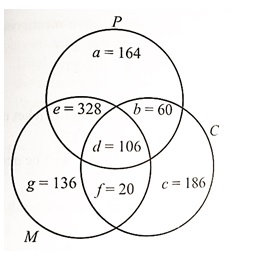
The result of an exam is given below. Out of 1000 students who appeared
(i) 658 failed in Physics
(ii) 166 failed in Physics and Chemistry
(iii) 372 failed in Chemistry, 434 failed in Physics and Maths
(iv) 590 failed in Maths, 126 failed in Maths & Chemistry
Find the number of people who failed in (assuming that none is passed in all subjects.
We have the following equations:
a+ b + c + d + e + f + g = 1000
a + b + d + e = 658, b + d = 166
b + d + c + f = 372
d + e = 434 as in the figure.
d + e + f + g = 590, d + f = 126. Find the values
Chemistry but not in Physics.
A
318
B
198
C
213
D
206
Question 131Single Answer
Passage :
Direction: information given below and answer the question that follow.
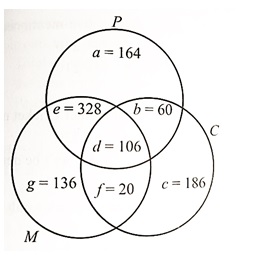
The result of an exam is given below. Out of 1000 students who appeared
(i) 658 failed in Physics
(ii) 166 failed in Physics and Chemistry
(iii) 372 failed in Chemistry, 434 failed in Physics and Maths
(iv) 590 failed in Maths, 126 failed in Maths & Chemistry
Find the number of people who failed in (assuming that none is passed in all subjects.
We have the following equations:
a+ b + c + d + e + f + g = 1000
a + b + d + e = 658, b + d = 166
b + d + c + f = 372
d + e = 434 as in the figure.
d + e + f + g = 590, d + f = 126. Find the values
Physics or Maths but not in Chemistry.
A
558
B
718
C
628
D
None of these
Question 132Single Answer
Passage :
For the next four question that follow:
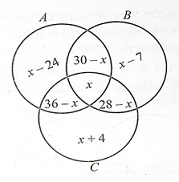
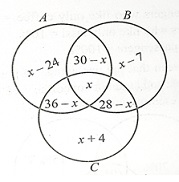
In a city, three daily newspapers A, B, C are published, 42% read A; 51% read B; 68% read C; 30% read A and B; 28% read B and C; 36% read A and C; 8% do not read any of the three newspapers.
Let x% people read all the three newspapers.
Since 8% people do not read any newspapers.
(x – 24) + (x – 7) + (x + 4) + (30 – x) + (36 – x) + (28 – x) + x = 92
→ x + 98 – 31 = 92
→ x = 92 – 67 = 25
What is the percentage of persons who read all the three papers ?
A
20%
B
25%
C
30%
D
40%
Question 133Single Answer
Passage :
For the next four : question that follow :
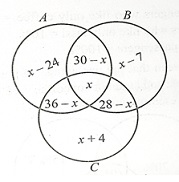
In a city, three daily newspapers A, B, C are published, 42% read A; 51% read B; 68% read C; 30% read A and B; 28% read B and C; 36% read A and C; 8% do not read any of the three newspapers.
Let x% people read all the three newspapers.
Since 8% people do not read any newspapers.
(x – 24) + (x – 7) + (x + 4) + (30 – x) + (36 – x) + (28 – x) + x = 92
→ x + 98 – 31 = 92
→ x = 92 – 67 = 25
What is the percentage of persons who read only two papers?
A
19%
B
31%
C
44%
D
None of these
Question 134Single Answer
Passage :
For the next four : question that follow :
In a city, three daily newspapers A, B, C are published, 42% read A; 51% read B; 68% read C; 30% read A and B; 28% read B and C; 36% read A and C; 8% do not read any of the three newspapers.
Let x% people read all the three newspapers.
Since 8% people do not read any newspapers.
(x – 24) + (x – 7) + (x + 4) + (30 – x) + (36 – x) + (28 – x) + x = 92
→ x + 98 – 31 = 92
→ x = 92 – 67 = 25
What is the percentage of persons who read only one paper ?
A
38%
B
48%
C
51%
D
None of these
Question 135Single Answer
"Who said, 'India was a parrot unto itself'?
A
Malik Muhammad Joyce
B
Raskhan
C
Rich Khusrow
D
Rich Hasan
Question 136Single Answer
What was the real name of Amir Khusro?
A
Muhammad Hasan
B
Muhammad Hussain
C
Muhammad Khusrow
D
Muhammad Mine
Question 137Single Answer
Who is considered the founder of the Sufi movement in India?
A
Qutubuddin Bakhtiar Aunty
B
Nizamuddin Awliya
C
muinuddin Chishti
D
Naseeruddin Mahmud
Question 138Single Answer
Education has given consciousness.
A
Devotion of
B
Knowledge of
C
recidivism of
D
Sufi Don't of
Question 139Single Answer
When was the Constituent Assembly of India formed?
A
1946
B
1947
C
1948
D
1950
Question 140Single Answer
Who was the Chairman of the Drafting Committee of the Indian Constitution?
A
Dr. Rajendra Prasad
B
Dr. B.R. Ambedkar
C
Jawaharlal Nehru
D
Sardar Vallabhbhai Patel
Question 141Single Answer
The idea of the Constituent Assembly was first put forward by:
A
Mahatma Gandhi
B
M.N. Roy
C
Jawaharlal Nehru
D
Sardar Vallabhbhai Patel
Question 142Single Answer
The Cabinet Mission Plan for India was proposed in:
A
1942
B
1945
C
1946
D
1947
Question 143Single Answer
The Constitution of India was adopted on:
A
15th August 1947
B
26th January 1950
C
26th November 1949
D
30th January 1948
Question 144Single Answer
The Preamble of the Indian Constitution is borrowed from the Constitution of:
A
USA
B
UK
C
Canada
D
Australia
Question 145Single Answer
The Indian Constitution was enforced on:
A
15th August 1947
B
26th January 1950
C
26th November 1949
D
30th January 1948
Question 146Single Answer
The concept of the 'Rule of Law' in the Indian Constitution is derived from:
A
USA
B
UK
C
Germany
D
Canada
Question 147Single Answer
The term 'Secular' was added to the Preamble by the:
A
42nd Amendment
B
44th Amendment
C
52nd Amendment
D
62nd Amendment
Question 148Single Answer
The 'Directive Principles of State Policy' in the Indian Constitution were inspired by:
A
The Constitution of Canada
B
The Constitution of Ireland
C
The Constitution of Australia
D
The Constitution of USA
Question 149Single Answer
The Constitution of India was drafted by:
A
200 members
B
298 members
C
250 members
D
310 members
Question 150Single Answer
The objective resolution, which later became the Preamble, was moved by:
A
Mahatma Gandhi
B
Sardar Patel
C
Jawaharlal Nehru
D
B.R. Ambedkar
Question 151Single Answer
Which part of the Indian Constitution deals with the Fundamental Rights?
A
Part II
B
Part III
C
Part IV
D
Part V
Question 152Single Answer
The concept of Judicial Review in the Indian Constitution is borrowed from:
A
UK
B
USA
C
Canada
D
Australia
Question 153Single Answer
The Union List in the Seventh Schedule contains:
A
52 subjects
B
66 subjects
C
97 subjects
D
61 subjects
Question 154Single Answer
Who is known as the "Father of the Indian Renaissance" ?
A
Raja Ram Mohan Roy
B
Swami Vivekananda
C
Rabindranath Tagore
D
Mahatma Gandhi
Question 155Single Answer
Which classical dance form is associated with Tamil Nadu ?
A
Kathak
B
Kuchipudi
C
Bharatanatyam
D
Odissi
Question 156Single Answer
Which is the longest river in India?
A
Yamuna
B
Ganges
C
Brahmaputra
D
Godavari
Question 157Single Answer
The Western Ghats are also known as:
A
Sahyadris
B
Vindhyas
C
Satpuras
D
Aravallis
Question 158Single Answer
Which sector contributes the highest to India's Gross Domestic Product (GDP)?
A
Agriculture
B
Industry
C
Services
D
Manufacturing
Question 159Single Answer
What type of economy does India have?
A
Capitalist
B
Socialist
C
Mixed
D
Communist
Question 160Single Answer
The term 'Demographic Dividend' refers to:
A
Increase in agricultural production
B
Rise in the working-age population
C
Growth in foreign investments
D
Surge in industrial output
Question 161Single Answer
Which of the following is a characteristic of the Indian economy?
A
Predominantly urban
B
High dependency on agriculture
C
Low population density
D
Export-oriented manufacturing
Question 162Single Answer
The 'Informal Sector' in India refers to:
A
Organized and registered businesses
B
Unorganized and unregistered businesses
C
Government enterprises
D
Foreign direct investments
Question 163Single Answer
Which organization is responsible for calculating India's GDP?
A
Reserve Bank of India (RBI)
B
NITI Aayog
C
Ministry of Finance
D
Central Statistics Office (CSO)
Question 164Single Answer
The term 'Inclusive Growth' in the Indian context means:
A
Growth that includes foreign investments
B
Growth that benefits all sections of society
C
Growth limited to urban areas
D
Growth focused only on industrial sectors
Question 165Single Answer
Which of the following is NOT a feature of the Indian economy?
A
Large population
B
Predominance of agriculture
C
High per capita income
D
Mixed economic system
Question 166Single Answer
The 'Green Revolution' in India was associated with:
A
Industrial growth
B
Agricultural productivity
C
Information technology
D
Environmental conservation
Question 167Single Answer
Which sector is known as the 'Primary Sector' in the Indian economy?
A
Agriculture and allied activities
B
Manufacturing
C
Services
D
Information Technology
Question 168Single Answer
The First Five-Year Plan in India was launched in:
A
1947
B
1950
C
1951
D
1955
Question 169Single Answer
The main focus of the Second Five-Year Plan was:
A
Agriculture
B
Heavy industries
C
Services
D
Information technology
Question 170Single Answer
Which model was adopted during the Second Five-Year Plan?
A
Harrod-Domar Model
B
Mahalanobis Model
C
Solow Model
D
Keynesian Model
Question 171Single Answer
The Third Five-Year Plan aimed at:
A
Self-reliance in food production
B
Rapid industrialization
C
Expansion of education
D
Development of the service sector
Question 172Single Answer
The concept of 'Rolling Plan' was introduced during which period?
A
1978-1980
B
1985-1990
C
1992-1997
D
2002-2007
Question 173Single Answer
The Eighth Five-Year Plan emphasized:
A
Liberalization and privatization
B
Green Revolution
C
Heavy industries
D
Rural development
Question 174Single Answer
Which Five-Year Plan is also known as the 'Gadgil Yojana'?
A
Third
B
Fourth
C
Fifth
D
Sixth
Question 175Single Answer
The Twelfth Five-Year Plan aimed for an average annual growth rate of:
A
7%
B
8%
C
9%
D
10%
Question 176Single Answer
The term 'Garibi Hatao' (Eradicate Poverty) was popularized during which Five-Year Plan?
A
Third
B
Fourth
C
Fifth
D
Sixth
Question 177Single Answer
The Planning Commission was replaced by NITI Aayog in:
A
2012
B
2014
C
2015
D
2016
Question 178Single Answer
Which period is considered the golden age of Tamil literature?
A
Sangam Age
B
Chola Period
C
Vijayanagara Empire
D
British Rule
Question 179Single Answer
What is the main source of information about the Sangam period?
A
Rock Edicts
B
Sangam Literature
C
Inscriptions in Temples
D
Palm Leaf Manuscripts
Question 180Single Answer
Which Sangam text is considered a comprehensive work on ethics and morality?
A
Tolkappiyam
B
Silappadikaram
C
Thirukkural
D
Manimekalai
Question 181Single Answer
The Megalithic culture in Tamil Nadu is associated with which archaeological site?
A
Adichanallur
B
Keeladi
C
Poompuhar
D
Kodumanal
Question 182Single Answer
Which major archaeological discovery in Tamil Nadu provided evidence of an advanced urban civilization similar to the Indus Valley?
A
Keeladi Excavation
B
Arikamedu
C
Adichanallur
D
Korkai
Question 183Single Answer
Which Sangam-era port was an important trade center with Rome and Greece?
A
Kaveripoompattinam
B
Kanchipuram
C
Madurai
D
Thanjavur
Question 184Single Answer
Who is considered the father of Tamil literature?
A
Avvaiyar
B
Thiruvalluvar
C
Tolkappiyar
D
Ilango Adigal
Question 185Single Answer
The term 'Sangam' in Sangam Literature refers to:
A
A religious text
B
A literary academy
C
A political organization
D
A war council
Question 186Single Answer
Which epic describes the story of Kovalan and Kannagi?
A
Silappadikaram
B
Manimekalai
C
Purananuru
D
Periya Puranam
Question 187Single Answer
Who wrote the Tamil grammar book ‘Tolkappiyam’?
A
Ilango Adigal
B
Thiruvalluvar
C
Tolkappiyar
D
Kambar
Question 188Single Answer
Which Tamil epic is known for its Buddhist influences?
A
Silappadikaram
B
Manimekalai
C
Purananuru
D
Thirukkural
Question 189Single Answer
Which dynasty was prominent during the Sangam period?
A
Chola
B
Pallava
C
Chera
D
All of the above
Question 190Single Answer
The famous Tamil poetess Avvaiyar was associated with which period?
A
Sangam Age
B
Pallava Period
C
Chola Period
D
Vijayanagara Period
Question 191Single Answer
Which inscription provides information about Tamil-Brahmi script?
A
Keeladi Inscriptions
B
Korkai Inscriptions
C
Edakkal Inscriptions
D
Adichanallur Inscriptions
Question 192Single Answer
Which ancient Tamil text discusses the ethics of kingship?
A
Purananuru
B
Agananuru
C
Tirukkural
D
Silappadikaram
Question 193Single Answer
Who composed the Periya Puranam?
A
Sekkizhar
B
Kamban
C
Thiruvalluvar
D
Ilango Adigal
Question 194Single Answer
What was the primary economic activity of the Sangam period?
A
Agriculture
B
Trade
C
Handicrafts
D
All of the above
Question 195Single Answer
Which Chola king built the famous Brihadeeswarar Temple in Thanjavur?
A
Rajaraja Chola I
B
Rajendra Chola I
C
Aditya Chola I
D
Kulothunga Chola I
Question 196Single Answer
Which river was significant to the civilization of the Sangam period?
A
Ganga
B
Yamuna
C
Kaveri
D
Narmada
Question 197Single Answer
Who is regarded as the first poet of Tamil literature?
A
Kapilar
B
Avvaiyar
C
Tolkappiyar
D
Thiruvalluvar
Question 198Single Answer
Which bird sanctuary is located in Nagapattinam district?
A
Vedanthangal Bird Sanctuary
B
Pulicat Lake Bird Sanctuary
C
Point Calimere Bird Sanctuary
D
Karikili Bird Sanctuary
Question 199Single Answer
Which soil type is found in the central regions of Tamil Nadu?