πŸ“š Exam by Category
β–Ύ
Objective Questions

Latest IIT JAM Chemistry Exam Question (Objective Questions), MCQ in English

Subjects : Section A, Section B, Section C

Question Bank IIT JAM Chemistry Exam - English
Back to Exam

Section A

Question 1Single Answer
10-6 M NaOH is diluted 100 times. The pH of the diluted base is
  1. A
    between 7 and 8
  2. B
    between 5 and 6
  3. C
    between 6 and 7
  4. D
    between 10 and 11
Question 2Single Answer
In the electrolysis of acidulated water, it is desired to obtain 1.12 cc of hydrogen per second under STP condition. The current to be passed is
  1. A
    1.93 AΒ  Β  Β  Β  Β 
  2. B
    9.65 A
  3. C
    19.3 AΒ  Β  Β  Β Β 
  4. D
    0.965 A
Question 3Single Answer
The one which decreases with dilution is
  1. A
    molar conductance
  2. B
    conductance
  3. C
    specific conductance
  4. D
    equivalent conductance
Question 4Single Answer
Vapour pressure of pure β€˜A’ is 70 mm of Hg at 25oC. It forms an ideal solution with β€˜B’ in which mole fraction of A is 0.8. if the vapour pressure of the solution is 84 mm of Hg at 25oC, the vapour pressure of pure β€˜B’ at 25oC is
  1. A
    28 mm Β Β 
  2. B
    56 mm
  3. C
    70 mm Β  Β 
  4. D
    140 mm
Question 5Single Answer
A 6% solution of urea is isotonic with
  1. A
    1 M solution of glucose
  2. B
    0.05 M solution of glucose
  3. C
    6% solution of glucose
  4. D
    25% solution of glucose
Question 6Single Answer
Which of the following is not a synthetic fibre:
  1. A
    Anygora
  2. B
    Rayon
  3. C
    Nylon
  4. D
    Polyster
Question 7Single Answer
Which one of the following is not contained in Portland cement ?
  1. A
    Ca3Al2O6
  2. B
    Ca3SiO5
  3. C
    Ca2SiΒ­O4
  4. D
    Ca3(PO4)2
Question 8Single Answer
What is the reson for white cement to be white ?
  1. A
    It does not contain carbon
  2. B
    It does not contain silicon
  3. C
    It does not contain iron
  4. D
    It does not contain calcium
Question 9Single Answer
Which fertilizer is assimilated directly by the plant ?
  1. A
    Super phosphate
  2. B
    Nitrolim
  3. C
    Muriate of Potash
  4. D
    Humus
Question 10Single Answer
Which of the following chemicals is used in foam fire extinguishers ?
  1. A
    Aluminium sulphate
  2. B
    Copper sulphate
  3. C
    Cobalt sulphate
  4. D
    Nickel sulphateΒ 
Question 11Single Answer
The appropriate regent required for carrying out the following transformation are
  1. A
    (i) succinic anhydride, AlCl3; Zn/Hg, HCl; (iii) polyphosphoric acid
  2. B
    Maleic anhydride, AlCl3; (ii) H2N - NH2, KOH; (iii) H2SO4
  3. C
    (i) succinic anhydride, FeCl3; (ii) LiAlH4; (iii) H2SO4
  4. D
    (i) phthalic anhydride, F3Bβˆ™OEt2; (ii) HS(CH2)2SH, H+; (iii) Raney Ni; (iv) polyphosphoric acid
Question 12Single Answer
TRUE statement(s) about Langmuir isotherm is(are) ?
  1. A
    valid for monolayer coverage
  2. B
    all adsorption sites are equivalent
  3. C
    there is dynamic equilibrium between free gas and adsorbed gas
  4. D
    adsorption probability is independent of occupancy at the neighbouring sites
Question 13Single Answer
On hydrolysis, aluminium carbide produces ?
  1. A
    CH4
  2. B
    C2H6
  3. C
    C2H4
  4. D
    C2H2
Question 14Single Answer
Carbonic anhydrase is an example of
  1. A
    Hydrolysis enzyme
  2. B
    Redox enzyme
  3. C
    O2 transport protein
  4. D
    Heme protein
Question 15Single Answer
The CORRECT order of melting points of group 15 trifluorides is ?
  1. A
    PF3 < AsF3 < SbF3 < BiF3
  2. B
    BiF3 < SbF3 < PF3 < AsF3
  3. C
    PF3 < SbF3 < AsF3 < BiF3
  4. D
    BiF3 < AsF3 < SbF3 < PF3
Question 16Single Answer
NaF, KF MgO and CaO are crystalline solids. They have NaCl structure. Their lattice energies vary in the order
  1. A
    NaF < KF < MgO < CaO
  2. B
    KF < NaF < CaO < MgO
  3. C
    MgO < CaO < NaF < KF
  4. D
    CaO < MgO < KF < NaF
Question 17Single Answer
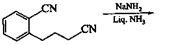
The major product formed in the following reaction is ?
  1. A
  2. B
  3. C
  4. D
Question 18Single Answer
The compound that the most acidic hydrogen is ?
  1. A
    H2C = CH2
  2. B
    HC = CH
  3. C
    H2C = C = CH2
  4. D
    H3C = CH3
Question 19Single Answer
The C - 2 epimer of D - glucose is ?
  1. A
    D - Mannose
  2. B
    D - Fructose
  3. C
    D - Galactose
  4. D
    D - Glucose
Question 20Single Answer
The value of integral
  1. A
    Zero
  2. B
    1/2
  3. C
    1
  4. D
    2
Question 21Single Answer
The number of crystal systems and the number of Bravais lattices are, respectively,
  1. A
    14 and 7
  2. B
    7 and 32
  3. C
    32 and 14
  4. D
    7 and 14
Question 22Single Answer
For adsorption of a gas on a solid surface, the plot that represents Freundlich isotherm is (x = mass of gas, m = mass of adsorbent, P = pressure)
  1. A
  2. B
  3. C
  4. D
Question 23Single Answer
With respect to periodic properties, the CORRECT statement is
  1. A
    Electron affinity order is F > O > Cl
  2. B
    First ionisation energy order Al > Mg > K
  3. C
    Atomic radius order is N > P > As
  4. D
    Ionic radius order is K + Ca2+ > Mg2+
Question 24Single Answer
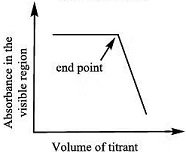
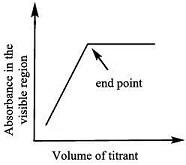
Which plot represents a spectrophotometric titration, where the titrant alone absorbs light in the visible region ?
  1. A
  2. B
  3. C
  4. D
Question 25Single Answer
Among the following metal carbonyl species, the one with the highest metal-carbon back bonding is ?
  1. A
    [Ti(CO)6]2-
  2. B
    [V(CO)6]-
  3. C
    Cr(CO)6
  4. D
    [Mn(CO)6]+
Question 26Single Answer
The CORRECT order of βˆ†0 (the octahedral crystal field splitting of d orbitals) values for the following anionic metal complexes is
  1. A
    [Ir(CN)6]3- < [Rh(CN)6]3- < [RhI6]3- < [COI6]3-
  2. B
    [COI6]3- < [RhI6]3- < [Rh(CN)6]3- < [Ir(CN)6]3-
  3. C
    [COI6]3- < [Rh(CN)6]3- < [RhI6]3- < [Ir(CN)6]3-
  4. D
    [Ir(CN)6]3- <[COI6]3- < [Rh(CN)6]3- < [RhI6]3-
Question 27Single Answer
The decay modes of 14C and 14O are ?
  1. A
    β decay
  2. B
    positron emission
  3. C
    β decay and positron emission, respectively
  4. D
    positron emission and β decay, respectively
Question 28Single Answer
Consider the following four xenon compounds: XeF2, XeF4, XeF6 and XeO3.
The pair of xenon compounds expected to have non-zero dipole moment is
  1. A
    XeF4 and XeF6
  2. B
    XeF2 and XeF4
  3. C
    XeF2 and XeO3
  4. D
    XeF6 and XeO3
Question 29Single Answer
The CORRECT order of stability for the following carbocations is ?
  1. A
    I < III < IV < II
  2. B
    III < II < IV < I
  3. C
    II < IV < III < I
  4. D
    IV < III < I < II
Question 30Single Answer
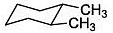
Among the dimethyl cyclohexanes, which one can be obtained in enantiopure form ?
  1. A
  2. B
  3. C
  4. D

Section B

Question 31Multiple Answers
The correct statement(s) about the following species is(are) ?
  1. A
    I and II are resonance structures
  2. B
    I and III are resonance structures
  3. C
    II and III are diastereomers
  4. D
    III is a tautomer of I
Question 32Multiple Answers
Consider the following reaction :

Among the following, the compound(s) whose osazone derivative(s) will have the same melting point as that of X is(are)
  1. A
  2. B
  3. C
  4. D
Question 33Multiple Answers
The appropriate regents required for carrying out the following transformation are
  1. A
    (i) PCC, CH2Cl2; (ii) PH3P = CHCO2Et; (iii) aq. NaOH, heat, then acidify
  2. B
    (i) Cro3, H2SO4, aq. Acetone (ii) Ac2O, NaOAc
  3. C
    (i) MnO2; (ii) CH2(CO2H)2, piperidine, pyridine
  4. D
    (i) PCC, CH2Cl2; (ii) BrCH2CO2C(CH3)3, Zn (iii) H3O+, heat
Question 34Multiple Answers
The protein(s) that belong to the class of the blue copper proteins is (are) ?
  1. A
    ceruloplasmin
  2. B
    superoxide dismutase
  3. C
    hemocyanin
  4. D
    azurin
Question 35Multiple Answers
The ion(s) that exhibit only charge transfer bands in the absorption spectra (UV - visible region) is(are)
  1. A
    [Cr(C2O4)3]3-
  2. B
    [CrO4]2-
  3. C
    [ReO4]-
  4. D
    [NiO2]2-
Question 36Multiple Answers
The type(s) of interaction(s) that hold layers of graphite together is(are) ?
  1. A
    stacking
  2. B
    van der Waals
  3. C
    hydrogen bonding
  4. D
    Coulombic
Question 37Multiple Answers
The 3pz orbital has ?
  1. A
    one radial node
  2. B
    two radial nodes
  3. C
    one angular node
  4. D
    two angular nodes
Question 38Multiple Answers
The diatomic molecules(s) that has(have) two π-type bonds is(are)
  1. A
    B2
  2. B
    C2
  3. C
    N2
  4. D
    O2
Question 39Multiple Answers
The β€œheme” containing protein (s)is/are ?
  1. A
    cytochrome C
  2. B
    hemocyanin
  3. C
    hemerythrin
  4. D
    myoglobin
Question 40Multiple Answers
Among the following, the species having see - saw shape is/are ?
  1. A
    SF4
  2. B
    XeF4
  3. C
  4. D

Section C

Question 41Numerical Answer
Among the following, the number of molecules that are aromatic is ____.
    Question 42Numerical Answer
    The number of all possible isomers for the molecular formula C6H14 is___.
      Question 43Numerical Answer
      Hydrolysis of 15.45 g of benzonitrile produced 10.98 g of benzoic acid. The percentage yield of acid formed is___.
        Question 44Numerical Answer
        A cetic acid content in commercial vinegar was analyzed by titrating against 1.5 M NaOH solution. A 20 mL vinegar sample required 18 mL of titrant to give endpoint. The concentration of acetic acid in the vinegar (in mol L-1) is___.
          Question 45Numerical Answer
          The bond order of Be2 molecule is ____.
            Question 46Numerical Answer
            The number of P – H bonds in hypophosphorus acid is ___.
              Question 47Numerical Answer
              The isotope undergoes one alpha and one beta particle emission sequentially to form an isotope β€œX”. The number of neutrons in β€œX” is___.
                Question 48Numerical Answer
                In a diffraction experiment with X - rays of wavelength 1.54 Å, a diffraction line corresponding to 2θ = 20.8ΒΊ is observed. The inter - planar separation in Å is ____.
                  Question 49Numerical Answer
                  The potential energy of interaction between two ions in an ionic compound is given by kJ mol-1. Assuming that CaCl2 is linear molecule of length 5.6 Å, the potential energy for CaCl2 molecule in kJ mol-1 is ___.
                    Question 50Numerical Answer
                    The enthalpy of formation for CH4(g), C(g) and H(g) are -75, 717 and 218 kJ mol-1, respectively. The enthalpy of C – H bond in kJ mol-1 is ____.
                      Important Questions Package

                      IIT JAM Chemistry Exam Online Question Bank Package

                      Buy IIT JAM Chemistry Important Questions, MCQ, question answer in Hindi & English. It will help you to score high marks in IIT JAM Chemistry question bank 2026 in Online, PDF & Print study material.

                      + Free Monthly Current Affairs, GK & more PDF Download
                      Sr.Package NameAmount
                      1.IIT JAM Chemistry Exam - English
                      Description : 700 Question With Answer
                      β‚Ή81 [β‚Ή500]
                      2.IIT JAM Chemistry Exam Question Bank Book - English
                      Description : 700 Question with Answer (Printed Material)
                      β‚Ή390 [β‚Ή650]
                      3.IIT JAM Chemistry Exam - English
                      Description : 700 Question & Answer Download in PDF (Send by Email)
                      β‚Ή101 [β‚Ή450]
                      4.IIT JAM Chemistry Exam - English (old)
                      Description : 375 Question with Answer
                      β‚Ή51 [β‚Ή500]
                      Back to Exam
                      Question for IIT JAM Chemistry 2027 - Quiz / Questions / MCQ - Toppersexam