information given below and answer the question that follow.
The result of an exam is given below. Out of 1000 students who appeared
(i) 658 failed in Physics
(ii) 166 failed in Physics and Chemistry
(iii) 372 failed in Chemistry, 434 failed in Physics and Maths
(iv) 590 failed in Maths, 126 failed in Maths & Chemistry
Find the number of people who failed in (assuming that none is passed in all subjects.
We have the following equations:
a+ b + c + d + e + f + g = 1000
a + b + d + e = 658, b + d = 166
b + d + c + f = 372
d + e = 434 as in the figure.
d + e + f + g = 590, d + f = 126. Find the values
Chemistry but not in Physics.
A
318
B
198
C
213
D
206
Question 1002Single Answer
Passage :
Direction: information given below and answer the question that follow.
The result of an exam is given below. Out of 1000 students who appeared
(i) 658 failed in Physics
(ii) 166 failed in Physics and Chemistry
(iii) 372 failed in Chemistry, 434 failed in Physics and Maths
(iv) 590 failed in Maths, 126 failed in Maths & Chemistry
Find the number of people who failed in (assuming that none is passed in all subjects.
We have the following equations:
a+ b + c + d + e + f + g = 1000
a + b + d + e = 658, b + d = 166
b + d + c + f = 372
d + e = 434 as in the figure.
d + e + f + g = 590, d + f = 126. Find the values
Physics or Maths but not in Chemistry.
A
558
B
718
C
628
D
None of these
Question 1003Single Answer
Passage :
For the next four question that follow:
In a city, three daily newspapers A, B, C are published, 42% read A; 51% read B; 68% read C; 30% read A and B; 28% read B and C; 36% read A and C; 8% do not read any of the three newspapers.
Let x% people read all the three newspapers.
Since 8% people do not read any newspapers.
(x – 24) + (x – 7) + (x + 4) + (30 – x) + (36 – x) + (28 – x) + x = 92
→ x + 98 – 31 = 92
→ x = 92 – 67 = 25
What is the percentage of persons who read all the three papers ?
A
20%
B
25%
C
30%
D
40%
Question 1004Single Answer
Passage :
For the next four : question that follow :
In a city, three daily newspapers A, B, C are published, 42% read A; 51% read B; 68% read C; 30% read A and B; 28% read B and C; 36% read A and C; 8% do not read any of the three newspapers.
Let x% people read all the three newspapers.
Since 8% people do not read any newspapers.
(x – 24) + (x – 7) + (x + 4) + (30 – x) + (36 – x) + (28 – x) + x = 92
→ x + 98 – 31 = 92
→ x = 92 – 67 = 25
What is the percentage of persons who read only two papers?
A
19%
B
31%
C
44%
D
None of these
Question 1005Single Answer
Passage :
For the next four : question that follow :
In a city, three daily newspapers A, B, C are published, 42% read A; 51% read B; 68% read C; 30% read A and B; 28% read B and C; 36% read A and C; 8% do not read any of the three newspapers.
Let x% people read all the three newspapers.
Since 8% people do not read any newspapers.
(x – 24) + (x – 7) + (x + 4) + (30 – x) + (36 – x) + (28 – x) + x = 92
→ x + 98 – 31 = 92
→ x = 92 – 67 = 25
What is the percentage of persons who read only one paper ?
A
38%
B
48%
C
51%
D
None of these
Question 1006Single Answer
Passage :
For the next four : question that follow:
In a city, three daily newspapers A, B, C are published, 42% read A; 51% read B; 68% read C; 30% read A and B; 28% read B and C; 36% read A and C; 8% do not read any of the three newspapers.
Let x% people read all the three newspapers.
Since 8% people do not read any newspapers.
(x – 24) + (x – 7) + (x + 4) + (30 – x) + (36 – x) + (28 – x) + x = 92
→ x + 98 – 31 = 92
→ x = 92 – 67 = 25
What is the percentage of persons who read only A but neither B nor C ?
A
4%
B
3%
C
1%
D
None of these
Question 1007Single Answer
Passage :
For the next four : question that follow:
In a city, three daily newspapers A, B, C are published, 42% read A; 51% read B; 68% read C; 30% read A and B; 28% read B and C; 36% read A and C; 8% do not read any of the three newspapers.
Let x% people read all the three newspapers.
Since 8% people do not read any newspapers.
(x – 24) + (x – 7) + (x + 4) + (30 – x) + (36 – x) + (28 – x) + x = 92
→ x + 98 – 31 = 92
→ x = 92 – 67 = 25
If A and B are any two sets, then what is A ᴖ (A ᴗ B) equal to ?
A
Complement of A
B
Complement of B
C
B
D
A
Question 1008Single Answer
Passage :
For the next four : question that follow:
In a city, three daily newspapers A, B, C are published, 42% read A; 51% read B; 68% read C; 30% read A and B; 28% read B and C; 36% read A and C; 8% do not read any of the three newspapers.
Let x% people read all the three newspapers.
Since 8% people do not read any newspapers.
(x – 24) + (x – 7) + (x + 4) + (30 – x) + (36 – x) + (28 – x) + x = 92
→ x + 98 – 31 = 92
→ x = 92 – 67 = 25
40% of the people read newspaper X, 50% read newspaper Y and 10% read both the papers. What percentage of the people read neither newspaper ?
A
10%
B
15%
C
20%
D
25%
Question 1009Single Answer
Passage :
Read the passage below and solve the question based on it.
5% of the passengers do not like coffee, tea and lassi and 10% like all the three, 20% like coffee and tea, 25% like lassi and coffee and 25% like lassi and tea. 55% like coffee, 50% like tea, and 50% like lassi.
Where C = Coffee, T = Tea and L =Lassi
The passengers who like only coffee is greater than the passengers who like only lassi by
A
25%
B
100%
C
75%
D
0%
Question 1010Single Answer
Passage :
Read the passage below and solve the question based on it.
5% of the passengers do not like coffee, tea and lassi and 10% like all the three, 20% like coffee and tea, 25% like lassi and coffee and 25% like lassi and tea. 55% like coffee, 50% like tea, and 50% like lassi.
Where C = Coffee, T = Tea and L =Lassi
The percentage of passengers who like both tea and lassi but not coffee, is
A
15
B
25
C
40
D
75
Question 1011Single Answer
Passage :
Read the passage below and solve the question based on it.
5% of the passengers do not like coffee, tea and lassi and 10% like all the three, 20% like coffee and tea, 25% like lassi and coffee and 25% like lassi and tea. 55% like coffee, 50% like tea, and 50% like lassi.
Where C = Coffee, T = Tea and L =Lassi
The percentage passengers who like at least 2 of the coffee, tea and lassi, is
A
30
B
45
C
50
D
60
Question 1012Single Answer
Passage :
Read the passage below and solve the question based on it.
5% of the passengers do not like coffee, tea and lassi and 10% like all the three, 20% like coffee and tea, 25% like lassi and coffee and 25% like lassi and tea. 55% like coffee, 50% like tea, and 50% like lassi.
Where C = Coffee, T = Tea and L =Lassi
If the number of passengers is 180, then the number of passengers who like lassi only, is
A
10
B
18
C
27
D
36
Question 1013Single Answer
Passage :
Read the passage below and solve the question based on it.
5% of the passengers do not like coffee, tea and lassi and 10% like all the three, 20% like coffee and tea, 25% like lassi and coffee and 25% like lassi and tea. 55% like coffee, 50% like tea, and 50% like lassi.
Where C = Coffee, T = Tea and L =Lassi
In a town three newspapers A, B and C are published. 42% of the people in that town read A, 68% read B, 51% read C, 30% read A and B, 28% read B and C, 36% A and C and 18% do not read any paper. Find the % of the population of town that reads all the three.
A
15%
B
25%
C
20%
D
35%
Question 1014Single Answer
Passage :
In the adjoining figure, I and II are circles with ceners P and Q respectively. The two circle touch each other and have a common tangent that touches them at points R and S respectively. This common tangent meets the line joining P and Q at O. The diameters of I and II are in the ratio 4 : 3. It is also known that the length of PO is 28 cm.
What is the ratio of the length of PQ to that of QO?
A
1 : 4
B
1 : 3
C
3 : 8
D
3 : 4
Question 1015Single Answer
Passage :
A committee of five members is to be formed out of 5 Males, 6 Females and 3 Children. In how many different ways can it be done if ?
The committee should consist of 2 Males, 2 Females and 1 child ?
A
450
B
225
C
55
D
90
Question 1016Single Answer
Passage :
A committee of five members is to be formed out of 5 Males, 6 Females and 3 Children. In how many different ways can it be done if ?
The committee should include all the 3 Childs?
A
90
B
180
C
21
D
55
Question 1017Single Answer
Passage :
A committee of five members is to be formed out of 5 Males, 6 Females and 3 Children. In how many different ways can it be done if ?
In how many different ways can 4 boys and 3 girls be arranged in a row such that all the boys stand together and all the girls stand together ?
A
75
B
576
C
288
D
24
Question 1018Single Answer
Passage :
An urn contains 4 green, 5 blue, 2 red and 3 yellow marbles.
If four marbles are drawn at random, what is the probability that two are blue and two are red ?
A
B
C
D
Question 1019Single Answer
Passage :
An urn contains 4 green, 5 blue, 2 red and 3 yellow marbles.
If eight marbles are drawn at random, what is the probability that there are equal number of marbles of each other ?
A
B
C
D
Question 1020Single Answer
Passage :
An urn contains 4 green, 5 blue, 2 red and 3 yellow marbles.
If two marbles are drawn at random, what is the probability that both are red or at least one is red ?
A
B
C
D
E
None of these
Question 1021Single Answer
Passage :
There are three bags A, B and C. In each bag there are three types of colored balls Yellow, Green and Black. In bag A, no. of Yellow colored balls are y and no. of green colored balls are g. Number of green colored balls are 4 more than the number of yellow colored balls. When one ball is picked at random then the probability of getting black color ball is The value of y is less than g. In bag B, number of yellow colored balls is more than that of bag A. If two balls are picked at random from bag B then the probability of getting both green color ball is . Total number of balls in bag B is 75.
In bag C, the ratio of number of green colored balls and number of black colored balls is 7 : 5. Total number of green and black colored balls is 36. If one ball is picked at random then the probability of getting one yellow ball is
If x number of yellow balls from bag B are taken and placed into bag A and 20% of black balls from bag A are taken and placed into in bag B. If we pick one ball from bag B then the probability that the ball is of black color is . Then find the value of x ?
A
5
B
6
C
3
D
2
Question 1022Single Answer
Passage :
There are three bags A, B and C. In each bag there are three types of colored balls Yellow, Green and Black. In bag A, no. of Yellow colored balls are y and no. of green colored balls are g. Number of green colored balls are 4 more than the number of yellow colored balls. When one ball is picked at random then the probability of getting black color ball is The value of y is less than g. In bag B, number of yellow colored balls is more than that of bag A. If two balls are picked at random from bag B then the probability of getting both green color ball is . Total number of balls in bag B is 75.
In bag C, the ratio of number of green colored balls and number of black colored balls is 7 : 5. Total number of green and black colored balls is 36. If one ball is picked at random then the probability of getting one yellow ball is
If one ball picked at random from each of the bag A and bag B then find the probability that both of the balls are of the same color ?
A
B
C
D
Can’t be determined
Question 1023Single Answer
Passage :
There are three bags A, B and C. In each bag there are three types of colored balls Yellow, Green and Black. In bag A, no. of Yellow colored balls are y and no. of green colored balls are g. Number of green colored balls are 4 more than the number of yellow colored balls. When one ball is picked at random then the probability of getting black color ball is The value of y is less than g. In bag B, number of yellow colored balls is more than that of bag A. If two balls are picked at random from bag B then the probability of getting both green color ball is . Total number of balls in bag B is 75.
In bag C, the ratio of number of green colored balls and number of black colored balls is 7 : 5. Total number of green and black colored balls is 36. If one ball is picked at random then the probability of getting one yellow ball is
Difference between the number of green balls in bag A and bag C is how much percent more/less than the sum of the number of black balls in bag A and bag C together ?
A
100%
B
95%
C
97.5%
D
102.5%
Question 1024Single Answer
Passage :
There are three bags A, B and C. In each bag there are three types of colored balls Yellow, Green and Black. In bag A, no. of Yellow colored balls are y and no. of green colored balls are g. Number of green colored balls are 4 more than the number of yellow colored balls. When one ball is picked at random then the probability of getting black color ball is The value of y is less than g. In bag B, number of yellow colored balls is more than that of bag A. If two balls are picked at random from bag B then the probability of getting both green color ball is . Total number of balls in bag B is 75.
In bag C, the ratio of number of green colored balls and number of black colored balls is 7 : 5. Total number of green and black colored balls is 36. If one ball is picked at random then the probability of getting one yellow ball is
Panas has 15 yellow, pink and white balls in his bag. Number of each balls is different in the bag. Difference between yellow ball and pink ball is same as difference between pink ball and white ball. Probability of selecting one while ball from the bag is greater than 0.2, then number of while balls in the bag can be
(A) 3 (B) 4
(C) 5 (D) 7
(E) 9
A
Only B, C, D and E
B
Only B, D, E
C
All A, B, C, D and E
D
Only C, D, E
Question 1025Single Answer
Passage :
There are three bags A, B and C. In each bag there are three types of colored balls Yellow, Green and Black. In bag A, no. of Yellow colored balls are y and no. of green colored balls are g. Number of green colored balls are 4 more than the number of yellow colored balls. When one ball is picked at random then the probability of getting black color ball is The value of y is less than g. In bag B, number of yellow colored balls is more than that of bag A. If two balls are picked at random from bag B then the probability of getting both green color ball is . Total number of balls in bag B is 75.
In bag C, the ratio of number of green colored balls and number of black colored balls is 7 : 5. Total number of green and black colored balls is 36. If one ball is picked at random then the probability of getting one yellow ball is
In a bag which contains 60 pens, there are 27 blue pens and some black and red pens. If two pens are picked up from the bag without replacement, then the probability of the first pen being blue and second being black is 9/59. Find the number of red pens in the bag.
A
16
B
13
C
10
D
14
Question 1026Single Answer
Passage :
Percentage of marks obtained by seven students in six subjects
Subject (Max Marks I Students
Eng
(100)
His
(100)
Com
100
Maths
(100)
Science
(100)
Econ
(100)
Meera
100
80
50
90
90
60
Subodh
80
70
80
100
80
40
Kunal
90
70
60
90
70
70
Soni
60
60
65
80
80
80
Richu
50
90
62
80
85
95
Irne
40
60
64
70
65
85
Vijay
80
80
35
65
50
75
What is the total marks obtained by Meera in all the subject ?
A
448
B
580
C
470
D
74.67
E
None of these
Question 1027Single Answer
Passage :
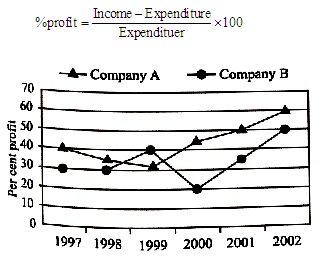
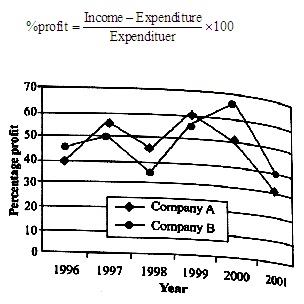
Percent profit earned by two companies over the given years.
If the income of Company A in 2002 was Rs. 600 crores, what was its expenditure?
A
Rs.360 crores
B
Rs. 480 crores
C
Rs. 375 crores
D
Cannot be deterrmined
E
None of these
Question 1028Single Answer
Passage :
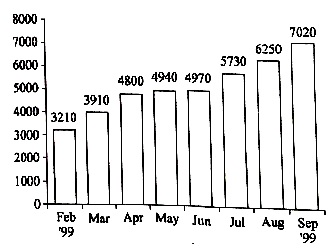
Crude oil Price (in RS) per given below :
Crude oil Price (in RS) per metric tonne
If in April the crude oil price had been lesser than the given by Rs 223 per metric tonne then, how much would have been the percentage increase in pricre over the earlier month?
A
10
B
12
C
14
D
16
E
None of these
Question 1029Single Answer
Passage :
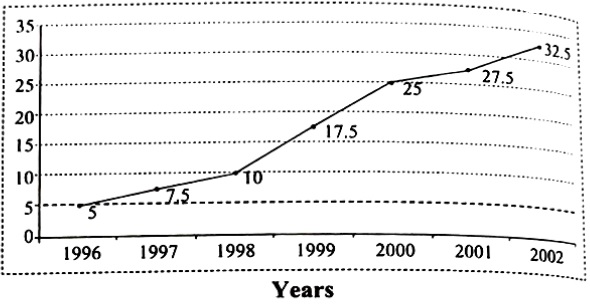
Production of a company (in lakh units) over the given years
The prodution in 2002 is what percent of production in 1996 ?
A
650%
B
550%
C
325%
D
320%
E
None of these
Question 1030Single Answer
Passage :
Percentage of marks obtained by six students in six subjects is –
Faculty
Institution
Arts
Commerce
Science
Engineering
Management
A
125
187
216
98
74
B
96
152
198
157
147
C
144
235
110
164
127
D
165
138
245
66
36
E
215
196
287
86
66
F
184
212
195
112
97
G
225
206
182
138
89
Approximately what is the overall percentage of marks obtained by Q in all the subjects ?
A
77
B
72
C
78
D
70
E
74
Question 1031Single Answer
Passage :
Number of students studying in different faculties in seven institutions.
Faculty
Institution
Arts
Commerce
Science
Engineering
Management
A
125
187
216
98
74
B
96
152
198
157
147
C
144
235
110
164
127
D
165
138
245
66
36
E
215
196
287
86
66
F
184
212
195
112
97
G
225
206
182
138
89
What is the percentage of students studying science in the institue G with respect to the total number of students studying in the institute G?
A
17.20
B
12.70
C
D
E
None of these
Question 1032Single Answer
Passage :
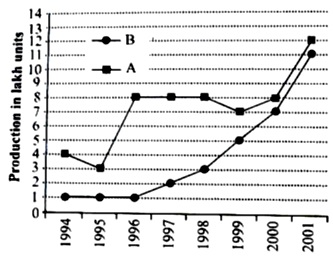
Production of two companies A & B over the years (Production in lakh units).
For Company A, in which year is the percentage increase/decrease in the production from the previous year the highest ?
A
2001
B
1995
C
1999
D
1996
E
None of these
Question 1033Single Answer
Passage :
Centrewise and Postwise number of candidates
Post Specialist Center
Officer
Clerk
Filed Officer
Supervisor
Specialist Officer
Bangalore
2000
5000
50
2050
750
Delhi
15000
17000
160
11000
750
Mumbai
17000
19500
70
7000
900
Hyderabad
3500
20000
300
9000
1150
Kolkata
14900
17650
70
1300
1200
Lucknow
11360
15300
30
1500
650
Chennai
9000
11000
95
1650
500
Which centre has the highest number of candidates ?
A
Delhi
B
Kolkata
C
Hyderabad
D
Mumbai
E
None of these
Question 1034Single Answer
Passage :
A factory was opened in 1994 with certain initial strengths in different untis as shown in the table. At the beginning of the subsequent years some of the workers left and some new workers were deployed. No worker left or joined in between. Details are given in the table given below. Study it carefully and answer the questions that follow.
UNIT
Year
A
B
C
D
E
1994
156
132
98
76
125
(Initial Strength)
L
J
L
J
L
J
L
J
L
J
1995
12
15
23
32
12
36
6
26
11
13
1996
17
18
16
14
8
19
17
28
11
15
1997
9
20
12
12
17
14
9
16
19
16
1998
32
40
14
17
23
35
12
23
23
14
1999
22
35
11
15
18
25
14
24
32
38
2000
26
32
17
21
13
18
11
19
21
36
In 1999 the strength of workers was maxmium in which unit ?
A
E
B
D
C
C
D
B
E
A
Question 1035Single Answer
Passage :
Percentage of students passed over appeared from six States over the years in an admission test.
State/Year
A
B
C
D
E
F
1996
32
35
37
41
39
29
1997
45
26
29
37
43
37
1998
28
38
22
27
36
42
1999
36
42
38
38
29
45
2000
40
34
26
26
35
30
2001
24
29
33
33
41
36
2002
35
43
40
38
39
28
If the average number of students qualified from State E for the given years was 532, what was the average number of students appeared ?
A
1420
B
1350
C
1422
D
Cannot be determined
E
None of these
Question 1036Single Answer
Passage :
Number of bales of wool processed by 5 woollen mills
Name Of Company
Month
Polar
Shephered
Kiwi
Warmwear
Comfy
Jan
900
850
350
1000
850
Feb
800
700
1050
1100
850
March
1050
800
1000
1100
950
April
800
850
850
1100
850
May
950
900
1050
1150
850
Total
4500
4100
4900
5450
4350
In the case of which mill is the processing of wool in March the highest percentage of the total processing by that mill during the five month period ?
A
Polar
B
Shephered
C
Kiwi
D
Warmwear
E
Comfy
Question 1037Single Answer
Passage :
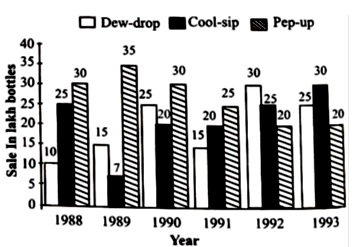
Study the following graph carefully and answer the question given below
In the case of Cool–sip drink, what was the approximate percent increase in sale in 1992 over its sale in 1991?
A
Less than 20
B
20 –25
(a) Less than 20 (b) 20 –25
(c) 25 (d) 31 – 35
(e) 36 – 40
C
25
D
31 – 35
E
36 – 40
Question 1038Single Answer
Passage :
In 6 educational years, number of studeunts taking admission and leaving from the 5 different schools which are founded in 1990 are given below.
School
A
B
C
D
E
AD
L
AD
L
AD
L
AD
L
AD
L
1990
1025
-
950
-
1100
-
1500
-
1450
-
1991
230
120
350
150
320
130
340
150
250
125
1992
190
110
225
115
300
150
300
160
280
130
1993
245
100
185
110
260
125
295
120
310
120
1994
280
150
200
90
240
140
320
125
340
110
1995
250
130
240
120
310
180
360
140
325
115
In th above table shown Ad = Admitted, L = Left
In which of the following schools, percentage increase in the number of students from the year 1990 to 1995 is maximum?
A
A
B
B
C
C
D
D
E
E
Question 1039Single Answer
Passage :
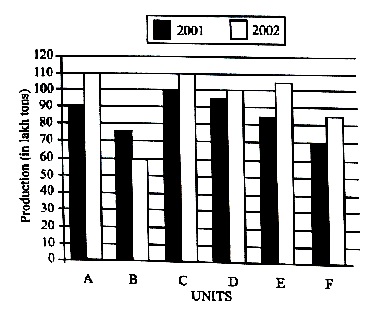
Production (in lakh tons) of six units of a company in 2001 and 2002
Average production of three A, B & C in 2001 is what percent of the average production of units D, E & F in 2002? (rounded off to two digits after decimal).
A
109.43
B
90.37
C
91.38
D
106.43
E
None of these
Question 1040Single Answer
Passage :
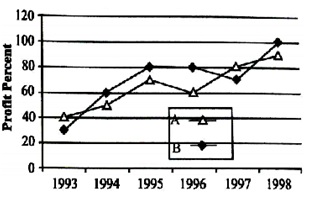
Percentage profit earned by two companies over the given years.
If the total income of Company A in 1999 was equal to the expenditure of Company B in 2000, then what was the ratio of expenditure of Company A in 1999 to the income of Company B in 2000?
A
25 : 66
B
66 : 25
C
10 : 13
D
13 : 10
E
None of these
Question 1041Single Answer
Passage :
Percentage of malnourished children in Chile over the years
Year
Tested Number (in thousand)
Percentage of the malnoarished
1984
998
Law
Moderate
High
1985
1015
12.5
2.9
0.7
1985
1048
12.1
2.7
0.7
1986
1071
11.9
2.5
0.5
1987
1048
10.8
1.8
0.3
1990
1023
10.4
1.6
0.2
1991
1048
10.0
1.4
0.1
1992
1.63
8.70
1.1
0.1
1993
1161
7.80
0.9
0.1
What is the difference between the total numbers of the malnourished children in the years 1991 and 1986 ?
A
Zero
B
46112
C
22008
D
41920
E
None of these
Question 1042Single Answer
Passage :
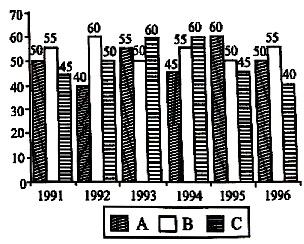
Production of paper (in lakh tonnes) by 3 different companies A, B and C over the years
For which of the following years the percentage of rise/fall in production from the previous year the maximum for Company B ?
A
1992
B
1993
C
1994
D
1995
E
1996
Question 1043Single Answer
Passage :
Production (in lakh tonnes) of six companies over the given years
1995
1996
1997
1998
1999
2000
A
465
396
524
630
408
650
B
372
482
536
480
512
580
C
694
528
492
575
550
495
D
576
602
387
426
632
518
E
498
551
412
518
647
610
F
507
635
605
600
485
525
What is the difference between average production for the given years of companies B and E (in lakh tonnes rounded off to two digits after decimal) ?
A
56.50
B
45.50
C
45.67
D
55.78
E
None of these
Question 1044Single Answer
Passage :
Study the following table carefully to answer these question
Distribution of marks obtained by 160 students in each of the three subjects-Hindi,English and Maths - out of 100
Sub/Marks
0-19
20-39
40-59
60-79
80-100
Hindi
12
31
79
30
8
English
21
30
65
42
2
Maths
31
22
34
45
28
Average of three subjects
24
28
68
35
5
If for passing, the student has to obtain minimum 60% marks on average of three subjects, how many students will pass ?
A
40
B
108
C
68
D
73
E
None of these
Question 1045Single Answer
Passage :
Number of cars (In thousands) of different Models and Colours sold in two Metro cities in a year
Type
Metro M
Metro H
Colour
Colour
Black
Red
Blue
White
Silver
Black
Red
Blue
White
Silver
A
40
25
55
75
15
45
32
40
60
20
B
20
35
60
80
20
30
37
39
81
35
C
35
30
50
90
35
40
42
41
6
37
D
45
40
45
85
40
35
39
37
90
42
E
50
35
35
60
30
50
44
43
77
22
F
55
42
40
65
52
47
34
45
87
17
The total number of silver-coloured cars sold in Metro H is approximately what percentage of that in Metro M ?
A
130
B
140
C
90
D
100
E
110
Question 1046Single Answer
Passage :
Marks (out of 50) obtained by five students P, Q, R, S and T in five subjects in five periodical examination of each subject.
Subjects
Sub
P
Q
R
Periodicals
I
II
III
IV
V
I
II
III
IV
V
I
II
III
IV
V
Maths
40
30
45
20
35
30
20
35
45
40
30
35
40
45
40
Sc.
30
40
25
30
20
25
45
30
37
28
48
46
31
40
80
His.
35
25
15
30
40
33
27
40
34
26
35
45
40
30
35
Geo.
45
47
32
39
37
42
43
30
40
25
25
35
48
37
25
Eng
24
28
36
39
43
30
28
37
34
31
26
28
31
30
40
Subjects
Sub
S
T
Periodicals
I
II
III
IV
V
I
II
III
IV
V
Maths
25
35
40
45
30
29
31
39
41
40
Sc.
31
34
38
27
30
44
36
40
30
40
His.
34
40
36
42
48
37
43
35
45
40
Geo.
39
37
44
40
30
38
39
33
40
40
Eng
31
34
35
45
40
30
30
35
45
40
What was the average marks of the five subjects of student Q in the 1st periodical ?
A
32
B
34
C
40
D
30
E
None of these
Question 1047Single Answer
Passage :
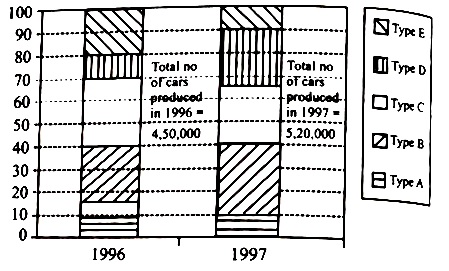
The percentage of five different types of cars produced by the company during two years is given below.
If the percentage production of B type cars in 1997 was the same as that of 1996, what would have been the number of cars produced in 1997?
A
1,12,500
B
1,20,000
C
1,30,000
D
Data inadequate
E
None of these
Question 1048Single Answer
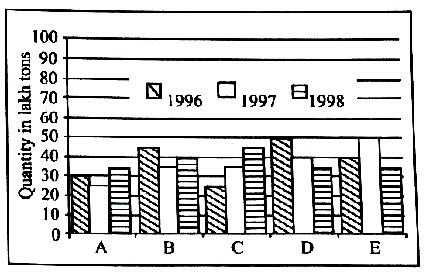
Passage :
The production of fertilizer in lakh tons by different companies for three years 1996, 1997 & 1998
What is the ratio between average production by Company B in three years to the average production by company C in three years?
A
6 : 7
B
8 : 7
C
7 : 8
D
7 : 6
E
None of these
Question 1049Single Answer
Passage :
Study the following table to answer the given question.
Number of students of different classes of a school playing different games.
Class ->
Games
XII
XI
X
IX
VIII
VII
VI
Chess
11
12
5
4
2
2
2
Criket
38
40
12
17
25
18
20
Basket Ball
11
9
7
6
0
0
0
Table Tennis
9
9
21
19
12
16
14
Football
40
27
18
19
12
16
14
Caroom
16
15
8
19
12
16
14
Tennis
8
9
11
5
6
0
0
Badminton
47
39
33
21
19
0
0
Approximately what percent of Class X students play the Table Tennis out of the total Class X students playing the different given games ?
A
20
B
21
C
27
D
26
E
18
Question 1050Single Answer
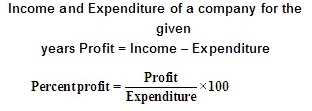
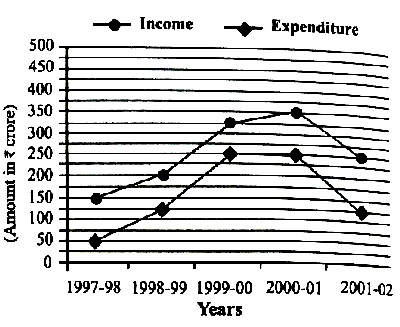
Passage :
What is the percent profit earned in 2001 – 2002 ?
A
200
B
125
C
100
D
12.5
E
None of these
Important Questions Package
HRRL Engineer Chemical Exam Online Question Bank Package
Buy HRRL Engineer Chemical Important Questions, MCQ, question answer in Hindi & English. It will help you to score high marks in HRRL Engineer Chemical question bank 2026 in Online, PDF & Print study material.
+ Free Monthly Current Affairs, GK & more PDF Download
Sr.
Package Name
Amount
1.
HRRL Engineer (Chemical) Exam - English
Description : 1000 Question With Answer
₹101[₹500]
2.
HRRL Engineer (Chemical) Exam - English
Description : 2000 Question With Answer
₹151[₹500]
3.
HRRL Engineer (Chemical) Exam - English
Description : 1000 Question & Answer Download in PDF (Send by Email)
₹151[₹550]
4.
HRRL Engineer (Chemical) Exam Question Bank Book - English
Description : 1000 Question with Answer (Printed Material)
₹390[₹650]
Quantitative Aptitude
Question 1051Single Answer
Passage :
Average Production of six machines for the given years in thousands
Year
Machine
Machine
Machine
Machine
Machine
Machine
I
II
III
IV
V
VI
1999
620
400
1020
2050
680
980
1998
680
400
1040
2070
670
1000
1997
640
403
1043
2130
680
1020
1996
700
399
1060
1908
690
1060
1995
706
397
1080
1603
685
1200
For which year and the machine has the production been highest for the given data?
A
1999, IV
B
1998, IV
C
1997, III
D
1996, IV
E
None of these
Question 1052Single Answer
Passage :
Highest marks and average marks obtained by students in subjects over the years The maximum marks in each subject is 100.
Students
English
Hindi
Maths
Science
History
High
Avg
High
Avg
High
Avg
High
Avg
High
Avg
1992
85
62
75
52
98
65
88
72
72
46
1993
80
70
80
53
94
60
89
70
65
55
1994
82
65
77
54
85
62
95
64
66
58
1995
71
56
84
64
92
68
97
68
68
49
1996
75
52
82
66
91
64
92
75
70
58
1997
82
66
81
57
89
66
98
72
74
62
The highest marks in Hindi in 1993 was what percent of the average marks in Mathematics in 1996 ?
A
135
B
130
C
125
D
140
E
None of these
Question 1053Single Answer
Passage :
Area and Production of Different Vegetables
Vegetable
Area
(in Hectare)
Production
(in Tonnes)
Tomato
2600
79092
Beans
2100
20895
Onion & Garlic
1500
29490
Cabbage
1700
42670
Root & Vegetable
800
18560
Bringal
300
4500
Pea
7200
72729
Leafy Vegetable
2900
28600
How many more tonnes per hectare cabbage were produced in comparison to cauliflower ?
A
5.3
B
4.5
C
3.5
D
5.5
E
None of these
Question 1054Single Answer
Passage :
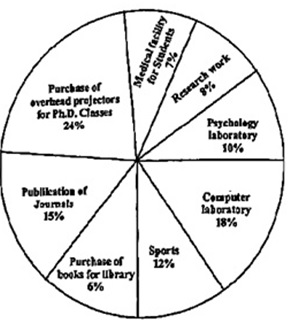
Study the following pie–chart carefully to answer these question. Total Expenditure RS 60 Lacs
What is the difference between the expenditure mady by univeristy for Publication of Journals and Psychoylogy Laboratory?
A
Rs 4 lacs
B
Rs3 lacs
C
Rs 4.2 lacs
D
Rs 3.8 lacs
E
None of these
Question 1055Single Answer
Passage :
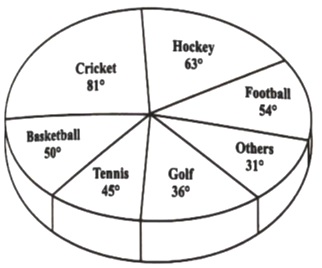
The circle graph given here shows the spending of a country on various sports during a particular year. Study the graph carefully and answer the questions given below it.
If the total amount spent on sports during the year be Rs 18000000, then the amount spent on basketball exceeds on Tennis by.
A
Rs 250000
B
Rs 360000
C
Rs 375000
D
Rs 410000
E
Rs 30000
Question 1056Single Answer
Passage :
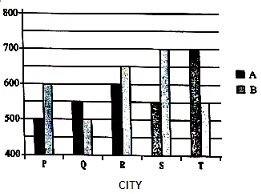
The graph given below represents the number of users of two broadband services A and B across 5 cities P, Q, R, S and T.
The number of users of brand A in city T is what percent of the number of users of brand B in City Q ?
A
150
B
110
C
140
D
160
E
120
Question 1057Single Answer
Passage :
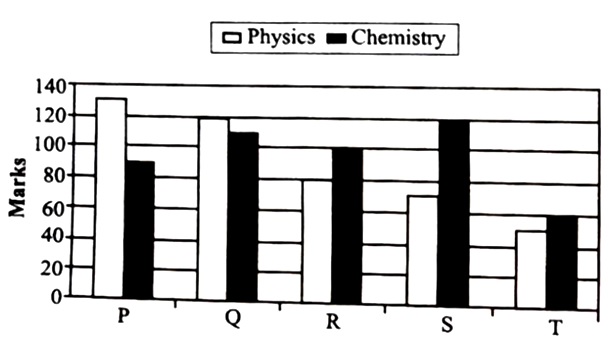
Marks Obtained by Five Students in Physis and
What is the respective ratio between the total marks obtained by P in Physics and Chemistry together to the total mards obtained by T in Physics and Chemistry together ?
A
3 : 2
B
4 : 3
C
5 : 3
D
2 : 1
E
None of these
Question 1058Single Answer
Passage :
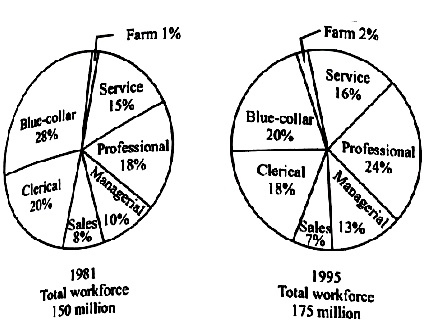
The pie–chari given below shows the distribution of workforce by occupational category for country X in 1981 and 1995. Study the chari and answer the question.
In 1981, the number of Sevice workers in the workforce, in millinos, was
A
15.0
B
20.5
C
22.5
D
28.0
Question 1059Single Answer
Passage :
The following table shows the productions of food–grains (in million tons) in a state for the period 1999 – 2000 to 2003 – 2004. Read the table and answer the question. Production (in million tons)
Year
Wheat
Rice
Barley
Other cereals
1999-2000
680
270
250
450
2000-2001
800
420
440
300
2001-2002
680
350
320
460
2002-2003
720
400
380
500
2003-2004
820
560
410
690
In the year 2003 – 2004, the increase in production was maximum over the previous year for:
A
Rice
B
Barley
C
Other cereals
D
Wheat
Question 1060Single Answer
Passage :
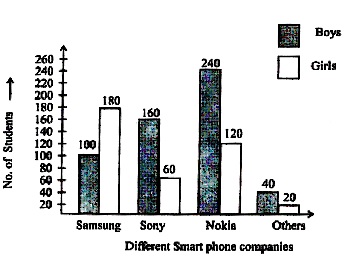
The bar chart representing the number of first year B. Com. students of St. Xavier's College using different companies' smart phones.
The bar chart representing the no. of students using different smart phones.
The ratio of the number of boys to the number of girls using the smart phones of Samsung and Sony together is .
A
12 : 13
B
13 : 12
C
14 : 11
D
11 : 14
Question 1061Single Answer
Passage :
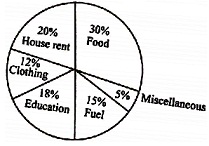
The following pie-chart shows the monthly expenditure of a fimily on food, house rent, clothing, education, fuel and miscellaneous.
If the percentage of expenditure on food is x% of the total percentage of expenditure on clothing, education and fuel, then x equals.
A
66
B
C
D
67
Question 1062Single Answer
Passage :
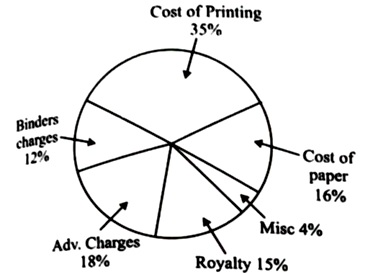
Circle graph given below shows the expenditure incurred in bringing out a book by a publisher.
If the cost of printing is RS 17,500, the Royalty is:
A
RS 8750
B
RS 6300
C
RS 7500
D
RS 3150
Question 1063Single Answer
Passage :
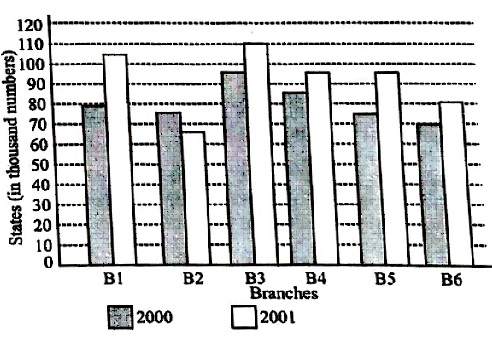
Sales of Books (in thousand numbers) from Six Branches - B1, B2, B3, B4, B5 and B6 of a Publishing Company in 2000 and 2001.
Find the ratio of the total sales of branch B2 for both years to the total sales of branch B4 for both years.
A
2 : 3
B
3 : 5
C
4 : 5
D
7 : 9
Question 1064Single Answer
Passage :
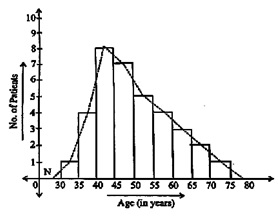
The diagram shows the age distribution of the patients admitted to a hospital in a particular day.
About 11% of the patient who got admitted to the hospital on that particular day were of age
A
either between 35 years and 40 years or between 55 years and 60 years
B
between 60 years and 65 years
C
between 35 years and 40 years
D
between 35 years and 40 years and between 55 years and 60 years
Question 1065Single Answer
Passage :
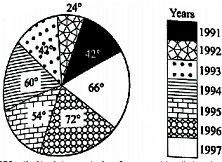
The following pie-chart represents the profits earned by a certain company in seven causecutive years. Study the pie-chart carefully and answer the question.
If x% of the total of profits earned in all the given years is same as the profit earned in the year 1994, then x is.
A
B
C
D
Question 1066Single Answer
Passage :
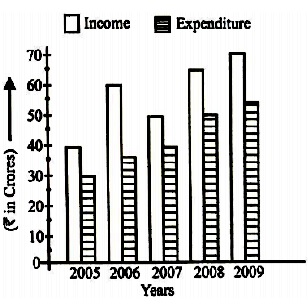
Graph which shows income and expenditure of a company over the years 2005-2009 and answer the question.
In how many years was the income of the company less than the average income of the given years ?
A
4
B
3
C
2
D
1
Question 1067Single Answer
Passage :
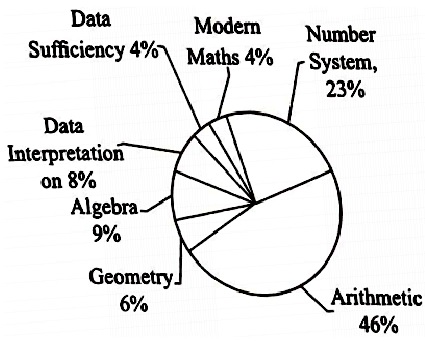
The pie chart given below shows the break-up of number of hours of teaching various subjects at an institute by Mr. Raghav.
If Mr. Raghav taught a total of 500 hours, then what is the difference in number of hours of teaching algebra and modern Maths?
A
15
B
20
C
25
D
40
Question 1068Single Answer
Passage :
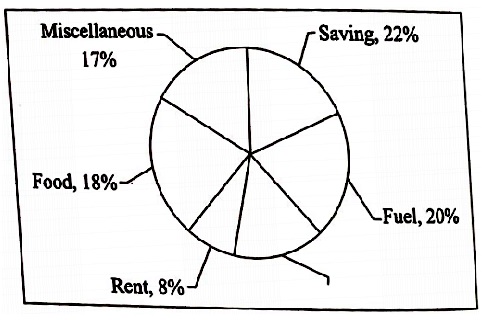
The pie chart given below shows the expenditre (in percentage) of Mahesh. The monthly income of Mahesh is RS 26000.
If he invests 65% of his savings on purchasing gold then how much amount (in Rs) does he spend on gold ?
A
3312
B
4124
C
3522
D
3718
Question 1069Single Answer
Passage :
Study the following table and answer the following questions carefully. Following table shows the percentage population of six state below poverty line and the proportion of male and female.
Sales
Percentage
population below
poverty line
Preparation of male and female
Below poverty
line M : F
Above poverty
line M : F
A
12
3:02
4:03
B
15
5:07
3:04
C
25
4:05
2:03
D
26
1:02
5:06
E
10
6:05
3:02
F
32
2:03
4:05
If the total population of C and D together is 18000, the what is the total no. of females below poverty line in the above stated states?
A
5000
B
5500
C
4800
D
Data inadequate
E
None of these
Question 1070Single Answer
Passage :
Percentage of marks obtained by six students in six different subjects.
Stu/Sub
Psy
(150)
Socio
(120)
Econ
(80)
Philos
(75)
Statis
(125)
Gelo
(60)
A
72
65
85
65
88
72
B
63
73
69
57
68
65
C
63
73
69
57
68
65
D
56
65
77
61
75
67
E
78
55
82
76
59
74
F
84
70
64
78
82
80
Note : Figures written in bracket under each subject indicate the maximum marks allotted for that subject.
What is the total mark obtained by 'A' in Psychology Economics and Geology together ?
A
219.2
B
229
C
209.8
D
229.6
E
None the these
Question 1071Single Answer
Passage :
Fare in rupees for three different types of vehicles.
Vehicle
Fare of distance upto
2 Km
4 Km
7 Km
10 Km
15 Km
20 Km
Type A
Rs. 5.00
Rs. 9.00
Rs. 13.50
Rs. 17.25
Rs. 22.25
Rs. 26.00
Type B
Rs. 7.50
Rs. 14.50
Rs. 24.25
Rs. 33.25
Rs. 45.75
Rs. 55.75
Type C
Rs.10.00
Rs. 19.00
Rs. 31.00
Rs. 41.50
Rs. 56.50
Rs. 69.00
Note : Figures written in bracket under each subject indicate the maximum marks allotted for that subject.
Shiv Kumar has to travel a distance of 15 kms in all. He decides to travel equal distance by each of the three types of vehicles. How much money is to be spent as fare?
A
Rs 51.75
B
Rs 47.50
C
Rs 47.25
D
Rs 51.25
Question 1072Single Answer
Passage :
Statewise and Disciplinewise Number of Candidates Appeared (App.) and Qualified (Qual.) at a competitive Examination).
State
A.P.
U.P.
Kerala
Orissa
M.P.
W.B.
Total
Disipline
APP.
Qual.
APP.
Qual.
APP.
Qual.
APP.
Qual.
APP.
Qual.
APP.
Qual.
APP.
Qual
Arts
5420
1840
4980
1690
2450
845
3450
1200
7500
2000
4800
1500
28600
9075
Commerce
8795
2985
6565
2545
3500
2040
4800
2200
8400
2400
7600
2700
39660
14870
Science
6925
2760
8750
3540
4250
2500
4500
1950
6850
3000
8500
3200
39775
1695
Engineering
1080
490
2500
1050
1200
450
1850
850
2500
750
3400
1400
12530
4990
Agriculture
2040
850
1085
455
700
200
450
150
1500
475
1200
500
5775
2130
Total
23060
8425
23880
9280
12100
6035
15050
6350
26750
8625
25500
9300
123640
48015
For which of the following states the percentage of candidates qualified to appeared is the minimum for commerce discipline?
A
AP
B
UP
C
Kerala
D
Orissa
E
MP
Question 1073Single Answer
Passage :
Production of main crops in India (in million tonnes)
Crops
91-92
92-93
93-94
94-95
95-96
96-97
Pulses
20.5
22.4
24.6
23.5
27.8
28.2
Oilseeds
32.4
34.6
40.8
42.4
46.8
52.4
Rice
80.5
86.4
88.2
92.6
94.2
90.8
Sugercane
140.8
150.2
152.2
160.3
156.4
172.5
Wheat
130.2
138.4
146.8
141.6
152.2
158.4
Coarse grain
45.6
52.8
60.4
62.4
58.2
62.8
Sum
450
484.8
513.2
522.8
535.6
565.1
In which of the following years the total production of oilseeds in the years 1994 - 95, 1995 - 96 and 1996 - 97 was equal to the production of wheat ?
A
1993 - 94
B
1994 - 95
C
1996 - 97
D
1992 - 93
E
None of these
Question 1074Single Answer
Passage :
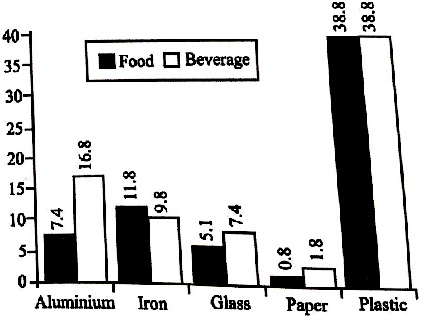
Packaging Materials Used (In tonnes)
Aluminium Iron Glass Paper Plastic
What percent of all the packaging materials used for packing beverages was contributed by paper? (Find the answer up to two decimal places).
A
2.42
B
3.41
C
2.41
D
3.42
E
None of these
Question 1075Single Answer
Passage :
Production (in crore unties) of six companies over the year
Company
Years
Total
1997
1998
1999
2000
2001
2002
TP
103
150
105
107
110
132
707
ZIR
75
80
83
86
90
91
505
AVC
300
300
300
360
370
340
1970
CTU
275
280
281
280
285
287
1688
PEN
25
30
35
40
42
45
217
SIO
85
87
89
91
92
96
540
Total
863
927
893
964
989
991
5627
The production of Company AVC in 2000 is approximately what percent of its average production over the given years?
A
300
B
110
C
136
D
18.25
E
95
Question 1076Single Answer
Passage :
The students of a school have an option to study only Hindi, only Sanskrit or a composite subject Hindi and Sanskrit. Out of, the 175 students in the school, boys and girls are in the ratio of 3 : 4 respectively. 40% of boys have opted for only Hindi. 44% of the students have opted for only Sanskrit. Out of the total number of girls 32% have opted for the composite subject. The number of boys who opted for only Sanskrit and that for composite subject are in the ratio 2 : 1 respectively.
What is the ratio between the number of boys who have opted for only Hindi and the number of girls who have opted for the compsite subject respectively ?
A
15 : 16
B
10 : 7
C
10 : 9
D
11 : 12
E
None of these
Question 1077Single Answer
Passage :
Total population of a village is 35000. Out of these 70% are literate. 44% of the total population are females. Out of the total illiterate population, males and females are in the ratio of 28 : 47 respectively.
What is the ratio of illiter to literate females ?
A
63 : 47
B
47 : 63
C
16 : 47
D
47 : 16
E
None of these
Question 1078Single Answer
Passage :
Number of students studying different disciplines at graduate level from Stare 'A' over the years.
Discopline/year
Arts
Commerce
Science
Agriculture
Medicine
Engineering
1997
2400
3200
4200
840
2350
3180
1998
2250
3500
4820
760
2120
3340
1999
3050
2850
4550
1120
2640
3650
2000
2800
3640
4680
930
1890
3490
2001
2980
3080
5220
780
2260
3280
2002
2770
3800
3950
810
2450
3500
For which of the following years, percentage increase/decrease in the number of students studying Commerce with respect to the previous year is the maximum ?
A
1998
B
1999
C
2000
D
2001
E
2002
Question 1079Single Answer
Passage :
(i) The ratio of the populations of males, females and children 10 years old and above is 11 : 10 in State 'A'. Out of which 40% males or 8800 are literate, 20% children (10 year old and above) are illiterate while 30% females are literate.
(ii) The number of children below 10 years of age is 10% of the number of females. 5% of the total poputation of the State are below poverty line and 80% of them are illiterate.
How many women are illiterate ?
A
20000
B
6000
C
14400
D
16800
E
None of these
Question 1080Single Answer
Passage :
Average marks obtained by 20 boys and 20 girls in five subjects from five different schools
Subject/Max Marks
P
Q
R
S
T
B
G
B
G
B
G
B
G
B
G
B
Eng
200
85
90
80
75
100
110
65
60
105
110
Hist
100
40
55
45
50
50
55
40
45
65
60
Geo
100
50
40
40
45
60
55
50
55
60
65
Math
200
120
110
95
85
135
130
75
80
130
135
Science
200
105
125
110
120
125
115
85
90
140
135
In above table, B = Boys and G = Girls
In which of the following subjects did the girls have highest average percentage of marks from all the schools ?
A
Science
B
Geography
C
English
D
History
E
Mathematics
Question 1081Single Answer
Passage :
Percent profit earned by the two companies A & B over the year
If the expenditure of Company B increased by 20% from 1995 to 1996, the income in 1996 will be how many times the income in 1995 ?
A
2.16 times
B
1.5 times
C
1.8 times
D
equal
E
None of these
Question 1082Single Answer
Passage :
Degree Wise Break-up Expenditure of a Family in a Month Total Amount Spent in a Month of Rs 45,800
What is the amount spent by the family on commuting ?
A
RS 10,076
B
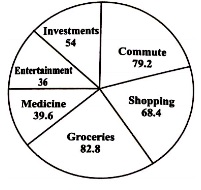
RS 10,534
C
RS 6,870
D
RS 8,702
E
None of these
Question 1083Single Answer
Passage :
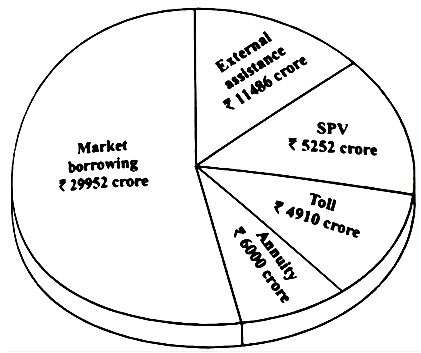
The source of funds to be collected by the National Highways Authority of India (NHAI) for its phase II project. Study the pie chart and answers the questions that follow.
Sources of Funds to be Arranged by NHAI for Phase II Projects (in Rs crore)
Total Fund = RS 57600 crore
If the toll is to be collected through an outsourced agency by allowing a maximum 10% commission, how much amount should be permitted to be collected by the outsourced agency so that the project is supported with 4900 RS crore ?
A
RS 6213 crore
B
RS 5827 crore
C
RS 5401 crore
D
RS 5316 crore
E
None of these
Question 1084Single Answer
Passage :
Area and Population of different states
States
Area (in sq Kilometres)
Population( in lakhs)
A
6230
1122
B
2540
838
C
8135
649
D
7436
572
E
4893
711
F
3718
286
G
4297
860
What is the approximate ratio of the areas of state B to the areas of state A and G together.
A
1 : 3.8
B
1 : 3.5
C
1 : 5.2
D
1 : 4.5
E
1 : 4.1
Question 1085Single Answer
Passage :
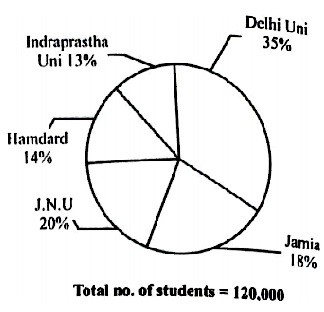
Following chart shows the number of students in different universities Percentage of listeners fo different FM channels in National Capital Region
Universities
FM Channels
Radio
Mirchi
Radio
City
Red
FM
Red
Gold
Rainbow
Indraprastha
76%
72%
46%
54%
48%
Hamdard
63%
64%
59%
47%
53%
JNU
52%
65%
64%
51%
54%
DU
82%
44%
32%
35%
45%
Jamia
75%
32%
36%
52%
64%
How many students of JNU listen to Radio city.
A
15200
B
15600
C
14400
D
14600
E
None of these
Question 1086Single Answer
Passage :
Study the following table carefully and answer accordingly : The different five-star hotel projects completed by different companies.
Project
No. of
rooms
Cost (Rs cr)
Year of
Complecation
Company
A
600
275
1998
P
B
320
210
1999
Q
C
250
250
1999
R
D
400
430
1998
S
E
520
310
2000
T
F
450
400
1998
U
G
500
250
2000
V
What is the approximate average number of rooms that would be built per crore of rupees over the three year period ?
A
1.25
B
1.70
C
0.90
D
1.40
E
1.55
Question 1087Single Answer
Passage :
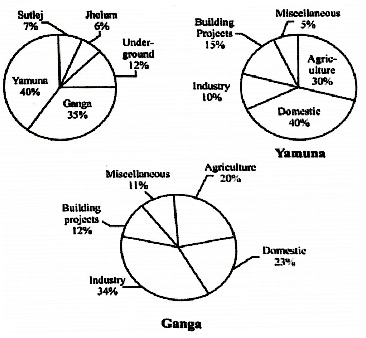
Contribution of different sources of water to fulfil the requirement in Delhi and consumption of water foe different uses by two major sources. Total consumption of water = 720 milion litres
What is the ratio of supply of Jehlum water and underground water together to consumption of Yamuna water for domestic purposes and Ganga water for Agriculture puroses together ?
A
17 : 23
B
5 : 8
C
17 : 22
D
18 : 23
E
None of these
Question 1088Single Answer
Passage :
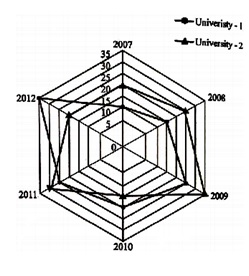
Number of students (in thousands) in two different universities in six different years Number of students
What is the sum of the number of students in university-1 in the year 2007 and the number of students in university-2 in the year 2011 together ?
A
50000
B
55000
C
45000
D
57000
E
40000
Question 1089Single Answer
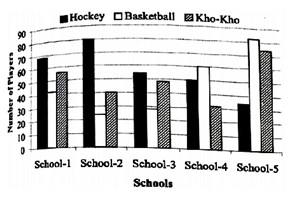
Passage :
Number of Players participating in the different games in five different schools.Number of players participating in three different games in five different schools.
Number of players participating in Kho–Kho from school–4 is what percent of number of players participating in hockey from school–2 ?
A
42
B
48
C
36
D
40
E
60
Question 1090Single Answer
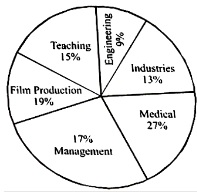
Passage :
Pecentagewise distribution of employees in six different proffresions Total number of employees = 26800
What is the difference between the total numbere of employees is in teaching and medical profession together and the number of employees in management profession ?
A
6770
B
7700
C
6700
D
7770
E
7670
Question 1091Single Answer
Passage :
Study the table carefully to answer the questions that follow : Monthly bill (in rupees) of landline phone,electricity,laundry and mobile phone piad by three different people in five different months
Month
Monthly Bills
Landline Phone
Electricity
Laundry
Mobile phone
Ravi
Dev
Manu
Ravi
Dev
Manu
Ravi
Dev
Manu
Ravi
Dev
Manu
March
234
190
113
145
245
315
93
323
65
144
234
345
April
124
234
321
270
220
135
151
134
35
164
221
325
May
156
432
211
86
150
98
232
442
132
143
532
332
June
87
123
124
124
150
116
213
324
184
245
134
125
July
221
104
156
235
103
131
413
532
143
324
432
543
What is the difference between the mobile phone bill paid by Ravi in the month of May and the laundary bill paid by Dev in the month of March ?
A
RS 180/–
B
RS 176/–
C
RS 190/–
D
RS167/–
E
RS196/–
Question 1092Single Answer
Passage :
Station
Name
Arrival
time
Departure
time
Halt time
(in minutes)
Distance travelled from
origin (in Km)
No. of passangers bording the train at each station
Dadar
Starting point
12.05 am
-
0 km
437
Vasai Road
4.15 am
12.56 am
3 minutes
42 Km
378
Surat
4.15 am
4.20 am
5 minutes
257 Km
458
Vadodara
6.05 am
6.10 am
5 minutes
386 Km
239
Anand Jn.
6.43 am
6.45 am
5 minutes
422 Km
290
Nadiad Jn.
7.01 am
7.03 am
2 minutes
440 Km
132
Ahmedabad
8.00 am
8.20 am
20 minutes
486 Km
306
Bhuj
5.40 pm
Ending point
-
977 Km
None
Distance between which two stations is second lowest ?
A
Nadiad Jn. to Ahmedabad
B
Anand Jn. to Nadiad Jn.
C
Dadar to Vasi Road
D
Anand Jn. to Vadodara
E
Vasai Road to Surat
Question 1093Single Answer
Passage :
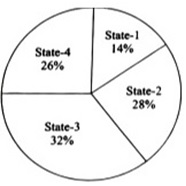
Study the pie-chart and table carefully to answer the questions that follow : Pie-chart showing percentagewise distribution of cars in fear different Total cars=700 Distribution of cars
Table Showing ratio between diesel and petrol engine cars which are distributed among four different states
State
Diesel Engine Cars
Petrol Engine Cars
State-1
3
4
State-2
5
9
State-3
5
3
State-4
1
1
Number of petrol engine cars in state-3 is what percent more than the number of diesel engine cars in state-1?
A
100
B
200
C
300
D
125
E
225
Question 1094Single Answer
Passage :
Number of people visiting six differnt Super-markets and the percentage of men,women and childern visiting those Super-markets
Names of the Super-Markets
Total of People
Percentage of
Men
Women
Children
A
34560
35
55
10
B
65900
37
43
20
C
45640
35
45
20
D
555500
41
26
33
E
42350
6
70
24
F
59650
24
62
14
What is the respective ratio of number of women visiting Super–markets A to those visiting Super market ?
A
35 : 37
B
245 : 316
C
352 : 377
D
1041 : 1156
E
None of these
Question 1095Single Answer
Passage :
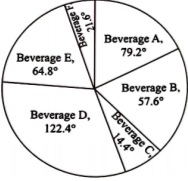
Prefrence of students among six beverages in terms of degree of angle in the pie-chart total no. of students=6800
What is the difference between the total number of students who prefer Beverage A and C together and the total number of students who prefer Beverage D and F together ?
A
959
B
955
C
952
D
954
E
None of these
Question 1096Single Answer
Passage :
Percentage of marks Obtained by Different Students in Different Subjects of MBA
Students
Subjects (Maximum Marks)
Starategic
Management (150)
Brand
Management (100)
Compensation
Management (150)
Consumer Behaviour (125)
Service Marketing (75)
Training & Development (50)
Anushka
66
75
88
56
56
90
Archit
82
76
84
96
92
88
Arpan
76
66
78
88
72
70
Garvit
90
88
96
76
84
86
Gunit
64
70
68
72
68
74
Pranita
48
56
50
64
64
58
What are the average marks obtained by all students together in Compensation Management ?
A
116
B
120
C
123
D
131
E
None of these
Question 1097Single Answer
Passage :
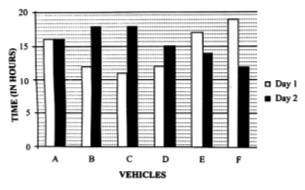
Time Taken to Travel (in Hours) by Six vehicles on Two Different Days Distance Covered (in Kilometers) by six Vehicles on Each Day
Vehicle
Day 1
Day 2
A
832
864
B
516
774
C
693
810
D
552
765
E
935
546
F
703
636
What was the difference between the speed of vehicle A on day 1 and the speed of vehicle C on the same day ?
A
7 km/hr.
B
12 km/hr.
C
11 km/hr.
D
8 km/hr.
E
None of these
Question 1098Single Answer
Passage :
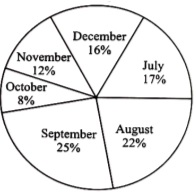
Pie-chart and table carefully and answer the question given below : Percentagewise Distribution of the Number of Mobile Phones Sold by a Shopkeeper During Six Months phones sold = 45,000 The respective ratio between the number of mobile phones sold of company A and company B during six months
Months
Ratio
July
8:7
August
4:5
September
3:2
October
7:5
November
7:8
December
7:9
The number of mobile phones sold of company A during July is approximately What percent of the number of mobile phone sold of company A during December ?
A
110
B
140
C
150
D
105
E
130
Question 1099Single Answer
Passage :
Number of people taking Fresh Loans from Different Banks over the year and the percentage of Defaulters Amongst them each Year
Year
Bank
P
Q
R
S
T
2004
27361
26345
25467
28246
30164
2005
32081
27456
32652
29565
32443
2006
25361
28637
32652
29565
32443
2007
23654
29045
32561
28314
36152
2008
36125
30467
25495
23764
35463
2009
35465
31963
27649
24356
33214
2010
34135
31974
28283
26553
31264
Approximate Percentage of Defaulters Among them each Year
Year
Bank
P
Q
R
S
T
2004
12
9
15
13
19
2005
24
8
17
20
23
2006
22
13
16
21
23
2007
18
11
18
22
19
2008
12
10
13
23
18
2009
11
20
11
22
21
2010
9
21
12.0
21
23
Approximately how many people taking a loan from Bank S in the year 2006 were defaulters ?
A
6490
B
6210
C
5020
D
6550
E
5580
Question 1100Single Answer
Passage :
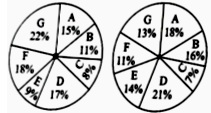
The question are based on the following data. The distribution of appeared and qualified aspirants in competitive examination from different States. Total appered aspirants = 45000 Total qualified aspirants = 9000
What is the percentage of qualified aspirants with respect to appeared aspirants from states B and C taken together? (Rounded off to two decimal places.).
A
23.11
B
24.21
C
21.24
D
23
E
None of these
Chemical
Question 1101Single Answer
The equilibrium constant (K) for a reaction is related to the Gibbs free energy change (ΔG) by:
A
ΔG = -RT ln(K)
B
ΔG = RT ln(K)
C
ΔG = -RT/ln(K)
D
ΔG = RT/ln(K)
Question 1102Single Answer
The first law of thermodynamics states that:
A
Entropy of an isolated system always increases
B
Energy can neither be created nor destroyed
C
Enthalpy remains constant in an adiabatic process
D
Heat transfer is irreversible
Question 1103Single Answer
Which thermodynamic property is a measure of the disorder of a system?
A
Enthalpy
B
Gibbs free energy
C
Entropy
D
Internal energy
Question 1104Single Answer
The Gibbs phase rule is used to determine:
A
The rate of a chemical reaction
B
The number of degrees of freedom in a system
C
The heat transfer coefficient
D
The mass transfer rate
Question 1105Single Answer
What is the term for a system in which there is no transfer of heat with the surroundings?
A
Isothermal
B
Isobaric
C
Adiabatic
D
Isochoric
Question 1106Single Answer
The Clapeyron equation is used to calculate:
A
Vapor pressure as a function of temperature
B
Heat capacity
C
Reaction rate
D
Mass transfer coefficient
Question 1107Single Answer
Fugacity is a measure of:
A
The ideal gas pressure
B
The "escaping tendency" of a substance from a phase
C
The reaction rate
D
The heat transfer rate
Question 1108Single Answer
The rate of a homogeneous reaction is usually expressed as a function of:
A
Temperature and pressure only
B
Temperature and concentration
C
Pressure and flow rate
D
Flow rate and volume
Question 1109Single Answer
A batch reactor is characterized by:
A
Continuous flow of reactants and products
B
No flow of reactants or products during the reaction
C
Constant volume and temperature
D
Constant pressure and temperature
Question 1110Single Answer
A continuous stirred-tank reactor (CSTR) is assumed to be:
A
Plug flow
B
Perfectly mixed
C
Laminar flow
D
Turbulent flow
Question 1111Single Answer
The space time in a plug flow reactor (PFR) is equal to:
A
The residence time
B
The reaction rate
C
The heat transfer rate
D
The mass transfer rate
Question 1112Single Answer
Catalysts increase the rate of a reaction by:
A
Increasing the temperature
B
Lowering the activation energy
C
Increasing the pressure
D
Changing the equilibrium constant
Question 1113Single Answer
What type of reactor is used for heterogeneous catalytic reactions where a solid catalyst is fluidized by the reacting fluid?
A
Batch reactor
B
CSTR
C
Fluidized bed reactor
D
Packed bed reactor
Question 1114Single Answer
The Arrhenius equation describes the temperature dependence of:
A
Reaction rate constant
B
Heat transfer coefficient
C
Mass transfer coefficient
D
Equilibrium constant
Question 1115Single Answer
Distillation is used to separate components based on differences in:
A
Density
B
Boiling points
C
Viscosity
D
Particle size
Question 1116Single Answer
Absorption is a mass transfer operation in which a gas is dissolved in a:
A
Solid
B
Liquid
C
Another gas
D
Vacuum
Question 1117Single Answer
Extraction is a separation process based on differences in:
A
Solubility
B
Density
C
Boiling point
D
Viscosity
Question 1118Single Answer
Drying involves the removal of:
A
Solutes from a solution
B
Moisture from a solid
C
Gases from a mixture
D
Heat from a system
Question 1119Single Answer
Reverse osmosis is an example of a:
A
Distillation process
B
Absorption process
C
Membrane separation process
D
Drying process
Question 1120Single Answer
The Fick's law describes:
A
Heat conduction
B
Mass diffusion
C
Fluid flow
D
Chemical reaction rates
Question 1121Single Answer
The overall mass transfer coefficient is influenced by:
A
Liquid-phase resistance only
B
Gas-phase resistance only
C
Both liquid-phase and gas-phase resistances
D
Neither liquid nor gas phase resistances
Question 1122Single Answer
Conduction is the transfer of heat through:
A
Fluid motion
B
Electromagnetic waves
C
Molecular vibrations
D
Phase change
Question 1123Single Answer
Convection involves heat transfer by:
A
Electromagnetic waves
B
Fluid motion
C
Molecular vibrations
D
Phase change
Question 1124Single Answer
Radiation is heat transfer by:
A
Fluid motion
B
Electromagnetic waves
C
Molecular vibrations
D
Phase change
Question 1125Single Answer
A heat exchanger is used to:
A
Increase reaction rate
B
Transfer heat between two fluids
C
Separate components
D
Dry solids
Question 1126Single Answer
What is the term for heat transfer in a fluid due to bulk movement of the fluid?
A
Conduction
B
Convection
C
Radiation
D
Evaporation
Question 1127Single Answer
The Fourier's law describes:
A
Heat conduction
B
Mass diffusion
C
Fluid flow
D
Chemical reaction rates
Question 1128Single Answer
The Stefan-Boltzmann law describes:
A
Heat conduction
B
Heat radiation
C
Heat convection
D
Heat transfer in heat exchangers
Question 1129Single Answer
The Nusselt number is a dimensionless number used in:
A
Mass transfer
B
Heat transfer
C
Reaction kinetics
D
Thermodynamics
Question 1130Single Answer
What type of heat exchanger consists of concentric pipes?
A
Shell and tube
B
Double pipe
C
Plate
D
Finned tube
Question 1131Single Answer
The overall heat transfer coefficient in a heat exchanger is affected by:
A
Fluid velocities and thermal conductivities
B
Only fluid velocities
C
Only thermal conductivities
D
Neither fluid velocities nor thermal conductivities
Question 1132Single Answer
In a counter-current heat exchanger, the fluids flow:
A
In the same direction
B
In opposite directions
C
Perpendicular to each other
D
In a circular pattern
Question 1133Single Answer
The logarithmic mean temperature difference (LMTD) is used to calculate:
A
Heat transfer rate
B
Mass transfer rate
C
Reaction rate
D
Fluid flow rate
Question 1134Single Answer
The Prandtl number is a dimensionless number that relates:
A
Momentum diffusivity and thermal diffusivity
B
Mass diffusivity and thermal diffusivity
C
Momentum diffusivity and mass diffusivity
D
Fluid velocity and pressure
Question 1135Single Answer
Fins are used in heat exchangers to:
A
Increase the heat transfer surface area
B
Decrease the fluid velocity
C
Increase the pressure drop
D
Decrease the thermal conductivity
Question 1136Single Answer
Forced convection occurs when fluid motion is caused by:
A
Density differences
B
External means like pumps or fans
C
Molecular vibrations
D
Electromagnetic waves
Question 1137Single Answer
Natural convection occurs when fluid motion is caused by:
A
External means like pumps or fans
B
Density differences
C
Molecular vibrations
D
Electromagnetic waves
Question 1138Single Answer
The effectiveness of a heat exchanger is defined as:
A
The ratio of actual heat transfer to maximum possible heat transfer
B
The ratio of fluid velocities
C
The ratio of thermal conductivities
D
The ratio of pressure drops
Question 1139Single Answer
Scaling in heat exchangers refers to:
A
The formation of deposits on heat transfer surfaces
B
The increase in heat transfer rate
C
The decrease in fluid velocity
D
The increase in pressure drop
Question 1140Single Answer
Pascal's law states that pressure applied to an enclosed fluid is:
A
Diminished throughout the fluid
B
Transmitted undiminished to every point in the fluid
C
Increased in the direction of flow
D
Decreased in the direction of flow
Question 1141Single Answer
The Reynolds number is used to determine:
A
Fluid density
B
Flow regime (laminar or turbulent)
C
Fluid viscosity
D
Fluid pressure
Question 1142Single Answer
A centrifugal pump operates based on:
A
Positive displacement
B
Centrifugal force
C
Gravity
D
Vacuum
Question 1143Single Answer
Size reduction of solids is accomplished by:
A
Filtration
B
Crushing and grinding
C
Sedimentation
D
Distillation
Question 1144Single Answer
Filtration is a process used to separate:
A
Liquids from gases
B
Solids from liquids
C
Gases from gases
D
Solids from solids
Question 1145Single Answer
Sedimentation is a process based on:
A
Density differences
B
Boiling point differences
C
Solubility differences
D
Viscosity differences
Question 1146Single Answer
Bernoulli's equation describes the relationship between:
A
Pressure, velocity, and elevation
B
Temperature, pressure, and volume
C
Density, viscosity, and flow rate
D
Heat transfer and mass transfer
Question 1147Single Answer
The Darcy-Weisbach equation is used to calculate:
A
Heat transfer rate
B
Mass transfer rate
C
Pressure drop in pipes
D
Reaction rate
Question 1148Single Answer
A feedback control system operates by:
A
Predicting future process behavior
B
Measuring the output and adjusting the input
C
Maintaining a constant input
D
Ignoring process disturbances
Question 1149Single Answer
A PID controller consists of:
A
Proportional, Integral, and Derivative modes
B
Pressure, Temperature, and Flow modes
C
Primary, Intermediate, and Delayed modes
D
Positive, Inverse, and Differential modes
Question 1150Single Answer
A rotameter is used to measure:
A
Pressure
B
Temperature
C
Flow rate
D
Level
Question 1151Single Answer
The Laplace transform is used in process control to:
A
Analyze steady-state behavior
B
Analyze dynamic behavior
C
Calculate heat transfer rates
D
Calculate mass transfer rates
Question 1152Single Answer
A transfer function relates:
A
Input and output of a system
B
Temperature and pressure
C
Flow rate and level
D
Heat transfer and mass transfer
Question 1153Single Answer
The Haber-Bosch process is used to produce:
A
Ethylene
B
Methanol
C
Ammonia
D
Sulfuric acid
Question 1154Single Answer
Methanol is produced from:
A
Natural gas or coal
B
Crude oil
C
Vegetable oils
D
Animal fats
Question 1155Single Answer
Ethylene is commonly produced by:
A
Cracking of hydrocarbons
B
Polymerization of propylene
C
Oxidation of methane
D
Hydrogenation of benzene
Question 1156Single Answer
Catalytic cracking is a process used in:
A
Polymer production
B
Petroleum refining
C
Ammonia synthesis
D
Methanol production
Question 1157Single Answer
Polymerization is a process that involves:
A
Breaking down large molecules
B
Combining small molecules into large chains
C
Separating components by distillation
D
Removing impurities by filtration
Question 1158Single Answer
Environmental pollution control in chemical industries includes:
A
Air and water treatment
B
Increasing production rates
C
Reducing product quality
D
Ignoring waste disposal
Question 1159Single Answer
Reforming in petroleum refining is used to:
A
Increase the octane number of gasoline
B
Reduce the viscosity of heavy oils
C
Remove sulfur from crude oil
D
Produce asphalt
Question 1160Single Answer
Process design involves:
A
Selecting equipment and determining process conditions
B
Managing personnel
C
Marketing products
D
Accounting procedures
Question 1161Single Answer
Plant layout includes considerations of:
A
Equipment arrangement and safety
B
Employee salaries
C
Product pricing
D
Stock market trends
Question 1162Single Answer
Cost estimation is used to determine:
A
Product quality
B
Capital and operating costs
C
Employee performance
D
Environmental impact
Question 1163Single Answer
Economic evaluation methods include:
A
Net present value and internal rate of return
B
Employee satisfaction surveys
C
Customer feedback analysis
D
Weather forecasting
Question 1164Single Answer
Hazard analysis is used to:
A
Prevent accidents and ensure safety
B
Increase production rates
C
Reduce product costs
D
Improve employee morale
Question 1165Single Answer
Piping design includes considerations of:
A
Fluid flow and pressure drop
B
Employee uniforms
C
Product packaging
D
Office furniture
Question 1166Single Answer
The purpose of a process flow diagram (PFD) is to:
A
Illustrate the sequence of operations
B
Detail equipment specifications
C
Manage employee schedules
D
Track inventory levels
Question 1167Single Answer
A battery limits diagram shows:
A
The physical boundaries of the process unit
B
The employee training schedule
C
The customer order history
D
The financial performance of the company
Question 1168Single Answer
The Lang factor is used in:
A
Cost estimation of chemical plants
B
Employee performance evaluations
C
Customer satisfaction surveys
D
Environmental impact assessments
Question 1169Single Answer
The payback period is used to determine:
A
The profitability of a project
B
The time required to recover the initial investment
C
The net present value of a project
D
The internal rate of return of a project
Question 1170Single Answer
A HAZOP study involves:
A
Identifying potential hazards and operability problems
B
Developing marketing strategies
C
Managing inventory levels
D
Conducting financial audits
Question 1171Single Answer
The purpose of a process and instrumentation diagram (P&ID) is to:
A
Show the piping, equipment, and instrumentation details
B
Detail employee training programs
C
Track customer orders
D
Manage financial transactions
Question 1172Single Answer
The capital cost of a chemical plant includes:
A
Raw material costs
B
Equipment, installation, and construction costs
C
Employee salaries
D
Product marketing costs
Question 1173Single Answer
The operating cost of a chemical plant includes:
A
Equipment purchase costs
B
Raw material, utilities, and labor costs
C
Construction costs
D
Land acquisition costs
Question 1174Single Answer
The internal rate of return (IRR) is:
A
The discount rate that makes the net present value equal to zero
B
The time required to recover the initial investment
C
The profitability index of a project
D
The payback period of a project
Question 1175Single Answer
The net present value (NPV) is used to:
A
Determine the profitability of a project by discounting future cash flows
B
Calculate the payback period of a project
C
Estimate the internal rate of return of a project
D
Calculate the depreciation of equipment
Question 1176Single Answer
The purpose of a safety data sheet (SDS) is to:
A
Provide information about the hazards of chemical substances
B
Detail employee performance evaluations
C
Track customer order history
D
Manage financial transactions
Question 1177Single Answer
The design pressure of a vessel is:
A
The maximum pressure expected during normal operation
B
The minimum pressure required for operation
C
The average pressure during operation
D
The pressure required for marketing the product
Question 1178Single Answer
The process of debottlenecking refers to:
A
Identifying and removing constraints that limit production capacity
B
Increasing employee salaries
C
Reducing product marketing costs
D
Ignoring safety regulations to increase production
Question 1179Single Answer
The rate law of a reaction expresses the reaction rate as a function of:
A
Temperature only
B
Pressure only
C
Concentration of reactants
D
Volume of the reactor
Question 1180Single Answer
The order of a reaction is determined by:
A
Stoichiometry of the reaction
B
Experimental data
C
Temperature of the reaction
D
Pressure of the reaction
Question 1181Single Answer
A reaction mechanism describes:
A
The overall stoichiometry of the reaction
B
The step-by-step sequence of elementary reactions
C
The heat of reaction
D
The activation energy of the reaction
Question 1182Single Answer
The Arrhenius equation relates the rate constant to:
A
Pressure and concentration
B
Temperature and activation energy
C
Volume and pressure
D
Concentration and volume
Question 1183Single Answer
Non-elementary reactions involve:
A
Single-step reactions
B
Multiple-step reactions
C
Reactions with no activation energy
D
Reactions with constant rate constants
Question 1184Single Answer
The molecularity of an elementary reaction refers to:
A
The number of reactants in the overall reaction
B
The number of molecules participating in an elementary step
C
The order of the reaction
D
The rate constant of the reaction
Question 1185Single Answer
The half-life of a first-order reaction is:
A
Dependent on the initial concentration
B
Independent of the initial concentration
C
Proportional to the initial concentration
D
Inversely proportional to the initial concentration
Question 1186Single Answer
The design equation for a batch reactor relates:
A
Conversion and time
B
Temperature and pressure
C
Volume and flow rate
D
Concentration and volume
Question 1187Single Answer
Conversion in a batch reactor is defined as:
A
The rate of product formation
B
The fraction of reactant consumed
C
The change in temperature
D
The change in pressure
Question 1188Single Answer
For a given conversion, the size of a batch reactor is determined by:
A
The reaction rate and time
B
The temperature and pressure
C
The flow rate and volume
D
The concentration and volume
Question 1189Single Answer
In a batch reactor, multiple reactions can lead to:
A
Increased conversion of all reactants
B
Formation of desired and undesired products
C
Constant reaction rates
D
No change in temperature
Question 1190Single Answer
The performance of a batch reactor is evaluated by:
A
Conversion, selectivity, and yield
B
Temperature, pressure, and volume
C
Flow rate, concentration, and volume
D
Heat transfer and mass transfer
Question 1191Single Answer
The space time in a batch reactor is equal to:
A
The reaction time
B
The residence time
C
The flow rate
D
The volume of the reactor
Question 1192Single Answer
A CSTR is assumed to be:
A
Plug flow
B
Perfectly mixed
C
Laminar flow
D
Turbulent flow
Question 1193Single Answer
The design equation for a CSTR relates:
A
Conversion, space time, and reaction rate
B
Temperature, pressure, and volume
C
Flow rate, concentration, and volume
D
Heat transfer and mass transfer
Question 1194Single Answer
A PFR is characterized by:
A
Perfect mixing
B
Plug flow
C
Laminar flow
D
Turbulent flow
Question 1195Single Answer
The design equation for a PFR relates:
A
Conversion, space time, and reaction rate
B
Temperature, pressure, and volume
C
Flow rate, concentration, and volume
D
Heat transfer and mass transfer
Question 1196Single Answer
Combining CSTRs and PFRs can:
A
Improve conversion and selectivity
B
Decrease reaction rates
C
Increase pressure drop
D
Reduce heat transfer
Question 1197Single Answer
For multiple reactions in continuous-flow reactors, performance is evaluated by:
A
Conversion, selectivity, and yield
B
Temperature, pressure, and volume
C
Flow rate, concentration, and volume
D
Heat transfer and mass transfer
Question 1198Single Answer
The residence time in a CSTR is equal to:
A
The space time
B
The reaction time
C
The flow rate
D
The volume of the reactor
Question 1199Single Answer
The space velocity in a PFR is:
A
Inversely proportional to the space time
B
Directly proportional to the space time
C
Equal to the reaction time
D
Equal to the residence time
Question 1200Single Answer
Homogeneous catalysts are in the same phase as:
A
The reactants
B
The products
C
The reactor
D
The surroundings
Question 1201Single Answer
Heterogeneous catalysts are in a different phase than:
A
The reactants
B
The products
C
The reactor
D
The surroundings
Question 1202Single Answer
Adsorption is the process of:
A
A substance being absorbed into a bulk solid or liquid
B
A substance adhering to the surface of a solid
C
A substance reacting with another substance
D
A substance changing its phase
Question 1203Single Answer
Desorption is the process of:
A
A substance leaving the surface of a solid
B
A substance being absorbed into a bulk solid or liquid
C
A substance reacting with another substance
D
A substance changing its phase
Question 1204Single Answer
Catalytic reaction mechanisms involve:
A
Only one elementary step
B
Multiple steps including adsorption, surface reaction, and desorption
C
No activation energy
D
Constant reaction rates
Question 1205Single Answer
The design of catalytic reactors considers:
A
Catalyst properties, reaction kinetics, and mass transfer
B
Only temperature and pressure
C
Only flow rate and volume
D
Only heat transfer
Question 1206Single Answer
Packed bed reactors are commonly used for:
A
Homogeneous catalytic reactions
B
Heterogeneous catalytic reactions
C
Non-catalytic gas-phase reactions
D
Liquid-phase reactions without a catalyst
Question 1207Single Answer
Fluidized bed reactors are used when:
A
High pressure drop is acceptable
B
Good heat transfer and catalyst regeneration are required
C
The catalyst is in the same phase as the reactants
D
The reaction is highly exothermic and requires precise temperature control
Question 1208Single Answer
Catalyst deactivation can occur due to:
A
Increased reaction temperature
B
Poisoning, fouling, or sintering
C
Increased reactant concentration
D
Increased flow rate
Question 1209Single Answer
The Thiele modulus is used to determine:
A
The rate of heat transfer in a catalytic reactor
B
The effectiveness of a porous catalyst
C
The rate of mass transfer in a catalytic reactor
D
The pressure drop across a packed bed
Question 1210Single Answer
The effectiveness factor in catalytic reactions is defined as:
A
The ratio of the actual reaction rate to the rate without pore diffusion limitations
B
The ratio of the pore diffusion rate to the surface reaction rate
C
The ratio of the catalyst surface area to the reactor volume
D
The ratio of the reactant concentration to the product concentration
Question 1211Single Answer
Shape selectivity in zeolites is based on:
A
The chemical composition of the zeolite
B
The pore size and structure of the zeolite
C
The temperature of the reaction
D
The pressure of the reaction
Question 1212Single Answer
In catalytic cracking, the primary function of the catalyst is to:
A
Increase the boiling point of hydrocarbons
B
Promote the formation of smaller, more valuable hydrocarbons
C
Remove sulfur from the feed
D
Increase the viscosity of the feed
Question 1213Single Answer
The Langmuir-Hinshelwood mechanism describes:
A
Adsorption of reactants, surface reaction, and desorption of products
B
Only the adsorption of reactants
C
Only the desorption of products
D
Only the surface reaction
Question 1214Single Answer
The Eley-Rideal mechanism involves:
A
Both reactants adsorbing onto the catalyst surface before reacting
B
One reactant adsorbing onto the catalyst surface while the other reacts from the gas phase
C
Only the adsorption of reactants
D
Only the desorption of products
Question 1215Single Answer
For a given catalyst, the selectivity of a reaction is influenced by:
A
Temperature, pressure, and reactant concentrations
B
Only the reactor volume
C
Only the flow rate
D
Only the catalyst particle size
Question 1216Single Answer
The space velocity in a catalytic reactor is defined as:
A
The volumetric flow rate of reactants divided by the catalyst volume
B
The volumetric flow rate of products divided by the reactor volume
C
The mass flow rate of reactants divided by the catalyst mass
D
The mass flow rate of products divided by the reactor mass
Question 1217Single Answer
The turnover frequency (TOF) of a catalyst is a measure of:
A
The number of molecules converted per active site per unit time
B
The total number of molecules converted
C
The total number of active sites
D
The total reaction rate
Question 1218Single Answer
The pore diffusion limitation in a catalyst becomes significant when:
A
The reaction rate is much slower than the diffusion rate
B
The reaction rate is much faster than the diffusion rate
C
The reaction rate is equal to the diffusion rate
D
The reaction is non-catalytic
Question 1219Single Answer
Residence Time Distribution (RTD) measures:
A
The temperature profile within a reactor
B
The distribution of residence times of fluid elements in a reactor
C
The pressure drop across a reactor
D
The reaction rate within a reactor
Question 1220Single Answer
RTD studies are typically performed using:
A
Temperature sensors
B
Tracer techniques
C
Pressure gauges
D
Flow meters
Question 1221Single Answer
A perfect plug flow reactor (PFR) has an RTD that is:
A
A broad distribution
B
A sharp peak or impulse
C
A flat line
D
A sinusoidal wave
Question 1222Single Answer
A perfectly mixed CSTR has an RTD that is:
A
A broad distribution
B
A sharp peak or impulse
C
An exponential decay
D
A sinusoidal wave
Question 1223Single Answer
Models for non-ideal reactors are used to:
A
Predict ideal reactor behavior
B
Account for deviations from ideal behavior
C
Measure reaction rates
D
Calculate heat transfer coefficients
Question 1224Single Answer
The dispersion model accounts for non-ideal behavior by:
A
Assuming perfect mixing
B
Introducing an axial dispersion coefficient
C
Using a series of perfectly mixed tanks
D
Ignoring axial mixing
Question 1225Single Answer
The tanks-in-series model represents a non-ideal reactor as:
A
A single perfectly mixed tank
B
A series of perfectly mixed tanks
C
A plug flow reactor with axial dispersion
D
A batch reactor
Question 1226Single Answer
The Bodenstein number is used in the dispersion model to:
A
Measure reaction rate
B
Quantify axial dispersion
C
Calculate heat transfer
D
Determine pressure drop
Question 1227Single Answer
RTD data can be used to determine:
A
Reaction kinetics
B
Reactor volume
C
Degree of mixing in a reactor
D
Catalyst activity
Question 1228Single Answer
Bypassing in a reactor leads to:
A
Increased conversion
B
Reduced conversion
C
No change in conversion
D
Increased heat transfer
Question 1229Single Answer
Dead zones in a reactor lead to:
A
Increased conversion
B
Reduced conversion
C
No change in conversion
D
Increased heat transfer
Question 1230Single Answer
Enzyme kinetics studies the rate of:
A
Chemical reactions in the absence of enzymes
B
Enzyme-catalyzed reactions
C
Physical processes in biological systems
D
Heat transfer in bioreactors
Question 1231Single Answer
The Michaelis-Menten equation describes:
A
Microbial growth kinetics
B
Enzyme kinetics
C
Bioreactor design
D
Scale-up of bioreactors
Question 1232Single Answer
The Michaelis constant (Km) represents:
A
The maximum reaction rate
B
The substrate concentration at half the maximum rate
C
The enzyme concentration
D
The product concentration
Question 1233Single Answer
The maximum reaction rate (Vmax) is related to:
A
The Michaelis constant
B
The enzyme concentration
C
The substrate concentration
D
The product concentration
Question 1234Single Answer
Microbial growth kinetics studies the rate of:
A
Enzyme-catalyzed reactions
B
Microbial cell growth
C
Physical processes in biological systems
D
Heat transfer in bioreactors
Question 1235Single Answer
The Monod equation describes:
A
Enzyme kinetics
B
Microbial growth kinetics
C
Bioreactor design
D
Scale-up of bioreactors
Question 1236Single Answer
The specific growth rate is influenced by:
A
Substrate concentration
B
Temperature
C
pH
D
All of the above
Question 1237Single Answer
Bioreactor design involves considerations of:
A
Mass transfer
B
Heat transfer
C
Mixing
D
All of the above
Question 1238Single Answer
A chemostat is a type of bioreactor that operates in:
A
Batch mode
B
Fed-batch mode
C
Continuous mode
D
Plug flow mode
Question 1239Single Answer
Scale-up of bioreactors involves:
A
Maintaining constant geometric similarity
B
Maintaining constant power input per unit volume
C
Maintaining constant oxygen transfer rate
D
All of the above
Question 1240Single Answer
In enzyme inhibition, a competitive inhibitor:
A
Binds to the enzyme at a site other than the active site
B
Binds to the enzyme at the active site
C
Reduces Vmax
D
Increases Km
Question 1241Single Answer
Non-competitive inhibition affects:
A
Km
B
Vmax
C
Both Km and Vmax
D
Neither Km nor Vmax
Question 1242Single Answer
The yield coefficient (Y) in microbial growth relates:
A
Product formation to substrate consumption
B
Cell growth to substrate consumption
C
Substrate consumption to time
D
Product formation to time
Question 1243Single Answer
The maintenance coefficient (m) represents:
A
Substrate consumption for cell growth
B
Substrate consumption for cell maintenance
C
Product formation rate
D
Cell death rate
Question 1244Single Answer
A fed-batch bioreactor involves:
A
Continuous addition of substrate
B
Continuous removal of products
C
Both continuous addition of substrate and removal of products
D
Intermittent addition of substrate
Question 1245Single Answer
Oxygen transfer rate in bioreactors is influenced by:
A
Agitation speed
B
Aeration rate
C
Bubble size
D
All of the above
Question 1246Single Answer
The Kla value represents:
A
The oxygen transfer coefficient
B
The specific growth rate
C
The Michaelis constant
D
The yield coefficient
Question 1247Single Answer
Sterilization of bioreactors is essential to:
A
Prevent contamination
B
Increase product yield
C
Reduce substrate consumption
D
Increase heat transfer
Question 1248Single Answer
Which water quality parameter measures the cloudiness of water?
A
pH
B
Turbidity
C
Dissolved Oxygen (DO)
D
Biochemical Oxygen Demand (BOD)
Question 1249Single Answer
Coagulation in water treatment involves:
A
Removing large particles by gravity
B
Adding chemicals to neutralize particle charges
C
Passing water through a filter bed
D
Killing pathogenic microorganisms
Question 1250Single Answer
Secondary wastewater treatment primarily focuses on:
A
Removing large solids
B
Reducing organic matter
C
Removing nutrients
D
Disinfecting the effluent
Question 1251Single Answer
Sludge dewatering is performed to:
A
Increase the volume of sludge
B
Reduce the moisture content of sludge
C
Enhance the odor of sludge
D
Improve the nutrient content of sludge
Question 1252Single Answer
Disinfection in water treatment is achieved by:
A
Sedimentation
B
Filtration
C
Chlorination or UV radiation
D
Coagulation
Question 1253Single Answer
BOD measures the:
A
Amount of dissolved oxygen in water
B
Amount of oxygen required by microorganisms to decompose organic matter
C
pH of water
D
Turbidity of water
Question 1254Single Answer
Tertiary wastewater treatment is used to:
A
Remove large solids
B
Reduce organic matter
C
Remove nutrients and specific pollutants
D
Disinfect the effluent
Question 1255Single Answer
Which air pollutant is a major component of photochemical smog?


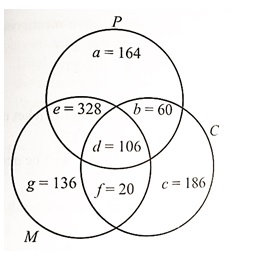
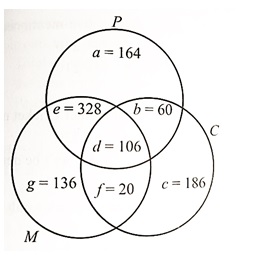
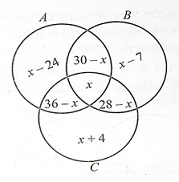
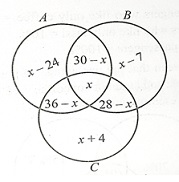
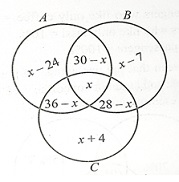
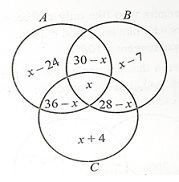
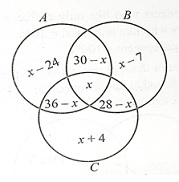
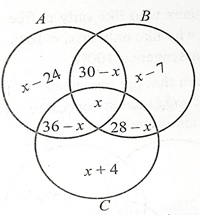
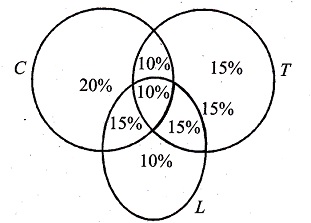
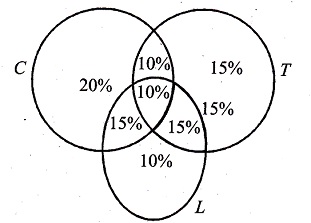
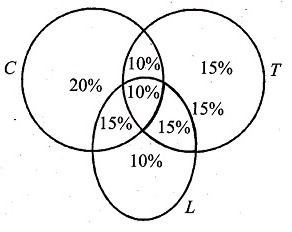
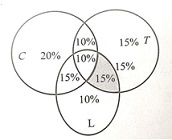
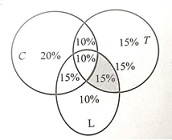
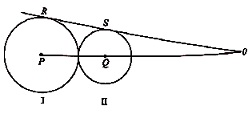


 The value of y
 is less than g. In bag B, number of yellow colored balls is
 more than that of bag A. If two balls are picked at random from bag B then the probability of getting both green color ball is
 . Total number of balls in bag B is 75.

 . Then find the value of x ?