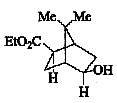
The most stable conformation for the following compound is
A
B
C
D
Question 1003Single Answer
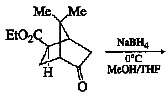
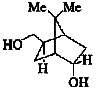
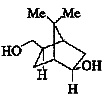
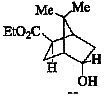
The major product formed in the following reaction is
A
B
C
D
Question 1004Single Answer
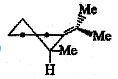
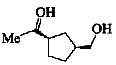
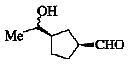
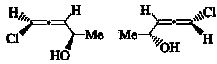
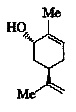
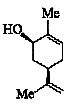
The correct relation between the following compounds is
A
enantiomers
B
diastereomers
C
homomers (identical)
D
constitutional isomers
Question 1005Single Answer
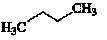
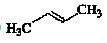
The correct order of heat of hydrogenation for the following compounds is
A
I II III IV
I > II > III > IV
B
I > III > II > IV
C
IV > I > III > II
D
IV > II > I > III
Question 1006Single Answer
Among the following, the correct statement (s) about ribose is (are)
1. On reduction with NaBH4 it gives optically inactive product.
2. On reaction with methanolic HCl it gives a furanoside.
3. On reaction with Br2–CaCO3–water it gives optically inactive product.
4. It gives positive Tollen’s test.
A
1, 2 and 4
B
1, 2 and 3
C
2 and 3
D
4 only
Question 1007Single Answer
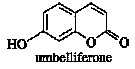
Biogenetic precursors for the natural product umbelliferone among the following are
1. L-tryptophan 2. cinnamic acid
3. L-methionine 4. L-phenylalanine
A
1 and 2
B
2 and 4
C
2 and 3
D
3 and 4
Question 1008Single Answer
Number of signals in the 13C{H} NMR spectrum of (R)-4-methylpentan-2-ol are
A
3
B
4
C
5
D
6
Question 1009Single Answer
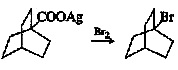
The major product formed in the following reaction is
A
B
C
D
Question 1010Single Answer
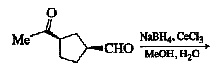
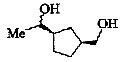
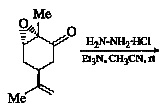
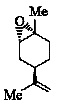
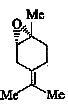
The major product formed in the following reaction is
A
B
C
D
Question 1011Single Answer
The major product formed in the following reaction is
A
B
C
D
Question 1012Single Answer
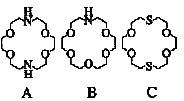
The magnitude of the stability constants for K+ ion complexes of the following supra-molecular hosts follows the order
A
B > A > C
B
C > A > B
C
A > B > C
D
C > B > A
Question 1013Single Answer
Antitubercular drug(s) among the following is (are)
1. Salbutamol 2. Ethambutanol
3. Isoniazid 4. Diazepam
A
1 and 2
B
2 and 3
C
3 and 4
D
4 alone
Question 1014Single Answer
A particle is in a one-dimensional box with a potential V0 inside the box and infinite outside. An energy state corresponding to n = 0 (n : quantum number) is not allowed because
A
the total energy becomes zero
B
the average momentum becomes zero
C
the wave function becomes zero every where
D
the potential V0 # 0
Question 1015Single Answer
An eigenstate of energy satisfies In the presence of an extra constant potential V0
A
both will change
B
both En and the average kinetic energy will change
C
only En will change, but not
D
only will change, but not En
Question 1016Single Answer
The intensity of a light beam decreases by 50% when it passes through a sample of 1.0 cm path length. The percentage of transmission of the light passing through the same sample, but of 3.0 cm path length, would be
A
50.0
B
25.0
C
16.67
D
12.5
Question 1017Single Answer
The electric-dipole allowed transition among the following is
A
3S → 3D
B
3S → 3P
C
3S → 1D
D
3S → 1F
Question 1018Single Answer
The product is the two-fold rotation axis around the x-axis and is the xy mirror plane) is
A
B
C
C2y
D
C2z
Question 1019Single Answer
The simplest ground-state VB wave function of a diatomic molecule like HCl is written as = H (1s, 1) Cl (3pz, 2) + B where B stands for
A
H (3pz, 2) Cl (1s, 1)
B
H (1s, 2) Cl (3pz, 1)
C
Cl (1s, 2) Cl (3pz, 1)
D
Cl (1s, 2) H (3pz, 1)
Question 1020Single Answer
Heat capacity of a species is independent of temperature if it is
A
tetratomic
B
triatomic
C
diatomic
D
monatomic
Question 1021Single Answer
In a chemical reaction : xenon gas is added at constant volume. The equilibrium
A
will shift towards the reactant
B
will shift towards the products
C
will not change the amount of reactant and products
D
will increase both reactant and products
Question 1022Single Answer
The temperature-dependence of a reaction is give by
k = AT2 exp (–E0/RT)
The activation energy (Ea) of the reaction is give by
A
B
E0
C
E0 + 2RT
D
2E0 + RT
Question 1023Single Answer
For a reaction, 2A + B → 3Z, if the rate of consumption of A is 2 × 10⁻⁴ mol dm–3 s–1, the rate of formation of Z (in mol dm–3 s–1) will be
A
3 × 10⁻⁴
B
2 × 10⁻⁴
C
D
4 × 10⁻⁴
Question 1024Single Answer
Dominant contribution to the escaping tendency of a charged particle with uniform concentration in a phase, depends on
A
chemical potential of that phase
B
electric potential of the phase
C
thermal energy of that phase
D
gravitational potential of that phase
Question 1025Single Answer
The intrinsic viscosity depends on the molar mass as The empirical constants K and a are dependent on
A
solvent only
B
polymer only
C
polymer-solvent pair
D
polymer-polymer interaction
Question 1026Single Answer
The correct for the cell reaction involving steps
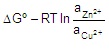
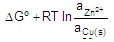
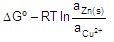
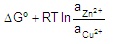
A
B
C
D
Question 1027Single Answer
The lowest energy-state of an atom with electronic configuration ns1 np1 has the term symbol
A
3p1
B
1p1
C
3p2
D
3p0
Question 1028Single Answer
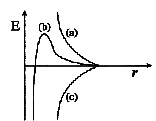
Energy of interaction of colloidal particles as a function of distance of separation can be identified as (1) van der Waals, (2) double layer, (3) van der Waals and double layer. The correct order of interactions in the figure corresponding to curves (a), (b) and (c) respectively, is
A
1, 2, 3
B
2, 3, 1
C
3, 1, 2
D
1, 3, 2
Question 1029Single Answer
The packing factor (PF) and number of atomic sites per unit cell (N) of an FCC crystal system are
A
PF = 0.52 and N = 3
B
PF = 0.74 and N = 3
C
PF = 0.52 and N = 4
D
PF = 0.74 and N = 4
Question 1030Single Answer
Differential pulse polarography (DPP) is more sensitive than D.C. Polarography (DCP). Consider following reasons for it
1. Non-faradic current is less in DPP in comparison to DCP.
2. Non-faradic current is more in DPP in comparison to DCP.
3. Polarogram of DPP is of different shape than that of DCP.
Correct reasons(s) is/are
A
1 and 3
B
2 and 3
C
2 only
D
1 only
Question 1031Single Answer
Considering the following parameters with reference to the fluorescence of a solution :
1. Molar absorptivity of fluorescent molecule.
2. Intensity of light source used for excitation.
3. Dissolved oxygen
The correct answer for the enhancement of fluorescence with the increase in these parameters is/are
A
1 and 2
B
2 and 3
C
1 and 3
D
3 only
Question 1032Single Answer
The geometric cross section of 125Sn (in bam) is nearly
A
1.33
B
1.53
C
1.73
D
1.93
Question 1033Single Answer
Match column A (coupling reactions) with column B (reagents)
The oxoacid of phosphorus having P atoms in +4, +3 and +4 oxidation states respectively, is
A
H5P3O10
B
H5P3O7
C
H5P3O8
D
H5P3O9
Question 1035Single Answer
The geometries of [Br3]+ and [I5]+ respectively, are
A
trigonal and tetrahedral
B
tetrahedral and trigonal bipyramidal
C
tetrahedral and tetrahedral
D
linear and trigonal pyramidal
Question 1036Single Answer
According to Wade’s theory the anion [B12H12]2– adopts
A
closo - structure
B
arachno - structure
C
hypo - structure
D
nido - structure
Question 1037Single Answer
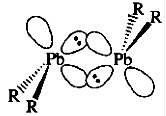
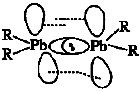
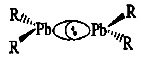
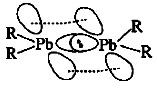
Considering the intert pair effect on lead, the most probable structure of
PbR2 [R = 2, 6-C6H3 (2, 6 –Pr2C6H3)2] is
A
B
C
D
Question 1038Single Answer
The reaction of SbCl3 with 3 equivalents of EtMgBr yields compound X. Two equivalents of SbI3 react with one equivalent of X to give Y. In the solid state, Y has a 1D-polymeric structure in which each Sb is in a square pyramidal environment. Compounds X and Y respectively, are
A
SbEt3 and [Sb(Et)I2]n
B
Sb(Et2)Cl and [Sb(Et2)Cl]n
C
SbEt3 and [SbEt2Br2]n
D
Sb(Et)Br2 and [SbEt(I) (Br)]n
Question 1039Single Answer
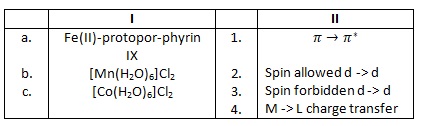
Match the complexes given in column I with the electronic transitions (mainly responsible for their colours) listed in column II
The correct answer is
A
(a) (b) (c)
1 3 2
B
4 2 3
C
1 3 4
D
1 2 3
Question 1040Single Answer
The following statements are given regarding the agostic interaction C—H···Ir observed in [Ir(Ph3P)3Cl].
1. Upfield shift of C—H proton in 1H NMR spectrum.
2. increased acid character of C—H.
3. vC–H in IR spectrum shifts to higher wavenumber.
The correct answer is/are
A
1 and 3
B
2 and 3
C
1 and 2
D
3 only
Question 1041Single Answer
Amongst the following :
1.
2.
3.
4.
The compounds with most shielded and deshielded Cp protons respectively, are
A
4 and 1
B
4 and 2
C
3 and 1
D
3 and 2
Question 1042Single Answer
Total number of vertices in metal clusters [Ru6(C)(CO)17], [Os5(C)(CO)15] and [Ru5(C)(CO)16] are 6, 5 and 5 respectively. The predicted structures of these complexes, respectively, are
A
closo, nido and nido
B
closo, nido and arachno
C
arachno, closo and nido
D
arachno, nido and closo
Question 1043Single Answer
Among the complexes,
1. K4[Cr(CN)6]
2. K4[Fe(CN)6]
3. K3[Co(CN)6]
4. K4[Mn(CN)6]
Jahn-Teller distortion is expected in
A
1, 2 and 3
B
2, 3 and 4
C
1 and 4
D
2 and 3
Question 1044Single Answer
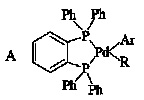
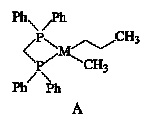
The reductive elimination of Ar—R (coupled product) from A is facile when
A
R = CH3
B
R = CH2Ph
C
R = CH2COPh
D
R = CH2CF3
Question 1045Single Answer
The total number of metal ions and the number of coordinated imidazole units of histidine in the active site of oxy-hemocyanin, respectively, are
A
2Cu2+ and 6
B
2Fe2+ and 5
C
2Cu+ and 6
D
Fe2+ and 3
Question 1046Single Answer
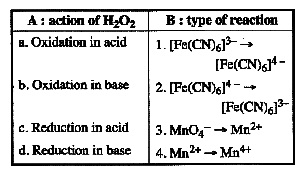
Match the action of H2O2 in aqueous medium given in column A with the oxidation/ reduction listed in column B :
The correct answer is
A
(a) (b) (c) (d)
1 2 3 4
B
2 4 3 1
C
3 4 2 1
D
4 1 3 2
Question 1047Single Answer
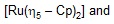
The reduced form of a metal ion complex is NMR active. On oxidation, the complex gives an EPR signal with g|| ≈ 2.2 and ≈ 2.0. Mossbauer spectroscopy cannot characterise the metal complex. The M is
A
Zn
B
Sn
C
Cu
D
Fe
Question 1048Single Answer
The least probable product from A on reductive elimination is
A
B
CH4
C
D
Question 1049Single Answer
Water plays different roles in the following reactions
1. 2H2O + Ca → Ca2+ + 2OH– + H2
2. nH2O + Cl → [Cl(H2O)n]–
3. 6H2O Mg2+ → [Mg(H2O)6]2+
4. 2H2O + 2F2 → 4HF + O2
The correct role of water in each reaction is
A
(1) oxidant, (2) acid, (3) base and (4) reductant
B
(1) oxidant, (2) base, (3) acid and (4) reductant
C
(1) acid, (2) oxidant, (3) reductant and (4) base
D
(1) base, (2) reductant, (3) oxidant'and (4) base
Question 1050Single Answer
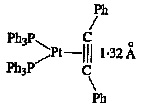
With respect to bonding in Pt–III in the structure given below, which of the following represent the correct bonding?
A
B
C
D
Important Questions Package
MP SET Chemical Science Exam Online Question Bank Package
Buy MP SET Chemical Science Important Questions, MCQ, question answer in Hindi & English. It will help you to score high marks in MP SET Chemical Science question bank 2026 in Online, PDF & Print study material.
+ Free Monthly Current Affairs, GK & more PDF Download
Sr.
Package Name
Amount
1.
MP SET Chemical Science Exam - English
Description : 1000 Question with Answer
₹101[₹500]
2.
MP SET Chemical Science Exam - English
Description : 2200 Question with Answer
₹151[₹500]
3.
MP SET Chemical Science Exam - English
Description : 1000 Question & Answer Download in PDF (Send by Email)
₹151[₹450]
4.
MP SET Chemical Science Exam Question Bank Book - English
Description : 1000 Question with Answer (Printed Material)
₹390[₹600]
Chemical Science
Question 1051Single Answer
The complex [Fe(phen)2(NCS)2] (phen = 1, 10-phenanthroline) shows spin cross-over behaviour. CFSE and µeff at 250 and 150 K respectively, are
A
0.4 •·, 4.90 BM and 2.4 •, 0.00 BM
B
2.4 •, 2.90 BM and 0.4 •, 1.77 BM
C
2.4 •, 0.00 BM and 0.4 •, 4.90 BM
D
1.2 •, 4.90 BM and 2.4 •, 0.00 BM
Question 1052Single Answer
Consider the following statements with respect to uranium
1. UO22+ disproportionates more easily than UO22+
2. U3O8 is its most stable oxide of U
3. Coordination number of U in [UO2 (NO3)2 (H2O)2].4H2O is six
4. UO22+ is linearThe correct set of statements is
A
1, 2 and 4
B
1, 3 and 4
C
2, 3 and 4
D
1, 2 and 3
Question 1053Single Answer
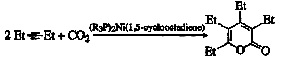
For the above conversion, which of the following statements are correct ?
1. CO2 combines with Ni(PR3)2 (1, 5-cyclo-octadiene)
2. Insertion of CO2 occurs
3. Insertion of Et — Et takes place
The correct answer is
A
1 and 2
B
2 and 3
C
3 and 1
D
1, 2 and 3
Question 1054Single Answer
Consider the following statements for (NH4)2 [Ce(NO3)6] (Z)
1. Coordination number of Ce is 12
2. Z is paramagnetic
3. Z is an oxidising agent
4. Reaction of Ph3PO with Z gives a complex having coordination number 10 for Ce.
The correct statements are
A
1, 2 and 3
B
2, 1 and 4
C
2, 3 and 4
D
1, 3 and 4
Question 1055Single Answer
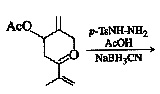
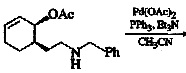
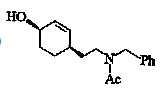
The major product formed in the following reaction sequnce is
A
B
C
D
Question 1056Single Answer
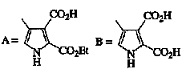
The major products A and B in the following reaction sequence are
A
B
C
D
Question 1057Single Answer
The major product formed in the following reaction is
A
B
C
D
Question 1058Single Answer
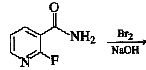
The correct statement about the following reaction is
A
The product is 2-fluoropyridin-3-amine and reaction involves nitrene intermediate
B
The product is 2-fluoropyridin-3-amine and reaction involves radical intermediate
C
The product is 2-hydroxynicotinamide and reaction involves benzyne-like intermediate
D
The product is 2-hydroxynicotinamide and reaction involves addition-elimina-tion mechanism
Question 1059Single Answer
The major product formed in the following reaction is
A
B
C
D
Question 1060Single Answer
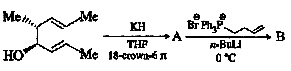
The major products A and B formed in the following reactions are
A
B
C
D
Question 1061Single Answer
The major products A and B formed in the following reactions are
A
B
C
D
Question 1062Single Answer
An organic compound shows following spectral data IR (cm–1) : 1680 1H NMR (CDCl3) : 7.66 (m, 1H), 7.60 (m, 1H), 7.10 (m, 1H), 2.25 (s, 3H)
13C NMR (CDCl3) : 190, 144, 134, 132, 128, 28 m/z (EI) : 126 (M+, 100%), 128 (M+ + 2, 4.9%)
The structure of the compound is
A
B
C
D
Question 1063Single Answer
The correct set of reagents to effect the following transformation is
A
B
C
D
Question 1064Single Answer
The correct structures of the intermediates [A] and [B] in the following reaction are
A
B
C
D
Question 1065Single Answer
The correct reagent combination A and the major product B in the following reaction sequence are
A
B
C
D
Question 1066Single Answer
The major product of the following reaction sequence is
A
B
C
D
Question 1067Single Answer
The major product formed in the following reaction is
A
B
C
D
Question 1068Single Answer
The major products A and B in the following synthetic sequence are
A
B
C
D
Question 1069Single Answer
The major product formed in the following reaction is
A
B
C
D
Question 1070Single Answer
The hydrocarbon among the following having conformationally locked chair-boat-chair form is
A
B
C
D
Question 1071Single Answer
The major product formed in the following reaction sequence is
A
B
C
D
Question 1072Single Answer
The major product formed in the following reaction sequence is
A
B
C
D
Question 1073Single Answer
Structures of A and B in the following synthetic sequence are
A
B
C
D
Question 1074Single Answer
In the following reaction, the ratio of A : B : C is (* indicates labelled carbon)
A
1 : 1 : 1
B
1 : 2 : 1
C
2 : 1 : 1
D
3 : 2 : 1
Question 1075Single Answer
Structure of the major product in the following synthetic sequence is
A
B
C
D
Question 1076Single Answer
Major product formed in the following i synthetic sequence on the monoterpene pulegone is
A
B
C
D
Question 1077Single Answer
Optically pure isomers A and B were heated with NaN3 in DMF. The correct statement from the following is
A
A gives optically pure D and B gives optically pure C
B
A gives racemic mixture of C and B gives optically pure C
C
A gives optically pure C and B gives racemic C
D
A gives optically pure D and B gives racemic D
Question 1078Single Answer
A molecular orbital of a diatomic molecule changes sign when it is rotated by 180° around the molecular axis. This orbital is
A
B
C
D
Question 1079Single Answer
IR active normal modes of methane belong to the irreducible representation
A
E + A1
B
E + A2
C
T1
D
T2
Question 1080Single Answer
The symmetric rotor among the following is
A
CH4
B
CH3Cl
C
CH2Cl2
D
CCl4
Question 1081Single Answer
The nuclear g-factors of 1H and 14N are 5.6 and 0.40 respectively. If the magnetic field in an NMR spectrometer is set such that the proton resonates at 700 MHz, the 14N nucleus would resonate at
A
1750 MHz
B
700 MHz
C
125 MHz
D
50 MHz
Question 1082Single Answer
The spectroscopic technique, by which the ground state dissociation energies of diatomic molecules can be estimated is
A
microwave spectroscopy
B
infrared spectroscopy
C
UV-visible absorption spectroscopy
D
X-ray spectroscopy
Question 1083Single Answer
The term symbol for the first excited state of Be with the electronic configuration 1s2 2s1 3s1 is
A
3S1
B
3S0
C
1S0
D
2S1/2
Question 1084Single Answer
Which of the following statements is INCORRECT?
A
A Slater determinant is an antisymmetrized wavefunction
B
Electronic wavefunction should be represented by Slater determinants
C
A Slater determinant always corresponds to a particular spin state
D
A Slater determinant obeys the Pauli exclusion principle
Question 1085Single Answer
Compare the difference of energies of the first excited and ground states of a particle confined in (i) a 1-d box (1), (ii) a 2-d square box (2) and (iii) a 3-d cubic box (3). Assume the length of each of the boxes is the same. The correct relation between the energy differences 1, 2 and 3 for the three cases is
A
1 > 2 > 3
B
1 = 2 = 3
C
3 > 2 > 1
D
3 > 1 > 2
Question 1086Single Answer
The correct statement about both the average value of position (p) and momentum (x) of a 1-d harmonic oscillator wavefunction is
A
(x) = 0 and (p) = 0
B
(x) = 0 but (p) = 0
C
(x) = 0 and (p) = 0
D
(x) = 0 but (p) = 0
Question 1087Single Answer
The value of the commutator [x, [x, px]] is
A
i hx
B
–i h
C
i h
D
0
Question 1088Single Answer
The equilibrium constants for the reactions CH4(g) + 2H2O(g) ò CO2(g) + 4H2(g) and CO(g) + H2O(g) ò CO2(g) + H2(g) and K1 and K2, respectively. The equilibrium constant for the reaction CH4(g) + H2O(g) ò CO(g) + 3H2(g) is
A
K1·K2
B
K1 – K2
C
K1/K2
D
K2 – K1
Question 1089Single Answer
Consider the progress of a system along the path shown in the figure. S (B → C) for one mole of an ideal gas is then given by
A
B
C
D
Question 1090Single Answer
A thermodynamic equation that relates the chemical potential to the composition of a mixture is known as
A
Gibbs-Helmholtz equation
B
Gibbs-Duhem equation
C
Joule-Thomson equation
D
Debye-Hiickel equation
Question 1091Single Answer
According to transition state theory, the temperature-dependence of pre-exponential factor (A) for a reaction between a linear and a non-linear molecule, that forms products through a non-linear transition state, is given by
A
T
B
T2
C
T–2
D
T–1.5
Question 1092Single Answer
For a given ionic strength, (I) rate of reaction is given by
log =. Which of the following reactions follows the above equation?
A
S2O82– + I–
B
Co(NH3)5Br2+ + OH–
C
CH3COOC2H5 + OH–
D
H+ + Br + H2O2
Question 1093Single Answer
For a reaction on a surface
At low pressure of H2, the rate is proportional to
A
[H2]
B
1/[H2]
C
[H2]1/2
D
1/[H2]1/2
Question 1094Single Answer
The temperature-dependence of an electrochemical cell potential is
A
B
C
D
Question 1095Single Answer
The single-particle partition function (f) for a certain system has the form f = AVeBT. The average energy per particle will then be (k is the Boltzman constant)
A
BkT
B
BkT2
C
kT/B
D
kT/B2
Question 1096Single Answer
The indistinguishability correction in the Boltzmann formulation is incorporated in the following way :
(N = total number of particles; f = single-particle partition function)
A
Replace f by f/N!
B
Replace fN by fN/N!
C
Replace f by f/In (N!)
D
Replace fN by fN/In(N!)
Question 1097Single Answer
In a photochemical reaction, radicals are formed according to the equation
If I is the intensity of light absorbed, the rate of the overall reaction is proportional to
A
I
B
I1/2
C
I[C4H10]
D
I1/2[C4H10]1/2
Question 1098Single Answer
Conductometric titration of a strong acid with a strong alkali (MOH) shows linear fall of conductance up to neutralization point because of
A
formation of water
B
increase in alkali concentration
C
faster moving H+ being replaced by slower moving M+
D
neutralization of acid
Question 1099Single Answer
Find the probability of the link in polymers where average values of links are (1) 10, (2) 50 and (3) 100
A
(1) 0.99, (2) 0.98, (3) 0.90
B
(1) 0.98, (2) 0.90, (3) 0.99
C
(1) 0.90, (2) 0.98, (3) 0.99
D
(1) 0.90, (2) 0.99, (3) 0.98
Question 1100Single Answer
The stability of a lyophobic colloid is the consequence of
A
van der Waals attraction among the solute-solvent adducts
B
Brownian motion of the colloidal particles
C
insolubility of colloidal particles in solvent
D
electrostatic repulsion among doublelayered colloidal particles









 In the presence of an extra constant potential V0
 will change

 will change, but not En
 is the two-fold rotation axis around the x-axis and
 is the xy mirror plane) is


 =
 xenon gas is added at constant volume. The equilibrium


 The empirical constants K and a are dependent on
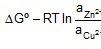
 for the cell reaction involving steps



 ≈ 2.0. Mossbauer spectroscopy cannot characterise the metal complex. The M is

 bonding in Pt–III in the structure given below, which of the following represent the correct bonding?




 •·, 4.90 BM and 2.4







 7.66 (m, 1H), 7.60 (m, 1H), 7.10 (m, 1H), 2.25 (s, 3H)


 1), (ii) a 2-d square box (
 S (B → C) for one mole of an ideal gas is then given by


