It takes 2 hours for Tiwari and Deo to do a job. Tiwari and Hari take 3 hours to do the same job. Deo and Hari take 6 hours to do the same job. Which Of the following statements is incorrect ?
A
Tiwari alone can do the job in 3 hours
B
Deo alone can do the job in 6 hours
C
Hari does not work at all
D
Hari is the fastest worker
Question 2Single Answer
Abdul travels thrice the distance Catherine travels, which is also twice the distance that Binoy travels. Catherine's speed is 1/3 of Abdul's speed, which is also 1/2 of Binoy's speed. If they start at the same time then who reaches first ?
A
Both Abdul and Catherine
B
Binoy
C
Catherine
D
All three together
Question 3Single Answer
For a certain regular solid : number of faces + number of vertices = number of edges + 2. For Three such distinct (not touching each other) objects, what is the total value of faces + vertices - edges ?
A
Two
B
Four
C
Six
D
Zero
Question 4Single Answer
A tall metal cylinder is filled end-to-end with n snugly fitting
spherical wax balls of diameter d. If the balls melt completely, the
volume fraction occupied by the melted wax is :
A
independent of both d and n
B
dependent on both d and n
C
independent of d, but dependent on n
D
dependent on d, but independent of n
Question 5Single Answer
A, B, C, D are points on a circle with AB = 5 cm, BC = 12 cm, AC = 13 cm and AD = 7 cm. Then, the closest approximation of CD is—
A
9 cm
B
10 cm
C
11 cm
D
14 cm
Question 6Single Answer
Choose the four digit number, in which the product Of the first & fourth digits is 40 and the product of the middle digits is 28. The thousands digit is as much less than the unit digit as the hundreds digit is less than the tens digit—
A
5478
B
5748
C
8745
D
8475
Question 7Single Answer
Equilateral triangles are drawn one inside the other as shown. What is the ratio of the two shaded areas ?
A
2 : 1
B
3: 4
C
4 : 1
D
8 : 1
Question 8Single Answer
A frog hops and lands exactly 1 metre away at a time. What is the least number of hops required to reach a point 10 cm away ?
A
1
B
2
C
3
D
It cannot travel such a distance
Question 9Single Answer
A train running at 36 km/h crosses a mark on the platform in 8 sec and takes 20 sec to cross the platform. What is the length of the platform ?
A
120m
B
280 m
C
40 m
D
160m
Question 10Single Answer
When a polynomial f(x) is divided by x - 5 or x - 3 or x - 2, it leaves a remainder of 1. Which of the following would be the polynomial ?
A
x3 - 10x2 + 31x + 31
B
x3 - 10x2 + 31x - 29
C
x3 - 10x2 + 31x - 31
D
x3 - 10x2 + 31x + 29
Question 11Single Answer
Water is slowly dripping out of a tiny hole at the bottom of a hollow metallic sphere initially full of water. Ignoring the water that has flowed away, the centre of mass of the system —
A
remains fixed at the centre of the sphere
B
moves down steadily as the amount of water decreases
C
moves down for sometime but eventually returns to the centre of the sphere
D
moves down until half of the water is lost and then moves up
Question 12Single Answer
The diagram (not to scale) shows the top view and cross section of a pond having a square outline and equal sized steps of 0.5 m width and 0.1 m height. What will be the volume of water (in m3) in the pond when it is completely filled ?
A
40.0
B
29.4
C
19.4
D
11.3
Question 13Single Answer
Which of the following is a carbohydrate ?
A
Nylon
B
Cane - sugar
C
Turpentine
D
Hydrogen peroxide
Question 14Single Answer
The S.I unit of temperature is :
A
Fahrenheit
B
Celsius
C
Kelvin
D
Centigradeac
Question 15Single Answer
A notebook contains only hundred statements as under :
1.This notebook contains 1 false statement.
2.This notebook contains 2 false statements.
99.This notebook contains 99 statements.
100.This notebook contains 100 statements.
Which of the statements is correct ?
A
100th
B
1st
C
99th
D
2nd
Question 16Single Answer
A chocolate bar having m x n unit square tiles is given, Calculate the number of cuts needed to break it completely, without stacking, into individual tiles —
A
(m x n)
B
(m -1)x(n -1)
C
(m x n)- 1
D
(m X n) +1
Question 17Single Answer
A person paid income tax at the rate of R% for the first Rs. 2 lakhs. and at the rate Of (R + 10 %) for income exceeding Rs. 2 lakhs. If the total tax paid is (R + 5%) of the annual income, then what is the annual income ?
A
Rs. 2.5 lakhs
B
Rs. 3.0 lakhs
C
Rs.4.0 lakhs
D
Rs. 5.0 lakhs
Question 18Single Answer
An experiment leads to the following set of observations of the variable ‘ ’ at different times ‘ ’.
t 0 1 2 3 4 5 6
v 5 6.1 9.1 13.7 20.6 30.8 41.4
Allowing for experimental errors, which of the following expressions best describes the relationship between and ?
A
v x t2
B
(v - 5) x t2
C
v=5t+ t2
D
(v- 5)= (t+5)
Question 19Single Answer
The difference between the squares of the ages (in complete years) of a father and his son is 899. The age of the father when his son was born —
A
cannot ascertained due to inadequate data
B
is 27 years
C
is 29 years
D
is 31 years
Question 20Single Answer
A bicycle tube has a mean circumference of 200 cm and a circular cross section of diameter 6 cm. What is the approximate volume of water (in cc) required to completely fill the tube, assuming that it does not expand ?
A
600
B
1200
C
3600
D
1800
Question 21Single Answer
Identify the species, those obey 18 electron rule, from the following .
A
1 and 2
B
2 and 3
C
3 and 4
D
1and4
Question 22Single Answer
The following transformation is an example of -
A
Oxidative addition
B
Insertion
C
hydride elimination
D
Reductive elimination
Question 23Single Answer
[NiIIL6]n+ or n- shows absorption bands at 8500, 15400, and 26000 cm-1 whereas [NiIIL’6]n+ or n-, at 17500 and 28200 cm-1. L’ are respectively -
A
OH- and N3-
B
Cl- and I-
C
NCS- and RCO2-
D
H2O and NH3
Question 24Single Answer
The number of microstates present in 3F term is -
A
3
B
21
C
9
D
28
Question 25Single Answer
CpM [Cp is (-C5H5)] fragment isolobal with a BH fragment is—
A
CpGe
B
CpMn
C
CpRu
D
Cpco
Question 26Single Answer
The number of metal-metal bonds is—
[Co2Fe2(Co)11( 4 - PPh)2] is—
A
3
B
4
C
5
D
6
Question 27Single Answer
Correct combination of and orbitals in B2 molecule is -
A
Gerade Ungerade
B
Ungerade Gerade
C
Gerade Gerade
D
Ungerade Ungerade
Question 28Single Answer
The correct shape of [TeF5]- ion on the basis of VSEPR theory is—
A
Trigonal bipyramidal
B
Square pyramidal
C
Pentagonal planar
D
See-saw
Question 29Single Answer
The numbers of P-S and P-P bonds in the compound P4S3, are, are respectively —
A
6 and 3
B
4 and 3
C
6 and 2
D
3 and 6
Question 30Single Answer
In the iodometric titration of sodium thiosul- fate (Na2S2O3) with acidic dichromate solution, 25 mL of 0.1 M dichromate requires 25 mL of 'x' M thiosulfate. The value of 'x' is -
A
0.2
B
0.1
C
0.6
D
0.4
Question 31Single Answer
Decomposition temperature of CaCO3 in thermo-gravimetric analysis will be highest in dynamic atmosphere of—
A
nitrogen
B
synthesis gas
C
1 : 1 mixture Of O2 and CO
D
water gas
Question 32Single Answer
On two sequential electron capture, 56Ba131 will give—
A
54Xe131
B
54Xe130
C
56Xe131
D
56Ce130
Question 33Single Answer
The compound which dissolves in POCl3 to give a solution with highest chloride ion concentration, is —
A
Et3N
B
KCI
C
FeCl3
D
SbCl5
Question 34Single Answer
For monoionic complex [UO2(NO3)3]-, the correct coordination number and geometry respectively are —
A
8 and hexagonal bipyramidal
B
5 and square pyramidal
C
8 and square antiprism
D
5 and trigonal bipyramidal
Question 35Single Answer
Chelate effect is—
A
predominantly due to enthalpy change
B
predominantly due to entropy change
C
independent of ring size
D
due to equal contribution of entropy and enthalpy change
Question 36Single Answer
The major product formed in the following reaction is -
A
B
C
D
Question 37Single Answer
Which among the following is an example of a Chemical Change ?
A
Rusting of iron
B
Magnetisation of iron
C
Melting of iron
D
Heating of iron
Question 38Single Answer
Who among the following conceived the first recognizable periodic table of chemical elements ?
A
Marie Skłodowska Curie
B
Dmitri Mendeleev
C
John Dalton
D
Amedeo Avogadro
Question 39Single Answer
In the 1H NMR spectrum of myrtenal, the two methyl groups are expected to display signals at (chemical shift values in ppm)
A
1.35 (s, 3H) and 5.0 (s, 3H)
B
0.74 (s, 3H) and 1.33 (s, 3H)
C
1.22 (s, 6H)
D
0.70 (s, 6H)
Question 40Single Answer
The frontier orbital interactions involved in the formation of the carbocation intermediate in the reaction of isobutylene with HClare :
A
B
C
D
Question 41Single Answer
In the UV-visibIe absorption spectrum of an , -unsaturated carbonyl compound, with increasing solvent polarity —
Which of the following defines the solubility of a solution ?
A
amount of the solvent present in the saturated solution
B
amount of the solute present in the saturated solution
C
amount of the solute per amount of solute in the solution
D
difference of amount of solvent and the amount of solute
Question 43Single Answer
In the following compound, the stereochemical descriptor for Ha and Hb is—
A
enantiotopic
B
diasterotopic
C
homotopic
D
constitutionally heterotopic
Question 44Single Answer
The correct statement are about the reaction of X and Y with NaNH2 are—
1. X reacts faster than Y
2.Y reacts faster than X
3. X and Y behave as Lewis acids
4. X is stronger Bronsted acid than Y
A
1 and 3
B
1 and 4
C
2 and 3
D
2 and 4
Question 45Single Answer
The correct statements about conformations X and Y of 2-butanone are—
1. X is more stable than Y
2.Y is more stable than X
3.Methyl groups in X are anti
4. Methyl groups in Y are gauche
A
1 and 4
B
1 and 3
C
2 and 3
D
1, 3 and 4
Question 46Single Answer
The correct order of the magnitude of 'A for the given substituents in values' cyclohexane derivatives is—
A
Ph > CN > Me
B
Me > Ph > CN
C
CN > Me > Ph
D
Ph > Me > CN
Question 47Single Answer
The correct order of pka values for the compounds X, Y and Z is—
A
X > Y > Z
B
Y > X > Z
C
Z > X > Y
D
Y > X > Z
Question 48Single Answer
The following transformation proceeds through two consecutive electrocyclic processes, which are—
A
4 conrotatory and 6 conrotatory
B
4 disrotatory and 6 conrotatory
C
4 conrotatory and 6 disrotatory
D
4 disrotatory and 6 disrotatory
Question 49Single Answer
The simultaneous eigenfunctions or angular momentum operators L2 and Lz are —
A
all of 2s, 2px, 2py, and 2pz orbitals
B
only 2s, 2px and 2py orbitals
C
only 2s and 2pz orbitals
D
only 2pz orbital
Question 50Single Answer
An ideal gas is composed of particles of mass M in thermal equilibrium at a temperature T in one container. Another container contains ideal gas particles of mass 2M at a temperature 2T. The correct statement about the two gases is —
A
average kinetic energy and average speed will be same in the two cases
B
both the averages Will be doubled in the second case
C
only the average kinetic energy Will be doubled in the second case
D
only the average speed will doubled in the second case
Important Questions Package
MP SET Chemical Science Exam Online Question Bank Package
Buy MP SET Chemical Science Important Questions, MCQ, question answer in Hindi & English. It will help you to score high marks in MP SET Chemical Science question bank 2026 in Online, PDF & Print study material.
+ Free Monthly Current Affairs, GK & more PDF Download
Sr.
Package Name
Amount
1.
MP SET Chemical Science Exam - English
Description : 1000 Question with Answer
₹101[₹500]
2.
MP SET Chemical Science Exam - English
Description : 2200 Question with Answer
₹151[₹500]
3.
MP SET Chemical Science Exam - English
Description : 1000 Question & Answer Download in PDF (Send by Email)
₹151[₹450]
4.
MP SET Chemical Science Exam Question Bank Book - English
Description : 1000 Question with Answer (Printed Material)
₹390[₹600]
Chemical Science
Question 51Single Answer
The lowest energy term for the d' configuration 's —
A
2D
B
5D
C
1P
D
1D
Question 52Single Answer
If the rates of a reaction are R1 and R2 at concentrations C1 and C2 of a reactant respectively. the order of reaction, (assuming concentrations of all other reactants and T remain constant) with respect to that reactant is given by—
A
B
C
D
Question 53Single Answer
Experimentally determined rate law for the chemical reaction
2NO2F + 2NO2 + F2 is R = k[NO2F]
The rate determining step consistent with rate law is—
A
2NO2F 2NO2 + F2
B
NO2F+ FFNO2
C
NO2F NO2 + F
D
NO2 + F NO2F
Question 54Single Answer
The symmetry point group of the most stable geometry of the following moleculeCl(H) C = C = C(H)Cl is -
A
C2
B
C1
C
C2v
D
C2h
Question 55Single Answer
The eigenfunctions of the Hamiltonian H(H = T + V) of a harmonic oscillator are (where T and V are kinetic energy and potential energy operators. respectively)—
A
eigenfunctions of T as well as V
B
eigenfunctions of T. but not of V
C
eigenfunctions of V. but not of T
D
eigenfunctions of neither T nor V
Question 56Single Answer
In a potentiometric titration, the end point is characterized by —
A
B
C
D
Question 57Single Answer
On titrating conductometrically a NaOH solution with a mixture of HCIand CH3CO2H solutions. plot of the volume of mixed acid added (h) in y-axis against the conductance (a) in x-axis is expected to look like—
A
B
C
D
Question 58Single Answer
is the dimension of -
A
pressure
B
volume
C
temperature
D
heat capacity
Question 59Single Answer
In a cubic crystal. the plane [100] is equally inclined to the planes—
A
[010] and [011]
B
[010] and [110]
C
[001] and [101]
D
[110] and [011]
Question 60Single Answer
The standard electrode potential E- at a fixed temperature and in a given medium is dependent on—
A
only the electrode composition
B
the electrode composition and the extent of the reaction
C
the extent of the electrode reaction only
D
the electrode reaction and the electrode composition
Question 61Single Answer
In a titration, the percentage uncertainties in the measured aliquot volume and the measured titre volume are respectively. The percentage error in the calculated concentration of aliquot is —
A
x + y
B
xy
C
(xy)1/2
D
(x2 + y2)1/2
Question 62Single Answer
For an ideal gas at 300K—
A
B
C
D
Question 63Single Answer
The first excited state of hydrogen molecule is -
A
B
C
D
Question 64Single Answer
When river water containing colloidal clay flows into the sea, the major cause of silting
A
accumulation of sand at the bottom
B
flocculation and coagulation
C
decreased salinity of sea water
D
micellization
Question 65Single Answer
Match the metal given in Column A with its medicinal use as a compound in Column B. Column A
(a) GD
(b) Au
(c) Pt
(d) Li Column B
1. Cancer
2. Maniac depression
3. MRI contrast agent
4. Arthritis
Correct match is -
A
(a) (b) (c) (d)
2 3 4 1
B
4 2 1 3
C
3 4 1 2
D
1 2 3 4
Question 66Single Answer
At pH 10, tryptophan exists as -
A
B
C
D
Question 67Single Answer
Complex [Cr(bipyridyl)3]3+, shows red phosphorescence due to transition -
A
4T2g →4A2g
B
4T1g→ 4A2g
C
4A2g →2Eg
D
2Eg→4A2g
Question 68Single Answer
Choose the correct option for carbonyl fluoride with respect to bond angle and bond length —
A
F-C-F > F-C-O and C-F > C-O
B
F-C-F > F-C-O and C-F < C-O
C
F-C-F < F-C-O and C-F > C-O
D
F-C-F < F-C-O and C-F < C-O
Question 69Single Answer
Which of the following react(s) with AsF5 in liquid BrF3 ?
A
XeF6 only
B
XeF6 and XeF4
C
XeF6 and XeF2
D
XeF4 and XeF2
Question 70Single Answer
Consider the following reactions :
1. NOCl + Sn
2. NOCl + AgNO3 →
3. NOCl + BrF3 →
4.NOCl + SbCl5→
Reactions which will give [NO]+ as a major product are
A
1 and 2
B
3 and 4
C
1 and 3
D
2 and 4
Question 71Single Answer
The complex that shows orbital contribution to the magnetic moment, is —
A
[Cu(H2O)6]2+
B
[Ni(H2O)6]2+
C
(C) [Co(H2O)6]2+
D
[Cr(H2O)6]2+
Question 72Single Answer
Among KF, SnF4 and SbF5, solute(s) that increase(s) the concentration of BrF4- in BrF3, is/are —
A
KF only
B
KF and SnF4
C
SnF4 and SbF5
D
KF, SnF4 and SbF5
Question 73Single Answer
Paramagnetic susceptibility of the order of 10-6 cm3 mol-1 observed for KMnO4 is due to —
A
random spin alignment
B
antiferromagnetic exchange interaction
C
paramagnetic impurity
D
temperature independent paramagnetism
Question 74Single Answer
Correct order of M—C bond length of metallocenes (a-c) —
1.[Fe( 5 - Cp)2]
2.[Ni( 5 - Cp)2]
3[Co( 5 - Cp)2] is —
A
1, 2, 3
B
2, 3, 1
C
3, 2, 1
D
1, 3, 2
Question 75Single Answer
A 100 mL solution of 2.5 x 10⁻³M in Bi(lll) and Cu(ll) each, is photometrically titrated at 745 nm with 0.1M EDTA solution. Identify correct statements for this titration—
1. Total volume of EDTA solution used is 5 mL
2.3 mL of EDTA is required to complex Bi(lll) and 2 mL for Cu(ll)
3. 2.5 mL of EDTA is used for each metal ion
4. First break in titration curve is for Cu(ll)
Correct statements are —
A
1 and 2
B
1 and 3
C
1, 2 and 3
D
2, 3 and 4
Question 76Single Answer
On continuous exposure of 10B sample to a slow neutron flux of 1016 m2s-1, its 3% weight fraction disappears in 3 x 10⁷ s. Cross section for neutron capture (in barns) by 10B
A
1000
B
3000
C
10,000
D
30,000
Question 77Single Answer
The 1H NMR spectrum of at 23°C consists of sharp single line. The number of signals observed at low temperature (140°C) in its spectrum
A
8
B
6
C
4
D
2
Question 78Single Answer
The g values for are respectively—
A
3/7 and 2/5
B
5/7 and 4/5
C
6/7 and 3/5
D
6/7 and 4/5
Question 79Single Answer
The number of 3c—2e bonds present in Al(BH4)3
A
four
B
three
C
six
D
zero
Question 80Single Answer
The numbers of skeletal electrons present in the compounds C2B3H5, C2B4H6, and B5H9 are respectively —
A
10, 12 and 12
B
12, 14 and 14
C
10, 12 and 14
D
12, 14 and 12
Question 81Single Answer
Identify correct statements for the EPR spectrum of VO(acac)2 [with square pyramidal geometry at vanadium] at 77 K [I(51V) = 7/2].
1.It has two g values.
2.It has 8 lines only.
It has one g value.
4 It has two patterns of 8 lines each.
Correct statements are —
A
1 and 4
B
1 and 3
C
2 and 3
D
2 and 4
Question 82Single Answer
The numbers of lines shown by the BH3 part of the moleculPh3P.11BH3
in the 1H and 11B NMR spectra are, respectively [(11B) = 3/2; I (31P) = 1/21]
A
8 and 8
B
4 and 8
C
3 and 6
D
6 and 3
Question 83Single Answer
To record Mössbauer spectrum of Fe containing samples, a source ‘X’ is used. X after a nuclear transformation (Y), gives -radiation used in Mössbauer spectroscopy. X and Y respectively, are —
A
57Fe,ß emission
B
57Co, ß emission
C
57Co, e- capture
D
57Fe, e- capture
Question 84Single Answer
Correct combination of number and size of rings present in a metal ion-porphine complex (including metal ion bearing chelate rings) is -
A
four 5-membered and four 6-membered
B
two 5-membered and six 6-membered
C
six S-membered and two 6-membered
D
five 5-membered and three 6-membered
Question 85Single Answer
In human body cis-platin hydrolyzes to a diaqua complex and modifies the DNA structure by binding to—
A
N-atom of guanine base
B
O-atom of cytosine base
C
N-atom of adenine base
D
O-atom of thymine base
Question 86Single Answer
For fluxional Fe(CO)5 (structure given below) in solution. the exchange of numbered CO groups will be between—
A
2 and 5; 3 and 4
B
2 and 3; 4 and 5
C
2 and 3; 1 and 5
D
1 and 2; 4 and 5
Question 87Single Answer
In the following reaction sequence
where dtc = dithiocarbamate and tds = thiuramdisulfide. Identify P, R, and S. Cp = 5 – C5H5
A
Et2dtc-K+ Et4tds CpMo(Et2dtc)(CO)2
B
Etdtc-K+ Et3tds CpMo(Et3dtc)(CO)2
C
Et4dtc-K+ Et2tds CpMo(Et4dtc)(CO)
D
Etdtc-K+ Ettds CpMo(Etdtc)(CO)
Question 88Single Answer
Heating a sample of results in the formation of with elimination of 2 equivalents of CO. The Mo—Mo bond order in this reaction changes from—
A
2 to 3
B
1 to 2
C
1 to 3
D
2 to 4
Question 89Single Answer
Choose the incorrect ‘Alloy – constituent metal’ pair :
A
Lockalloy – Iron
B
Vitallium – Cobalt
C
Italma – Aluminium
D
Constantan – Copper
Question 90Single Answer
Which of these metals has an ore named as ‘Malachite’ ?
A
Zinc
B
Aluminium
C
Iron
D
Copper
Question 91Single Answer
What do we call the difference between the initial mass energy and the total mass energy of the decay products in a radioactive decay ?
A
entropy
B
disintegration energy
C
alpha energy
D
integration energy
Question 92Single Answer
Brass is an alloy of which of the following metals ?
A
Copper and Tin
B
Copper and Zinc
C
Lead and Tin
D
Zinc and Nickel
Question 93Single Answer
The major products A and B in the following reaction sequence is -
A
B
C
D
Question 94Single Answer
The major product formed in the following reaction sequence is -
A
B
C
D
Question 95Single Answer
What is Tyndall effect ?
A
scattering of a beam of light by the particles of a suspension
B
refraction of a beam of light by the particles of a solution
C
scattering of a beam of light by the particles of a colloid
D
reflection of a beam of light by the particles of a suspension
Question 96Single Answer
The major product in the following reaction is -
A
B
C
D
Question 97Single Answer
The correct reagent combination to effect the following reaction is -
Which of the following is correct about effective nuclear charge experienced by the orbital ?
A
it increases with increase of azimuthal quantum number
B
it increases with increase of magnetic quantum number
C
it decreases with increase of azimuthal quantum number
D
It is same everywhere
Question 99Single Answer
What is the relationship between bond energy and bond length ?
A
Bond energy is independent of bond length
B
Bond energy increases with the increase of bond length
C
Bond energy decreases with the increase of bond length
D
None of the above
Question 100Single Answer
The correct match for the following transformations P-S with the processes I-IV is—
I. Diels-AIder
II. Non-ish Type I
III. Photocycloaddition followed by Diels-Alder
IV. Non-ish Type II
A
P Q R S
II IV III I
B
II IV I II
C
IV II III I
D
IV II I III
Question 101Single Answer
The orientation of an atomic orbital is governed by :
A
principal quantum number
B
magnetic quantum number
C
spin quantum number
D
azimuthal quantum number
Question 102Single Answer
The major product formed in the following reaction is -
A
B
C
D
Question 103Single Answer
The major product formed in the following reaction is -
A
B
C
D
Question 104Single Answer
A solution is :
A
a homogeneous mixture of two or more substances
B
a solid dissolved in a liquid
C
a solid dissolved in water
D
a mixture of two liquids
Question 105Single Answer
The intermediate A and the major product B in the following reaction sequence are -
A
B
C
D
Question 106Single Answer
The correct structure of the compound, which shows following 13C NMR DEPT- 135 data is 13C NMR DEPT-135 : negative peaks at 30.2, 31.9, 61.8, 114.7 ppm; positive peak at 130.4 ppm
A
B
C
D
Question 107Single Answer
The point group obtained by adding symmetry operation h to the point group C4 is -
A
S4
B
C4h
C
D2h
D
D4
Question 108Single Answer
The major products A and B formed in the following reaction sequence is -
A
B
C
D
Question 109Single Answer
The single-particle translational partition function ( f) for an ideal gas in a fixed volume V depends on the thermal de Broglie wavelength where—
A
n = 3
B
n = 1
C
n = -1
D
n = -3
Question 110Single Answer
15 particles are distributed among 4 levels as shown in state I. Heat is given to the system and no work is done. The final state could be
A
II
B
III
C
IV
D
V
Question 111Single Answer
Upon application of a weak magnetic field, a line in the microwave absorption spectrum of rigid rotor splits into 3 lines. The quantum number (J) of the rotational energy level from which the transition originates is—
A
0
B
1
C
2
D
3
Question 112Single Answer
Phase diagram of a compound is shown below -
The slopes of the lines OA, AC and AB are respectively. If melting point and H of melting are 300 K and 3 kJ mol-1 respectively, the change in volume on melting is -
A
10 tan
B
20tan
C
10 cot
D
20cot
Question 113Single Answer
The figure below describes how a Carnot engine works. It starts from the adiabatic compression step denoted by—
A
AB
B
BC
C
DC
D
AD
Question 114Single Answer
The ionization energy of hydrogen atom in its ground state is approximately 13.6 eV. The potential energy or He*, in its ground state is approximately —
A
-54.4 eV
B
-27.2 eV
C
-13.6 eV
D
-108.8 eV
Question 115Single Answer
The character table for the D3 point group is provided below :
For this point group, the correct statement among the following is—
A
It is possible to have a totally symmetric normal mode of vibration which is IR-active
B
All IR -active normal modes are necessarily Raman inactive
C
All Raman-acive normal modes are necessarily IR-active
D
it is possible 10 have a pair of IR-active normal modes that are
degenerate
Question 116Single Answer
For a particle of mass m confined in a rectangular box with sides 2a and a, the energy and degeneracy of the first excited state, respectively are —
A
B
C
D
Question 117Single Answer
If U is a function of V and T, is equal to (and a are the internal pressure and the coefficient of thermal expansion, respectively.)
A
Cp
B
Cv
C
D
Question 118Single Answer
The character table of C3v point group is provided below, along with an additional reducible representation,
A
A1 + A2 +2E
B
2A1 +2E
C
2A2 + 2E
D
2A1 + 2A2 + E
Question 119Single Answer
For the chemical reaction in aqueous solution
CH2Cl COO- + OH- CH2OH COO- + Cl-
the correct statement is—
A
Increase of pressure increases the rate constant
B
Increase or dielectric constant increases the rate constant
C
Increase of ionic strength decreases the rate constant
D
The entropy of activation is positive
Question 120Single Answer
If experimentally observed rate constant is greater than the maximum value of rate constant obtained using hard-sphere model of collision theory, then relation between the impact parameter (b) and sum of the radii of two reactants is —
A
b = r1 + r2
B
b < r1 + r2
C
b > r1 + r2
D
b r1 + r2
Question 121Single Answer
Which of the following numbers is the largest ?
A
B
C
D
Question 122Single Answer
The cube ABCDEFGH in the figure has each edge equal to a. The area of the triangle with vertices at A, C and F is
A
B
C
D
Question 123Single Answer
What is the number of distinct arrangements of the letters of the word UGC-CSIR so that U and I cannot come together?
A
2520
B
720
C
1520
D
1800
Question 124Single Answer
Suppose the sum of the seven positive numbers is 21. What is the minimum possible value of the average of the squares of these numbers?
A
63
B
21
C
9
D
7
Question 125Single Answer
Which of the following is true?
A
B < C < A
B
A < B < C
C
B < A < C
D
C < A < B
Question 126Single Answer
A circle of radius 5 units in the XY plane has its centre in the first quadrant, touches the x-axis and has a chord of length 6 units on the y-axis. The coordinate of its centre are
A
(4, 6)
B
(3, 5)
C
(5, 4)
D
(4, 5)
Question 127Single Answer
A wire of length 6 metres is used to make a tetrahedron of each edge 1 metre, using only one strand of wire for each edge. The minimun number of times the wire has to be cut is
A
2
B
3
C
1
D
zero
Question 128Single Answer
If the sum of the next two terms of the series below is x, what is the value of log2x?
2, –4, 8, –16, 32, –64, 128, .......
A
128
B
10
C
256
D
8
Question 129Single Answer
A conical vessel with semi-vertical angle 30° and height 10.5 cm has a thin lid. A sphere kept inside it touches the lid. The radius of the sphere (in cm) is
A
3.5
B
5
C
6.5
D
7
Question 130Single Answer
Amar, Akbar and Anthony are three friends, one of whom is a doctor, another is an engineer and the third is a professor. Amar is not an engineer. Akbar is the shortest. The tallest person is a doctor. The engineer’s height is the geometric mean of the heights of the other two. Then which of the following is true?
A
Amar is a doctor and he is the tallest
B
Akbar is a professor and he is tallest
C
Anthony is an engineer and he is shortest
D
Anthony is a doctor and he is the tallest
Question 131Single Answer
If 100 cats catch 100 mice in 100 minutes, then how long will it take for 7 cats to catch 7 mice?
A
100/7 minutes
B
100 minutes
C
49/100 minutes
D
7 minutes
Question 132Single Answer
What does this digram demonstrate?
A
B
C
D
Question 133Single Answer
Suppose there are socks of N different colours in a box. If you take out one sock at a time, what is the maximum number of socks that you have to take out before a matching pair is found? Assume that N is an even number.
A
N
B
N + 1
C
N – 1
D
N/2
Question 134Single Answer
At what time after 4 O’ clock, the hour and the minute hands will lie opposite to each other?
A
4 – 50' – 31"
B
4 – 52' – 51"
C
4 – 53' – 23"
D
4 – 54' – 33"
Question 135Single Answer
Which of the following curves just touches the x-axis?
A
y = x2 – x + 1
B
y = x2 – 2x + 2
C
y = x2 – 10x + 25
D
y = x2 – 7x + 12
Question 136Single Answer
If AB is paralleled to CD and AO = 2OD, then the area of triangle OAB is bigger than the area of triangle OCD by a factor of
A
2
B
3
C
4
D
8
Question 137Single Answer
Suppose we make N identical smaller spheres from a big sphere. The total surface area of the smaller spheres is X times the total surface area of the big sphere, where X is
A
B
1
C
N1/3
D
N3
Question 138Single Answer
What is the next number in the sequence 24, 30, 33, 39, 51,........?
A
57
B
69
C
54
D
81
Question 139Single Answer
Four lines are drawn on a plane with no two parallel and no three concurrent. Lines are drawn joining the points of intersection of the previous four lines. The number of new lines obtained this way is
A
3
B
5
C
12
D
2
Question 140Single Answer
For an odd nucleon in 'g’ nuclear orbital and parallel to I, spin and parity are
A
9/2 and (+)
B
7/2 and (+)
C
9/2 and (–)
D
7/2 and (–)
Question 141Single Answer
For the deposition of Pb by electroplating, the best suited compound among the following is
A
PbCl2
B
PbSO4
C
Pb(Et)4
D
Pb(BF4)2
Question 142Single Answer
Appropriate reasons for the deviation form the Beer’s law among the following are
1. Monochromaticity of light
2. Very high concentration of analyte
3. Association of analyte
4. Dissociation of analyte
A
1, 2 and 4
B
2, 3 and 4
C
1, 3 and 4
D
1, 2 and 3
Question 143Single Answer
Which one of the following shows the highest solubility in hot concentrated aqueous NaOH?
A
La(OH)3
B
Nd(OH)3
C
Sm(OH)3
D
Lu(OH)3
Question 144Single Answer
In the vibrational spectrum of CO2, the number of fundamental vibrational modes common in both infrared and Raman are
A
three
B
two
C
one
D
zero
Question 145Single Answer
The light pink colour of [Co(H2O)6]2+ and the deep blue colour of [CoCl4]2– are due to
A
MLCT transition in the first and d-d transition in the second
B
LMCT transitions in both
C
d-d transitions in both
D
d-d transition in the first and MLCT transition in the second
Question 146Single Answer
In Mo2(S2)6]2– cluster the number of bridging S22– and coordination number of Mo respectively, are
A
2 and 8
B
2 and 6
C
1 and 8
D
1 and 6
Question 147Single Answer
1H NMR spectrum of HD would show
A
a singlet
B
a doublet
C
a triplet with intensity ratio : 1 : 2 : 1
D
a triplet with intensity ratio 1 : 1 : 1
Question 148Single Answer
The number of possible isomers of [Ru(PPh3)2(acac)2] (acac = acetylacetonate) is
A
2
B
3
C
4
D
5
Question 149Single Answer
The total number of Cu – O bonds present in the crystalline copper (II) acetate monohydrate is
A
10
B
6
C
8
D
4
Question 150Single Answer
The electronegativity difference is the highest for the pair
A
Li, Cl
B
K, F
C
Na, Cl
D
Li, F
Question 151Single Answer
Which ones among CO32–, SO3, XeO3 and NO3– have planar structure?
A
CO32–, SO3 and XeO3
B
SO3, XeO3 and NO3–
C
CO32–, XeO3 and NO3–
D
CO32–, SO3 and NO3–
Question 152Single Answer
The substitution of 5– Cp group with nitric oxide is the easiest for
A
5 – Cp2Fe
B
5 – Cp2CoCl
C
5– Cp2Ni
D
5– Cp2Co
Question 153Single Answer
The molecule
obeys 18 e rule. The two ‘M’ satisfying the condition are
A
Cr, Re+
B
Mo, V
C
V, Re+
D
Cr, V
Question 154Single Answer
The correct set of the biologically essential elements is
A
Fe, Mo, Cu, Zn
B
Fe, Cu, Co, Ru
C
Cu, Mn, Zn, Ag
D
Fe, Ru, Zn, Mg
Question 155Single Answer
The number of lines exhibited by a high resolution EPR spectrum of the species, [Cu(ethylenediamine2]2+ is [Nuclear spin (I) of Cu = 3/2 and that of N = 1]
A
12
B
15
C
20
D
36
Question 156Single Answer
Degradation of penicillin G
gives penicillamine that can utilize nitrogen, oxygen or sulfur atoms as donors to bind with lead(II), mercury(II) or copper(II). The structure of penicillamine is
A
B
C
D
Question 157Single Answer
The molecule that has an S6 symmetry element is
A
B2H6
B
CH4
C
PH5
D
SF6
Question 158Single Answer
The electric dipole allowed transition in a d2 atomic system is
A
3F →1D
B
3F →1P
C
3F →3D
D
3F →3P
Question 159Single Answer
When a hydrogen atom is placed in an electric field along the y-axis, the orbital that mixes most with the ground state Is orbital is
A
2s
B
2px
C
2py
D
2pz
Question 160Single Answer
For water, Hvap ≈41 kJ mol–1. The molar entropy of vaporization at 1 atm pressure is approximately
A
410 J K–1 mol–1
B
110 J K–1 mol–1
C
41 J K–1 mol–1
D
11 J K–1 mol–1
Question 161Single Answer
If A and B are non-commuting hermitian operators, all eigenvalues of the operator given by the commutator [A, B] are
A
complex
B
real
C
imaginary
D
zero
Question 162Single Answer
The value of the commutator [x, px2] is given by
A
2 i
B
2 i
C
2 i x
D
2 i px
Question 163Single Answer
The correlation coeffcient between two arbitrary variable x and y is zero, if
A
=
B
= 2
C
= 2
D
=
Question 164Single Answer
A Carnot engine takes up 90 J of heat from the source kept at 300 K. The correct statement among the following is
A
it transfers 60 J of heat to the sink at 200 K
B
it transfers 50 J of heat to the sink at 200 K
C
it transfers 60 J of heat to the sink at 250 K
D
it transfers 50 J of heat to the sink at 250 K
Question 165Single Answer
The relative population in two states with energies E1 and E2 satisfying Boltzman distribution is given by n1/n2 = (3/2) exp. [–(E1 – E2)/KBT], The relative degeneracy g2/g1 is
If the concept of half-life is generalized to quarter-life of a first order chemical reaction, it will be equal to
A
n 2 / k
B
n 4 / k
C
4 / k
D
1 / 4k
Question 168Single Answer
Kohlrausch’s law is applicable to a dilute solution of
A
potassium chloride in hexane
B
acetic acid in water
C
hydrochloric acid in water
D
benzoic acid in benzene
Question 169Single Answer
A dilute silver nitrate solution is added to a slight excess of sodium iodide solution. A solution of Agl is formed whose surface adsorbs
A
I–
B
NO3–
C
Na+
D
Ag+
Question 170Single Answer
The absorption spectrum of O2 shows a vibrational structure that becomes continuum at 56875 cm–1. At the continuum, it dissociates into one ground state atom (Og) and one excited state atom (Oe). The energy difference between Oe and Og is 15125 cm–1. The dissociation energy (in cm–1) of ground state of O2 is
A
B
C
72000
D
41750
Question 171Single Answer
The correct representation of the variation of molar conductivity (y-axis) with surfactant concentration (x-axis) is [CMC = Critical Micelle Concentration]
A
B
C
D
Question 172Single Answer
The major product formed in the following reaction is
A
B
C
D
Question 173Single Answer
If the pKa value for p-methoxy benzoic acid is 4.46 and that of benzoic acid is 43.19, the para for methoxy group is
A
8.65
B
4.32
C
0.27
D
–0.27
Question 174Single Answer
The biosynthetic precursor of cadinene is
A
shikimic acid
B
mevalonic acid
C
arachidonic acid
D
prephenic acid
Question 175Single Answer
The correct order of acidity of the compounds A-C is
A
A > B > C
B
B > C > A
C
C > A > B
D
B > A > C
Question 176Single Answer
The mechanism involved in the following conversion is
A
E2-elimination
B
E1-elimination
C
syn-elimination
D
Elcb-elimination
Question 177Single Answer
The correct statement(s) A-D are given for the following reaction. The correct one(s) is (are)
1. aromatic ipso substitution reaction
2. aromatic nucleophilic substitution
3. aromatic electrophilic substitution
4. aromatic free radical substitution
A
1 and 2 only
B
1 and 3 only
C
3 and 4 only
D
3 only
Question 178Single Answer
The following photochemical transformation proceeds through
A
Norrish type I reaction
B
Norrish type II reaction
C
Barton reaction
D
Patemo-Buchi reaction
Question 179Single Answer
A tripeptide gives the following products on Edman degradation.
The tripeptide is
A
Phe-Ala-Gly
B
Phe-Gly-Ala
C
Ala-Gly-Phe
D
Gly-Ala-Phe
Question 180Single Answer
In the 1H NMR spectrum recorded at 293 K, an organic compound (C3H7NO), exhibited signals at d 7.8 (1 H, s), 2.8 (3 H, s) and 2.6 (3 H, s). The compound is
A
B
C
D
Question 181Single Answer
In the IR spectrum of p-nitrophenyl acetate, the carbonyl absorption band appears at
A
1670 cm–1
B
1700 cm–1
C
1730 cm–1
D
1760 cm–1
Question 182Single Answer
The absolute configuration at the two chiral centres of (–)-camphor is
A
1R, 4R
B
1R, 4s
C
1s, 4R
D
1s, 4s
Question 183Single Answer
The major product formed in the following reaction is
A
B
C
D
Question 184Single Answer
The first person to separate a racemic mixture into individual enantiomers is
A
J. H. Van’t Hoff
B
L. Pasteur
C
H.E. Fischer
D
F. Wohler
Question 185Single Answer
Consider the following statements for [18]-annulene:
1. it is aromatic
2. the inner protons resonate at d 9.28 in its 1H NMR spectrum
3. there are six protons in the shielded zone.
The correct statements are
A
1, 2, 3
B
1 and 2 only
C
2 and 3 only
D
1 and 3 only
Question 186Single Answer
In the compound given below, the relation between HA, HB, and between Br1, Br2 is
A
HA, HB are enantiotropic; and Br1, Br2 are diastereotopic
B
HA, HB are diastereotopic; and Br1, Br2 are enantiotropic
C
HA, HB are diastereotopic; and Br1, Br2 are homotopic
D
HA, HB are enantiotropic; and Br1, Br2 are homotopic
Question 187Single Answer
The most appropriate reagent to effect the following chemoselective conversion is
A
HCl, EtOH, reflux
B
Bu4NF
C
K2CO3 MeOH
D
CF3COOH, EtOH, rt
Question 188Single Answer
Among the following, an example of a ‘Green Synthesis’ is
A
synthesis of malachite green
B
Friedel-Craft’s acylation of anisole with Ac2O/anhydrous AlCl3
C
Jones’ oxidation of benzyl alcohol to benzoic acid
D
Diels-Alder reaction of furan and maleic acid in water
Question 189Single Answer
The recoil energy of a Mossbauer nuclide of mass 139 amu is 2.5 Mev. The energy emitted by the nucleus in keV is
A
12.5
B
15.0
C
20.5
D
25.0
Question 190Single Answer
Complexes of general formula, fac-[Mo(CO)3(phosphine)3] have the C-O stretching bands as given below :
Phosphines : PF3(A); PCl3(B); P(Cl)Ph2 (C); PMe3(D) v(CO), cm–1 : 2090(i); 2040(ii); 1977(iii); 1945(iv)
The correct combination of the phosphine and the streching frequency is
A
(A – i) (B – ii) (C – iii) (D – iv)
B
(A – ii) (B – i) (C – iv) (D – iii)
C
(A – iv) (B – iii) (C – ii) (D – i)
D
(A – iii) (B – iv) (C – i) (D – ii)
Question 191Single Answer
On subjecting 9.5 ml solution of Pb2+ of X M to polorographic measurements, Id was found to be 1 A. When 0.5 ml of 0.04 M Pb2+ was added before the measurement, the Id was found to be 1.25 A. The molarity X is
A
0.0035
B
0.0400
C
0.0067
D
0.0080
Question 192Single Answer
Match each item from the List-I (compound in solvent) with that from the List-II (its behaviour) and select the correct combination using the codes given below List-I List-II
(a) CH3COOH in pyridine 1. Strong acid
(b) CH3COOH in H2SO4 2. Weak acid
(c) HCIO4 in H2SO4 3. Strong base
(d) SbF5 in HF 4. Weak base Codes :
A
(a) (b) (c) (d)
1 2 3 4
B
2 1 3 4
C
3 4 2 1
D
4 2 3 1
Question 193Single Answer
Structure of a carborane with formula, C2B4H8 is formally derived from
A
Closo-borane
B
Nido-borane
C
Arachno-borane
D
Conjuncto-borane
Question 194Single Answer
Boric acid is a weak acid in aqueous solution. But its acidity increases significantly in the presence of ethylene glycol, because
A
ethylene glycol releases additional H+
B
B(OH)4– is consumed in forming a compound with ethylene glycol
C
ethylene glycol neutralizes H+ released by boric acid
D
Boric acid dissociates better in the mixed-solvent
Question 195Single Answer
Coordination number of ‘C’ in Be2C3 whose structure is correlated with that of CaF2, is
A
2
B
4
C
6
D
8
Question 196Single Answer
For the molecule given below
Consider the following statements about its room temperature spectral data :
1. 1H NMR has singles at 5.48 and 3.18 ppm.
2. 1H NMR has multiplet at 5.48 and singlet at 3.18 ppm.
3. IR has CO stretching bands at 1950 and 1860 cm–1.
4. IR has only one CO stretching band at 1900 cm–1.
The correct pair of statements is
A
1 and 3
B
2 and 3
C
1 and 4
D
2 and 4
Question 197Single Answer
In the cluster [Co3(CH)(CO)9] obeying 18e rule, the number of metal-metal bonds and the bridging ligands respectively, are
A
3 and 1 CH
B
0 and 3 CO
C
3 and 1 CO
D
6 and 1 CH
Question 198Single Answer
Consider the ions Eu(III), Gd(III), Sm(III) and Lu(III). The observed and calculated magnetic moment values are closest for the pair
A
Gd (III), Lu (III)
B
Eu(ni), Lu(HI)
C
Sm (IE), Gd (IH)
D
Sm (IH), Eu (III)
Question 199Single Answer
Silicates with continuous 3D framework are
A
Neso-silicates
B
Soro-silicates
C
Phyllo-silicates
D
Jetto-silicates
Question 200Single Answer
The correct spinel structure of Co3O4 is
A
(Co2+)t(2Co3+)oO4
B
(Co3+)t(Co2+Co3+)oO4
C
(Co2+Co3+)t(Co3+)oO4
D
(2Co3+)t(Co2+)oO4
Question 201Single Answer
In the solid state, the CuCl53– ion has two types of bonds. There are
A
three long and two short
B
two long and three short
C
one long and four short
D
four long and one short
Question 202Single Answer
In metalloenzymes, the metal centers are covalently linked through the side chains of the amino acid residues. The correct set of amino-acids which are involved in the primary coordination spheres of metalloen-zymes is
A
Ala, Leu, His
B
Glu, His, Cys
C
Leu, Glu, Cys
D
Ala, His, Glu
Question 203Single Answer
Consider the catalyst in Column-I and reaction in Column-II: Column-I Column-II
(a) [(R)-BINAP]Ru2– 1. Hydroformylation
(b) [Rh(CO)2I2]– 2. Asymmetric hydrogenation
(c) Pd(PPh3)4 3. Asymmetric hydrogen transfer
(d) 4. Heck coupling
The best match of a catalyst of Column-I with the reaction under Column-II is Codes :
A
(a) (b) (c) (d)
2 1 4 3
B
1 2 3 4
C
3 1 4 2
D
4 3 2 1
Question 204Single Answer
A solution of 2.0 g of brass was analysed for Cu electrogravimetrically using Pt-gauze as electrode. The weight of Pt-gauze changed from 14.5 g to 16.0 g. The percentage weight of Cu in brass is
A
50
B
55
C
60
D
75
Question 205Single Answer
The platinum complex of NH3 and Cl– ligands is an anti-tumour agent. The correct isomeric formula of the complex and its precursor are
A
cis-Pt(NH3)2Cl2 and PtCl42–
B
trans-Pt(NH3)2Cl2 and PtCl42–
C
cis-Pt(NH3)2Cl2 and Pt(NH3)42+
D
trans-Pt(NH3)2Cl2 and Pt(NH3)42+
Question 206Single Answer
Successive addition of NaCl, H3PO4, KSCN and NaF to a solution of Fe(NO3)3·9H2O gives yellow, colourless, red and again colourless solutions due to the respective formation of
Which one of following will not undergo oxidative addition by methyl iodide?
A
[Rh(CO)2I2]–
B
[Ir(PPh3)2(CO)Cl]
C
[– CpRh(CO)2]
D
[ – Cp2Ti(Me)(Cl)]
Question 208Single Answer
In hydroformylation reaction using [Rh(PPh3)3(CO)(H)] as the catalyst, addition of excess PPh3 would
A
increase the rate of reaction
B
decrease the rate of reaction
C
not influence the rate of reaction
D
stop the reaction
Question 209Single Answer
Find out the number of lines in the 31P NMR signal for
A
3
B
6
C
18
D
90
Question 210Single Answer
The rate of exchange of OH2 present in the coordination sphere by 18OH2 of,
(i) [Cu(OH2)6]2+; (ii) [Mn(OH2)6]2+;
(iii) [Fe(OH2)6]2+; (iv) [Ni(OH2)6]2+,
follows an order
A
(i) > (ii) > (iii) > (iv)
B
(i) > (iv) > (iii) > (ii)
C
(ii) > (iii) > (iv) > (i)
D
(iii) > (i) > (iv) > (ii)
Question 211Single Answer
Based on the behaviour of the metalloenzymes, consider the following statements :
1. In the enzymes, the zinc activates O2 to form peroxide species.
2. In the enzymes, the zinc activates H2O and provides a zinc bound hydroxide.
3. In the oxidases, the iron activates O2 to break the bonding between the two oxygens.
4. Zinc ion acts as a nucleophile and attacks at the peptide carbonyl.
The set of correct statements is
A
1 and 2
B
2 and 3
C
3 and 4
D
1 and 4
Question 212Single Answer
Fe2+-porphyrins fail to exhibit reversible oxygen transport and cannot differentiate CO from O2. However, the haemoglobin is free both these pitfalls. Among the following :
1. Fe2+-porphyrins undergo [A-oxodimer formation and the same is prevented in case of the haemoglobin.
2. Fe-CO bond strength is much low in case of haemoglobin when compared to the Fe2+-porphyrins.
3. While Fe-CO is linear, Fe-O2 is bent and is recognized by haemoglobin.
4. The interlinked four monomeric units in the haemoglobin are responsible to overcome the pitfalls.
The correct set of statements is
A
1 and 2
B
1 and 3
C
3 and 4
D
2 and 4
Question 213Single Answer
Reactions A and B are, termed as respectively
A
Insertion, Metathesis
B
Metathesis, Insertion
C
Oxidative addition, Metathesis
D
Oxidative addition, Insertion
Question 214Single Answer
A metal crystallizes in f.c.c. structure with a unit cell side of 500 pm. If the density of the crystal is 1.33 g/cc, the molar mass of the metal is close to
A
23
B
24
C
25
D
26
Question 215Single Answer
The activation energy for the bimolecular reaction A + BC → AB + C is E0 in the gas phase. If the reaction is carried out in a confined volume of 3, the activation energy is expected to
A
remain unchanged
B
increase with decreasing
C
decrease with decreasing
D
oscillate with decreasing
Question 216Single Answer
In a many-electron atom, the total orbital angular momentum (L) and spin (S) are good quantum numbers instead of the individual electron orbital (1, 2) and spin (s1, s2) angular momenta in the presence of
A
inter-electron repulsion
B
spin-orbit interaction
C
hyperfine couping
D
external magnetic field
Question 217Single Answer
The packing fraction of a simple cubic lattice is close to
A
0.94
B
0.76
C
0.52
D
0.45
Question 218Single Answer
The number of IR active vibrational modes of pyridine is
A
12
B
20
C
24
D
33
Question 219Single Answer
One of the excited states of Ti has the electronic configuration [Ar]4s2 3d1 4p1. The number of microstates with zero total spin (S) for this configuration is
A
9
B
15
C
27
D
60
Question 220Single Answer
The fugacity of a gas depends on pressure and the compressibility factor Z(=pV/RT)through the relation [ V is the molar volume]
For most gases at temperature T and up to moderate pressure, this equation shows that
A
f < p, if T → 0
B
f < p, if T → V
C
f > p, if T → 0
D
f = p, if T → 0
Question 221Single Answer
The internal pressure (U/V)T of a real gas is related to be compressibility factor Z = p/RT by [ is the molar volume]
A
(vU/V)T = RT(Z/V)T
B
(U/V)T = RT / (Z)
C
(U/V)T = (RT2 /)(Z/T)V
D
(U/V)T = ( / RT2)(Z/T)V
Question 222Single Answer
Suppose, the ground stationary state of a harmonic oscillator with force constant k is given by 0 = exp[–Ax2]Then, A should depend on k as
A
A k–1/2
B
A k
C
A k1/2
D
A k1/3
Question 223Single Answer
Combining two real wave functions a1 and a2, the following functions are constructed : .
The correct statement will then be
A
A and B represent the same state
B
A and C represent the same state
C
A and D represent the same state
D
B and D represent the same state
Question 224Single Answer
Crystal A diffracts from (111) and (200) planes but not from (110) plane, while the Crystal B diffracts from (110) and (200) planes but not from the (111) plane. From the above, we may conclude that
A
A has fee lattice while B has bcc lattice
B
A has bcc lattice while B has fee lattice
C
A and B both have fee lattice
D
A and B both have bcc lattice
Question 225Single Answer
The decomposition of NH3 on Mo surface follows Langmuir-Hinshelwood mechanism. The decomposition was carried out at low pressures. The initial pressure of NH3 was 10–2 torr. The pressure of NH3 was reduced to 10–4 torr in 10 minutes. The rate constant of decomposition of NH3 is
A
9.9 × 10⁻⁴ torr min–1
B
0.4606 min–1
C
9.9 × 10⁻³ torr min–1
D
0.693 min–1
Question 226Single Answer
A polymer sample has the following composition.
The polydispersity Index (P.D.I.) of the polymer is
A
B
C
D
Question 227Single Answer
The equilibrium constant for an electrochemical reaction
2Fe3+ + Sn2+2Fe2+ + Sn4+ is
[E0 (Fe3+ / Fe2+) = 0.75V, E0 (Sn4+ / Sn2+) = 0.15V, (2.303 RT / F) = 0.06V]
A
1010
B
1020
C
1030
D
1040
Question 228Single Answer
A bacterial colony grows most commonly by cell division. The change in the population due to cell division in an actively growing colony is dN = gN dt. The population of bacterial colony at time t is [N0 = N(t = 0)]
A
N0gt
B
N0 exp[–gt]
C
N0 exp[gt]
D
N0 (gt)2
Question 229Single Answer
The Arrhenius parameters for the thermal decomposition of NOCl, 2NOCl(g) → 2NO(g) + Cl2(g), are A – 1013 M–1 s–1, Ea = 105 kJ mol–1 and RT – 2.5 kJ mol–1. The enthalpy (in kJ mol–1) of the activated complex will be
A
110
B
105
C
102.5
D
100
Question 230Single Answer
The rotational partition function of H2 is
A
B
C
D
Question 231Single Answer
The potential in Debye-Hiickel theory is proportional to
A
1 / kr
B
exp[–kr]
C
exp[–kr]/r
D
kr
Question 232Single Answer
The vibrational frequency and anharmonicity constant of an alkali halide are 300 cm–1 and 0.0025, respectively. The positions (in cm–1) of its fundamental mode and first overtone are respectively
A
300, 600
B
298.5, 595.5
C
301.5, 604.5
D
290, 580
Question 233Single Answer
The adsorption of a gas is described by the Langmuir isotherm with the equilibrium constant K = 0.9 kPa–1 at 25°C. The pressure (in kPa) at which the fractional surface coverage is 0.95, is
A
1/11.1
B
21.1
C
11.1
D
42.2
Question 234Single Answer
The energy of a harmonic oscillator in its ground state is According to the virial theorem, the average kinetic (T) and potential (V) energies of the above are
A
B
C
D
Question 235Single Answer
The energy of a hydrogen atom in a state is (RH = Rydberg constant) . The degeneracy of the state will be
A
5
B
10
C
25
D
50
Question 236Single Answer
The trial wave function of a system is expanded The approximate ground-state energy of the system from the linear variational principle is
A
–1.0
B
–2.0
C
+4.0
D
+5.0
Question 237Single Answer
One molecular orbital of a polar molecule AB has the form CAA + CBB, where A and B are normalized atomic orbitals of centred on A and B, respectively. The electron in this orbital is found on atom B with a probability of 90%. Neglecting the overlap between A and B, a possible set of CA and CB is
A
CA = 0.95, CB = 0.32
B
CA = 0.10, CB = 0.90
C
CA = –0.95, CB = 0.32
D
CA = 0.32, CB = 0.95
Question 238Single Answer
For the reaction A2 2A in a closed container, the relation between the degree of dissociation (a) and the equilibrium constant Kp at a fixed temperature is given by
A
a = [Kp / (Kp + 4p)]
B
a = [Kp / (Kp + 4p)]1/2
C
a = [Kp + 4p) / Kp]
D
a = [(Kp + 4p) / Kp|1/2
Question 239Single Answer
4-Hydroxybenzoic acid exhibited signals at 171, 162, 133, 122 and 116 ppm in its broadband decoupled 13C NMR spectrum. The correct assignment of the signals is
An organic compound (C9H10O3) exhibited the following spectral data :
IR : 3400,1680 cm–1; 1H NMR : 7.8(1H, d, J = 8 Hz), 7.0(1H, d, J = 8 Hz), 6.5(1H, s), 5.8(1H, s, D2O exchangeable), 3.9(3 H, s), 2.3(3 H, s).
The compound is
A
B
C
D
Question 241Single Answer
The [a]D of a 90% optically pure 2-arylpropanoic axid solution is +135º. On treatment with a base at RT for one hour, [] change to +120º. The optical purity is reduced to 40% after 3 hours. If so, the optical purity of the solution after 1 hour, and its [a]D after 3 hours, respectively, would be
A
80%; and 60º
B
70%; and 40º
C
80%; and 90º
D
70%; and 60º
Question 242Single Answer
In the following pericyclic reaction, the structure of the allene formed and its configuration are
A
B
C
D
Question 243Single Answer
In the following sequence of pericyclic reactions X and Y are
A
B
C
D
Question 244Single Answer
The major product formed in the following reaction is
A
B
C
D
Question 245Single Answer
The following conversion involves
A
a 1, 3-dipolar species as reactive intermediate and a cycloaddition.
B
a carbenium ion as reactive intermediate, and a cycloaddition
C
a 1, 3-dipolar species as reactive intermediate, and an aza Wittig reaction
D
a carbanion as reactive intermediate, and an aza Cope rearrangement
Question 246Single Answer
The following transformation involves
A
an iminium ion, [3, 3]-sigmatropic shift and Mannich reaction
B
a nitrenium ion, [3, 3]-sigmatropic shift and Michael reaction
C
an iminium ion, [1, 3]-sigmatropic shift and Mannich reaction
D
a nitrenium ion, [1, 3]-sigmatropic shift and Michael reaction
Question 247Single Answer
With respect to the following biogenetic conversion of chorismic acid (A) to 4 hydroxyphenylpyruvic acid (C), the correct statement is
A
X is Claisen rearrangement; Y is oxidative decarboxylation
B
X is Fries rearrangement; Y is oxidative decarboxylation
C
X is Fries rearrangement; Y is dehydration
D
X is Claisen rearrangement; Y is dehydration
Question 248Single Answer
Match the following List-I List-II
(a) b-amyrin 1. alkaloid, secondary alcohol
(b) squalene 2. alkaloid, phenol
(c) morphine 3. triterpene, secondary alcohol
(d) ephedrine 4. acyclic triterpene, polyene
Codes:
A
(a) (b) (c) (d)
3 4 2 1
B
2 1 3 4
C
3 2 4 1
D
1 4 2 3
Question 249Single Answer
In the following reaction, the structure of B, and the mode of addition are
A
B
C
D
Question 250Single Answer
In the following reaction A and B are
A
B
C
D
Question 251Single Answer
Match the following biochemical transformations with the coenzymes involved List-I
(a) a-ketoglutarate to glutamic acid
(b) uridine to thymidine
(c) pyruvic acid to acetyl coenzyme A List-II
1. tetrahydrofolate
2. NADH
3. thiamine pyrophosphate
4. pyridoxamine Codes :
A
(a) (b) (c)
4 1 3
B
1 2 4
C
2 1 3
D
4 2 3
Question 252Single Answer
The structure of the major product B formed in the following reaction sequence is
A
B
C
D
Question 253Single Answer
Given the energy of each gauche butane interaction is 0.9 k-cal/mol, AG value of the following reaction is
A
0.9 k-cal/mol
B
1.8 k-cal/mol
C
2.7 k-cal/mol
D
3.6 k-cal/mol
Question 254Single Answer
In the following reaction, the reagent I and the major product II are
A
B
C
D
Question 255Single Answer
The major product formed in the following reaction sequence is
A
B
C
D
Question 256Single Answer
12.0 g of acetophenone on reaction with 76.2 g of iodine in the presence of aq. NaOH gave solid A in 75% yield. Approximate amount of A obtained in the reaction and its structure are
A
80 g, Cl4
B
40 g, Cl4
C
60 g, CHl3
D
30 g, CHl3
Question 257Single Answer
Consider the following reaction mechanism.
The steps A, B and C, respectively, are
metal halogen exchange; transmetallation; metal extrusion
Question 258Single Answer
The major product formed in the following reaction sequence is
A
B
C
D
Question 259Single Answer
The major product B formed in the following reaction sequence is
A
B
C
D
Question 260Single Answer
The major product B formed in the following reaction sequence is
A
B
C
D
Question 261Single Answer
A cylinder of radius 1 cm and height 1 cm is broken into three pieces. Which of the following must be true?
A
At least one piece has volume equal to 1 cm3
B
At least two pieces have equal volumes
C
At least one piece has volume less than 1 cm3
D
At least one piece has volume greater than 1 cm3
Question 262Single Answer
For real number x and y, x2 + (y – 4)2 = 0. Then the value of x + y is
A
8
B
2
C
D
4
Question 263Single Answer
Every time a ball falls to ground, it bounces back to half the height it fell from. A ball is dropped from a height of 1024 cm. The maximum height from the ground to which it can rise after the tenth bounce is
A
102.4 cm
B
1.24 cm
C
1 cm
D
2 cm
Question 264Single Answer
A farmer gives 7 full, 7 half-full and 7 empty bottles of honey to his three sons and asks them to share these among themselves such that each of them gets the same amount of honey and the same number of bottles. In how many ways can this be done?
(bottles cannot be distinguished otherwise, they are sealed and cannot be broken)
A
5
B
1
C
2
D
3
Question 265Single Answer
A car is moving along a straight track. Its speed is changing with time as shown.
Which of the following statements is correct?
A
The speed is never zero
B
The acceleration is zero once on the path
C
The distance covered initially increases and then decreases
D
The car comes back to its initial position once
Question 266Single Answer
If a + b + c + d + e = 10 (all positive numbers), then the maximum value of a × b × c × d × e is
A
12
B
32
C
48
D
72
Question 267Single Answer
How many nine-digit positive integers are there, the sum of squares of whose digits is 2?
A
8
B
9
C
10
D
11
Question 268Single Answer
A circle of radius 7 units lying in the fourth quadrant touches the x-axis at (10, 0). The centre of the circle has coordinates
A
(7, 7)
B
(–10, 7)
C
(10, –7)
D
(7, –7)
Question 269Single Answer
One of the four—A, B, C and D committed a crime. A said, “I did it.” B said, “I didn’t.” C said, “B did it.” D said, “A did it.” Who is lying?
A
A
B
B
C
C
D
D
Question 270Single Answer
What is the arithmetic mean of
A
0.01
B
C
0.00111...
D
Question 271Single Answer
A circle circumscribes identical, closepacked circles of unit diameter as shown. ’What is the total area of the shaded portion?
A
2
B
2x
C
D
Question 272Single Answer
There are 2 hills, A and B, in a region. If hill A is located N30°E of hill B, what will be the direction of hill B when observed from hill A? (N 30°E means 30° from north towards east).
A
S 30°W
B
S 60°W
C
S 30°E
D
S 60°E
Question 273Single Answer
What is the next number in the following sequence?
39, 42, 46, 50, ......
A
52
B
53
C
54
D
55
Question 274Single Answer
What is the perimeter of the given figure, where adjacent sides are at right angles to each other?
A
20 cm
B
18 cm
C
21cm
D
Cannot be determined
Question 275Single Answer
Three fishermen caught fishes and went to sleep. One of them woke up, took away one fish and 1/3rd of the remainder as his share, without others’ knowledge. Later, the three of them divided the remainder equally. How many fishes were caught?
A
58
B
19
C
76
D
88
Question 276Single Answer
(25 ¸ 5 + 3 – 2 × 4) + (16 × 4 – 3) =
A
61
B
22
C
44
D
16
Question 277Single Answer
Consider the sequence of ordered sets of natural numbers
{1}, {2, 3}, {4, 5, 6}, ...
What is the last number in the 10th set?
A
10
B
19
C
55
D
67
Question 278Single Answer
A student buys a book from an online shop at 20% discount. His friend buys another copy of the same book in a book fair for 192 paying 20% less than his friend. What is the full price of the book?
A
275
B
300
C
320
D
392
Question 279Single Answer
366 players participate in a knock-out tournament. In each round all competing players pair together and play a match, the winner of each match moving to the next round. If at the end of a round there is an odd number of winners, the unpaired one moves to the next round without playing a match. What is the total number of matches played?
A
366
B
282
C
365
D
418
Question 280Single Answer
What does the diagram establis?
Note : The diagram is a circle inside a square
A
x > 3
B
C
x < 4
D
x is closer to 3 than to 4
Question 281Single Answer
The boiling point of a solution of non-volatile solid is higher than that of the pure solvent. It always indicates that
A
the enthalpy of the solution is higher than that of the pure solvent
B
the entropy of the solution is higher than that of the pure solvent
C
the Gibbs free energy of the solution is higher than that of the pure solvent
D
the internal energy of the solution is higher than that of the pure solvent
Question 282Single Answer
When Frenkel defects are created in an otherwise perfect ionic crystal, the density of the ionic crystal
A
increases
B
decreases
C
remains same
D
oscillates with the number of defects
Question 283Single Answer
The correct thermodynamic relation among the following is
A
B
C
D
Question 284Single Answer
The molecule in which the bond order increases upon addition of an electron is
A
O2
B
B2
C
P2
D
N2
Question 285Single Answer
The volume of a gas adsorbed on a solid surface is 10.0 mL, 11.0 mL, 11.2 mL, 14.5 mL and 22.5 mL at 1.0, 2.0, 3.0, 4.0 and 5.0 atm. pressure, respectively. These data are best represented by
A
Gibbs’s isotherm
B
Langmuir isotherm
C
Freundlich isotherm
D
BET isotherm
Question 286Single Answer
A compound of M and X atoms has a cubic unit cell. M atoms are at the comers and body centre position and X atoms are at face centre positions of the cube. The molecular formula of the compound is
A
MX
B
MX2
C
M3X2
D
M2X3
Question 287Single Answer
The angle at which the first order Bragg reflection is observed from (110) plane in a simple cubic unit cell of side 3.238 Å, when chromium Ka radiation of wavelength 2.29 Å is used, is
A
30°
B
45°
C
60°
D
90°
Question 288Single Answer
Michael Faraday observed that the colour of colloidal suspensions of gold nanoparticles changes with the size of the nanoparticles. This is because
A
gold forms complex with the solvent
B
band gap of gold changes with size of the nanoparticle
C
gold in nanocrystalline form undergoes transmutation to other elements
D
colloidal suspensions diffract light
Question 289Single Answer
A reactor contains a mixutre of N2, H2 and NH3 in equilibrium (KP = 3.75 atm–2). If sufficient he is introduced into the reactor to double the total pressure, the value of KP at the new equilibrium would be
A
0.94 atm–2
B
3.75 atm–2
C
7.50 atm–2
D
15.00 atm–2
Question 290Single Answer
Electrolysis of an aqueous solution of 1.0 M NaOH results in
A
Na at the cathode and O2 at the anode
B
H2 at the cathode and O2 at the anode
C
Na and H2 at the cathode and O2 at the anode
D
O2 at the cathode and H2 at the anode
Question 291Single Answer
In a potentiometric titration, the end point is obtained by observing
A
change in colour
B
jump in potential
C
increase in current
D
increase in turbidity
Question 292Single Answer
The orbital with two radial and two angular nodes is
A
3p
B
5d
C
5f
D
8d
Question 293Single Answer
The energy of 2s and 2p orbitals is the same for
A
Li
B
Li2+
C
Be2+
D
H–
Question 294Single Answer
If a homonuclear diatomic molecule is oriented along the Z-axis, the molecular orbital formed by linear combination of Px orbitals of the two atoms is
A
B
C
D
1
Question 295Single Answer
In the mechanism of reaction, H2 + Br2 → 2HBr, the first step is
A
dissociation of H2 into H-radicals
B
dissociation of Br2 into Br-radicals
C
reaction of H-radical with Br2
D
reaction of Br-radical with H2
Question 296Single Answer
The cell voltage of Daniel cell [Zn]ZnSO4(aq) || CuSO4(aq)[Cu] is 1.07 V. If reduction potential of Cu2+ [Cu is 0.34 V, the reduction potential of Zn2+ | Zn is
A
1.41 V
B
–1.41 V
C
0.73 V
D
–0.73 V
Question 297Single Answer
According to Arrhenius equation (k = rate constant and T = temperature)
A
In k decreases linearly with 1/T
B
In k decreases linearly with T
C
In k increases linearly with 1/T
D
In k increases linearly with T
Question 298Single Answer
The IUPAC name of the compound given below is
A
(2E, 4E)-3-chlorohexa-2, 4-diene-1, 6-diol
B
(2Z, 4E)-3-chlorohexa-2, 4-diene-1, 6-diol
C
(2Z, 4Z)-4-chlorohexa-2, 4-diene-1, 6-diol
D
(2E, 4Z)-4-chlorohexa-2, 4-diene-1, 6-diol
Question 299Single Answer
A suitable organocatalyst for enantioselective synthesis of Wieland-Miescher ketone (A) is
A
(–)-proline
B
(+)-menthone
C
guanidine
D
(+)-BINOL
Question 300Single Answer
The major product formed in the reaction of styrene with an excess of lithium in liquid ammonia and t-butylalcohol is
A
B
C
D
Question 301Single Answer
In the IR spectrum of p-nitrophenyl acetate, the carbonyl absorption band appears at
A
1660 cm–1
B
1700 cm–1
C
1730 cm–1
D
1770 cm–1
Question 302Single Answer
Amongst the following, the compound which has the lowest energy barrier for the cis-trans isomerisation is
A
B
C
D
Question 303Single Answer
For estrone, among the statements A-C, the correct ones are
1. it is a steroidal hormone
2. it has two hydroxyl groups
3. it has one ketone and one hydroxyl groups
A
1, 2 and 3
B
1 and 2
C
1 and 3
D
3 and 3
Question 304Single Answer
An organic compound having the molecular formula C10H14 exhibited two singlets in the 1H NMR spectrum, and three signals in the 13C NMR spectrum. The compound is
A
B
C
D
Question 305Single Answer
The major product formed in the following reaction is
A
B
C
D
Question 306Single Answer
L-DOPA is used for the treatment of
A
tuberculosis
B
Parkinson’s disease
C
diabetes
D
cancer
Question 307Single Answer
The following reaction proceeds through a
A
1, 3-sigmatropic rearrangement
B
2, 3-sigmatropic rearrangement
C
3, 3-sigmatropic rearrangement
D
3, 5-sigmatropic rearrangement
Question 308Single Answer
The major product formed in the following reaction is
A
B
C
D
Question 309Single Answer
he constituent amino acids present in the following dipeptide, respectively, are
A
(R)-aspartic acid and (S)-lysine
B
(S)-aspartic acid and (R)-lysine
C
(R)-glutamic acid and (S)-arginine
D
(S)-glutamic acid and (S)-arginine
Question 310Single Answer
The two benzylic hydrogens HA and HB in the compounds I and II, are
A
diastereotopic in I and enantiotopic in II
B
diastereotopic in II and enantiotopic in I
C
diastereotopic in both I and II
D
enantiotopic in both I and II
Question 311Single Answer
Deuterium kinetic isotope effect for the following reaction was found to be 4.0. Based on this information, mechanism of the reaction is
A
E1
B
E2
C
E1CB
D
Free radical
Question 312Single Answer
The number of nodes present in the highest occupied molecular orbital of 1, 3, 5-hexatriene in its ground state is
A
one
B
two
C
three
D
four
Question 313Single Answer
The major product formed in the following reaction is
A
B
C
D
Question 314Single Answer
For acylation with acetic anhydride/ triethylamine, and oxidation with chromium trioxide of the trans- and cis-alcohols A and B, the correct statement is
A
A undergoes acylation as well as oxidation faster than B
B
B undergoes acylation as well as oxidation faster than A
C
A, undergoes acylation faster than B, whereas B undergoes oxidation faster than A
D
B undergoes acylation faster than A, whereas A undergoes oxidation faster than B
Question 315Single Answer
Patients suffering from Wilson’s disease have
A
low level of Cu-Zn superoxide dismutase
B
high level of Cu-Zn superoxide dismutase
C
low level of copper-storage protein, ceruloplasmin
D
high level of copper-storage protein, ceruloplasmin
Question 316Single Answer
High dose of dietary supplement ZnSO4 for the cure of Zn deficiency
A
reduces myoglobin
B
increases iron level in blood
C
increases copper level in brain
D
reduces copper, iron and calcium levels in body
Question 317Single Answer
The bond order of the metal-metal bond in the dimeric complex [Re2Cl4(PMe2Ph)4]+ is
A
4.0
B
3.5
C
3.0
D
2.5
Question 318Single Answer
Among the molten alkali metals, the example of an immiscible pair (in all proportions) is
A
K and Na
B
K and Cs
C
Li and Cs
D
Rb and Cs
Question 319Single Answer
Among the following, an example of a hypervalent species is
A
BF3.OEt2
B
SF4
C
[PF6]–
D
Sb2S3
Question 320Single Answer
Commonly used scintillator for measuring g-radiation is
A
Nal(Al)
B
Nal(Tl)
C
CsI(Tl)
D
CsI(Al)
Question 321Single Answer
A sample of Aluminium ore (having no other metal) is dissolved in 50 mL of 0.05 MEDTA. For the titration of unreacted EDTA, 4 mL of 0.05 M. MgSO4 is required. The percentage of A1 in the sample is
A
27
B
31
C
35
D
40
Question 322Single Answer
Which of the following is not suitable as catalyst for hydroformylation?
A
HCo(CO)4
B
HCo(CO)3PBu3
C
HRh(CO)(PPh3)3
D
H2Rh(PPh3)2Cl
Question 323Single Answer
In a cluster, H3CoRu3(CO)12 total number of electrons considered to be involved in its formation is
A
57
B
60
C
63
D
72
Question 324Single Answer
Among the following the correct acid strength trend is represented by
A
[Al(H2O6)]3+ < [Fe(H2O)6]3+ < [Fe(H2O)6]2+
B
[Fe(H2O)6]3+ < [Al(H2O6)]3+ < [Fe(H2O)6]2+
C
[Fe(H2O)6]2+ < [Fe(H2O)6]3+ < [Al(H2O6)]3+
D
[Fe(H2O)6]2+ < [Al(H2O6)]3+ < [Fe(H2O)6]3+
Question 325Single Answer
An octahedral metal ion M2+ has magnetic moment of 4.0 B.M. The correct combination of metal ion and d-electron configuration is given by
A
Co2+, t2g5 eg2
B
Cr2+, t2g4 eg2
C
Mn2+, t2g3 eg1
D
Fe2+, t2g4 eg2
Question 326Single Answer
The reaction of FeCl3·6H2O with SOCl2 yields
A
FeCl2(s), SO2(g) and HCl(g)
B
FeCl3(s), SO2(g) and HCl(I)
C
FeCl2(s), SO3(g) and HCl(g)
D
FeCl3(s), SO2(g) and HCl(g)
Question 327Single Answer
Treatment of ClF3 with SbF5 leads to the formation of a/an
A
polymeric material
B
covalent cluster
C
ionic compound
D
Lewis acid-base adduct
Question 328Single Answer
According to VSEPR theory, the geometry (with lone pair) around the central iodine in I3+ and I3– ions respectively are
A
tetrahedral and tetrahedral
B
trigonal bipyramidal and trigonal bipyramidal
C
tetrahedral and trigonal bipyramidal
D
tetrahedral and octahedral
Question 329Single Answer
Two tautomeric forms of phosphorus acid are
A
B
C
D
Question 330Single Answer
The reason for the chemical inertness of gaseous nitrogen at room temperature is best given by its
A
high bonding energy only
B
electronic configuration
C
HOMO-LUMO gap only
D
high bond energy and HOMO-LUMO gap
Question 331Single Answer
The reactive position of nicotinamide adenine dinucleotide (NAD) in biological redox reactions is
A
2-position of the pyridine ring
B
6-position of the pyridine ring
C
4-position of the pyridine ring
D
5-position of the pyridine ring
Question 332Single Answer
The electrophile Ph3C+ reacts with [ – C5H5) Fe(CO)2 (CDMe2)]+ to give a product A. The product A is formed because
A
Fe is oxidised
B
alkyl is substituted with Ph3C
C
Fe-Ph bond is formed
D
alkyl is converted to alkene
Question 333Single Answer
The solid state structure of aluminum fluoride
A
B
C
D
Question 334Single Answer
Oxidised form of enzyme catalase (structure A), prepared by the reaction of [Fe(P)]+ (P = porphyrin) with H2O2, has green color because
A
Oxidation state of iron changed from FeIII to FeIV
B
Porphyrin ring is oxidized by one electron
C
Transition appears in the visible region
D
FeIV is coordinated with anionic tyrosinate ligand in axial position
Question 335Single Answer
Substitution of L with other ligands will be easiest for the species
A
B
C
D
Question 336Single Answer
The ground state terms of Sm3+ and Eu3+, respectively, are
A
B
C
and
D
Question 337Single Answer
The orbital interactions shown below represent
A
CH3 — Al interactions in Al2(CH3)6
B
B — H interactions in B2H6
C
CH3 — Li interactions in Li4(CH3)4
D
CH3CH2 — Mg interactions in EtMgBr (OEt2)2
Question 338Single Answer
Compounds K2Ba[Cu(NO2)6] (A) and Cs2Ba[Cu(NO2)6] (B) exhibit tetragonal elongation and tetragonal compression, respectively. The unpaired electron in A and B are found respectively, in orbitals
A
dz2 and dx2 · dy2
B
dx2 · dy2 and dz2
C
dz2 and dz2
D
dx2 · dy2 and dx2 · dy2
Question 339Single Answer
Among the following, the correct statement is
A
CH is isolobal to Co(CO)3
B
CH2 is isolobal to Ni(CO)2
C
CH is isolobal to Fe(CO)4
D
CH2 is isolobal to Mn(CO)4
Question 340Single Answer
In Mossbauer experiment, a source emitting at 14.4 Kev (3.48 × 10¹⁸ Hz) had to be moved towards absorber at 2.2 mm s–1 for resonance. The shift in the frequency between the source and the absorber is
A
15.0 MHz
B
20. 0 MHz
C
25.5 MHz
D
30. 0 MHz
Question 341Single Answer
In the atomic absorption spectroscopic estimation of Fe(III) using O2/H2 flame, the absorbance decreases with the addition of
A
CO32–
B
SO42–
C
EDTA
D
Cl–
Question 342Single Answer
MnCr2O4 is likely to have a normal spinel structure because
A
Mn2+ will have a LFSE in the octahedral site whereas the Cr3+ will not
B
Mn is in +2 oxidation state and both the Cr are in +3 oxidation state
C
Mn is in +3 oxidation state and 1 Cr is in +2 and the other is in +3 state
D
Cr3+ will have a LFSE in the octahedral site whereas the Mn2+ ion will not
Question 343Single Answer
Reaction of Ph2PCH2CH2PPh2 with [RHCl(CO)2]2 in a 2 : 1 molar ratio gives a crystalline solid A. The IR spectrum of complex A shows nCO at 1985 cm–1. The 31P{1H} NMR spectrum of A consists of two doublets of doublets of equal intensities (103Rh is 100% abundant and I = 1/2). The structure of complex A is
A
B
C
D
Question 344Single Answer
In a polarographic estimation, the limiting currents (µA) were 0.15, 4.65, 9.15 and 27.15 when concentrations (mM) of Pb(II) were 0, 0.5, 1.0 and 3.0, respectively. An unknown solution of Pb(II) gives a limiting current of 13.65 µA. Concentration of Pb(II) in the unknown is
A
1.355 mM
B
1.408 mM
C
1.468 mM
D
1.500 mM
Question 345Single Answer
The gases SO2 and SO3 were reacted separately with ClF gas under ambient conditions. The major products expected from the two reactions respectively, are
A
SOF2 and ClOSO2F
B
SOF2 and SO2F2
C
SO2ClF and SO2F2
D
SO2ClF and ClOSO2F
Question 346Single Answer
In a specific reaction, hexachlorocyclotriphosphazene, N3P3Cl6 was reacted with a metal fluoride to obtain mixed halo derivatives namely N3P3Cl5F(1), N3P3Cl4F2(2), N3P3Cl3F3(3), N3P3Cl2F4(4), N3P3ClF5(5).
Compositions among these which can give isomeric products are
A
1, 2 and 3
B
2, 3 and 4
C
3, 4 and 5
D
5, 1 and 2
Question 347Single Answer
Xenon forms several fluorides and oxofluorides which exhibit acidic behavior. The correct sequence of descending Lewis acidity among the given species is represented by
A
XeF6 > XeOF4 > XeF4 > XeO2F2
B
XeOF4 > XeO2F2 > XeOF4 > XeF6
C
XeF4 > XeO2F2 > XeOF4 > XeF6
D
XeF4 > XeF6 > XeOF4 > XeO2F2
Question 348Single Answer
Among the following clusters,
A = [(H)Co6(CO)15]–, B = [(H)2Os6(CO)18],
C = [(H)2Os5(CO)16]
H is encapsulated in
A
A only
B
B only
C
B and C only
D
A and B only
Question 349Single Answer
Number of isomeric derivatives possible for the neutral closo-carborane, C2B10H12 is
A
three
B
two
C
four
D
six
Question 350Single Answer
The correct statement regarding the terminal bridging CO groups in solid CO4(CO)12 and Ir4(CO)12 is
A
both have equal number of bridging CO groups
B
number of bridging CO groups in CO4(CO)12 is 4
C
the number of terminal CO groups in Co4(CO)12 is 8
D
the number of bridging CO groups in Ir4(CO)12 is zero
Question 351Single Answer
Among the following the correct combination of complex and its colour is
A
Complex Colour
[Co(CN)4]2– Red
B
[CoCl4]2– Orange
C
[Co(NCS)4]2– Blue
D
[CoF4]2– Yellow
Question 352Single Answer
On reducting Fe3(CO)12 with an excess of sodium, a carbonylate ion is formed. The ion is isoelectronic with
A
[Mn(CO)5]–
B
[Ni(CO)4]
C
[Mn(CO)5]+
D
[V(CO)6]–
Question 353Single Answer
The correct statement for ozone is
A
It absorbs radiations in wavelength region 290-320 nm
B
It is mostly destroyed by NO radical in atmosphere
C
It is non-toxic even at 100 ppm level
D
Its concentration near poles is high due to its paramagnetic nature
Question 354Single Answer
The most appropriate structure for the complex [Pt2(NH3)2(NCS)2(PPh3)2] is
A
B
C
D
Question 355Single Answer
For higher boranes 3c-2e ‘BBB’ bond may be a part of their structures. In B5H9, the number of such electron deficient bond(s) present is/are
A
four
B
two
C
zero
D
one
Question 356Single Answer
An organic compound (C8H10O2), which does not change the color of ferric chloride solutioq, exhibited the following 1H NMR spectral data : 7.3 (1 H, t, J = 8 Hz), 7.0 (1 H, d, J = 8 Hz), 6.95 (1 H, s), 6.9 (1 H, d, J = 8 Hz), 5.3 (1 H, brs, D2O exchangeable), 4.6 (2 H, s), 3.9 (3 H, s). Structure of the compound is
A
B
C
D
Question 357Single Answer
In the following reaction, the intermediate and the major product A are
A
B
C
D
Question 358Single Answer
Methyl 4-oxopentanoate exhibited signals at 208, 172, 51, 37, 32 and 27 ppm in its 13C NMR spectrum. The signals due to the methoxy, Cl, C4 and C5 carbons are
A
OMe - 32; Cl - 208; C4 -172; C5 - 51
B
OMe - 51; Cl - 208; C4 -172; C5 - 32
C
OMe - 32; Cl -172; C4 - 208; C5 - 51
D
OMe - 51; Cl -172; C4 - 208; C5 - 32
Question 359Single Answer
The major product formed in the following reaction sequence is
A
B
C
D
Question 360Single Answer
The major product formed in the sulfuric acid mediated rearrangement of the sesquiterpene santonin A is
A
B
C
D
Question 361Single Answer
In the following transformation, the reagent A and the major product B, respectively
A
B
C
D
Question 362Single Answer
The peptide A on reaction with I-fluoro-2,
4-dinitrobenzene followed by exhaustive hydrolysis gave phenylalanine, alanine, serine and N-(2,
4-dinitrophenyl)glycine. On the other hand, peptide A after two cycles of Edman degradation gave
Phe-Ser as the product. The structure of the peptide A is
A
Phe-Ser-Ala-Gly
B
Phe-Ser-Gly-Ala
C
Gly-Ala-Phe-Ser
D
Ala-Gly-Phe-Ser
Question 363Single Answer
The compound B (labeled) is precursor for biosynthesis of the natural product A. The labeled carbons in the product A are
A
C1, C3, C5 and Me
B
C2, C4, C6 and Me
C
C2, C4, C6 and COOH
D
C1, C3, C5 and COOH
Question 364Single Answer
The major product formed in the following reaction sequence is
A
B
C
D
Question 365Single Answer
The major product formed in the following reaction sequence is
A
B
C
D
Question 366Single Answer
The major product formed in the following reaction sequence is
A
B
C
D
Question 367Single Answer
The major product formed in the following reaction sequence is
A
B
C
D
Question 368Single Answer
The major product formed in the following reaction sequence is
A
B
C
D
Question 369Single Answer
The conditions A-B, required for the following pericyclic reactions are
A
A – ; B –
B
A – hv ; B –
C
A – hv ; B – hv
D
A – ; B – hv
Question 370Single Answer
The major product formed in the following reaction sequence is
A
B
C
D
Question 371Single Answer
Stereoselective reduction of the dione A with a chiral reducing agent provides the corresponding diol B in 100% f diastereoselectivity and 90% ce favouring R, R-configuration. The composition of the product is
A
B
C
D
Question 372Single Answer
The major product formed in the following reaction sequence is
A
B
C
D
Question 373Single Answer
The number of p electrons participating and the pericyclic mode in the following reaction are
A
4 and conrotatory
B
4 and disrotatory
C
6 and conrotatory
D
6 and disrotatory
Question 374Single Answer
The major product formed in the following reaction sequence is
A
B
C
D
Question 375Single Answer
The major product formed in the following photochemical reaction is
A
B
C
D
Question 376Single Answer
The most suitable reagent combination of A-C, required in the following conversions are
A
A = Li/liq. NH3 ; B = NaBH4, CeCl3.7H2O; C = H2, (PH3P)3RhCl
B
A = Li/liq. NH3; B = NaBH4, CeCl3.7H2O;C = H2, 10% Pd/C
C
A = NaBH4, CeCl3.7H2O; B = Li/liq. NH3;C = H2, (Ph3P)3RhCl
D
A = NaBH4, CeCl3.7H2O; B = Li/liq. NH3;C = H2, 10% Pd/C
Question 377Single Answer
The major product formed in the following reaction sequence is
A
B
C
D
Question 378Single Answer
The major product formed in the following reaction sequence is
A
B
C
D
Question 379Single Answer
The major product formed in the following reaction sequence is
A
B
C
D
Question 380Single Answer
The major product B formed in the following reaction sequence, and overall yield of its formation are
A
B
C
D
Question 381Single Answer
Metallic gold crystallizes in fcc structure with unit cell dimension of 4.00 Å. The atomic radius of gold is
A
0.866 Å
B
1.414 Å
C
1.732 Å
D
2.000 Å
Question 382Single Answer
A first order gaseous reaction is 25% complete in 30 minutes at 227°C and in 10 minutes at 237°C. The activation energy of the reaction is closest to (R = 2 cal K–1 mol–1)
A
27 kcal mol–1
B
110 kcal mol–1
C
55 kcal mol–1
D
5.5 kcal mol–1
Question 383Single Answer
The most probable value of r for an electron in Is orbital of hydrogen atom is
A
B
a0
C
D
Question 384Single Answer
The quantum mechanical virial theorem for a general potential V(x, y, z) is given by
where T is the kinetic energy operator and < > indicates expectation value. This leads to the following relation between the expectation value of kinetic energy and potential energy for a quantum mechanical harmonic oscillator problem with potential
A
B
C
D
Question 385Single Answer
Consider a particle in a one dimensional box of length ‘a’ with the following potential
V(x) = x < 0
V(x) = x > a
V(x) = 0 0 < x < a/2
V(x) = V1 a/2 < x < a
Starting with the standard particle in a box hamiltonian as the zeroth order Hamiltonian and the potential of V1 from ‘a/2’ to ‘a’ as a perturbation, the first-order energy correction to the ground state is
A
V1
B
V1/4
C
–V1
D
V1/2
Question 386Single Answer
The energy for a single electron excitation in cyclopropenium cation in Huckel theory is
A
B
B
2B
C
3B
D
4B
Question 387Single Answer
The molecule that has the smallest diffusion coefficient in water is
A
Glucose
B
Fructose
C
Ribose
D
Sucrose
Question 388Single Answer
In the reaction between NO and H2 the following data are obtained
Experiment I : = Constant
Experiment II : PNO = Constant
The orders with respect to H2 and NO are
A
1 with respect to NO and 2 with respect to H2
B
2 with respect to NO and 1 with respect to H2
C
1 with respect to NO and 3 with respect to H2
D
2 with respect to NO and 2 with respect to H2
Question 389Single Answer
The angular momentum operator is
A
B
C
D
Question 390Single Answer
Both NaCl and KCl crystallize with the fcc structure. However, the X-ray powder diffraction pattern of NaCl corresponds to the fcc structure whereas, that of KCl corresponds to simple cubic structure. This is because
A
K+ and Cl– are isoelctronic
B
Na+ and Cl– are isoelctronic
C
K+ and Cl– are disordered in the crystal lattice
D
KCl has anti-site defects
Question 391Single Answer
Consider a two-dimensional harmonic oscillator with potential energy and y direction with potential respectively, the wave functions and eigenvalues of the above two-dimensional harmonic oscillator problem are
A
B
C
D
Question 392Single Answer
An element exists in two crystallographic modifications with FCC and BCC structures. The ratio of the densities of the FCC and BCC modifications in terms of the volumes of their unit cells (Vfcc and VBCC) is
A
VBCC : VFCC
B
2VBCC : VFCC
C
VBCC : 2VFCC
D
VBCC : VFCC
Question 393Single Answer
For an electronic configuration of two nonequivalent p electrons [1, 1], which of the following terms is not possible?
A
B
C
D
Question 394Single Answer
Given y(1H) ~ 2.7 × 10⁸ T–1 S–1. The resonance frequency of a proton in magnetic field of 12.6 T is close to ( = 3.14)
A
60 MHz
B
110 MHz
C
540 MHz
D
780 MHz
Question 395Single Answer
The atomic masses of fluorine and hydrogen are 19.0 and 1.0 amu, respectively
(1 amu = 1.67 × 10⁻²⁷ kg). The bond length of HF is 2.0 Å. The moment of inertia of HF is
A
3.2 × 10–47 kg m2
B
6.4 × 10–47 kg m2
C
9.6 × 10–47 kg m2
D
4.8 × 10–47 kg m2
Question 396Single Answer
The chemical potential (i) of the ith component is
A
B
C
D
Question 397Single Answer
The transition that is allowed by x-polarized light in trans-butadiene is
(The character table for C2h is given below)
A
1Au → 1Au
B
1Au → 1Bg
C
1Bu → 1Bg
D
3Bg → 1Ag
Question 398Single Answer
The masses recorded when a substance is weighted 4 times are 15.8, 15.4, 15.6 and 16.0 mg. The variance (square of the standard deviation) is closest to
A
0.02
B
0.05
C
0.10
D
0.20
Question 399Single Answer
The heat capacity of 10 mol of an ideal gas at a certain temperature is 300 JK–1 at constant pressure. The heat capacity of the same gas at the same temperature and at constant volume would be
A
383 JK–1
B
217 JK–1
C
134 JK–1
D
466 JK–1
Question 400Single Answer
Work (w) involved in isothermal reversible expansion from Vi to Vf of n moles of an ideal gas is
A
w = –nRT ln (Vf / Vi)
B
w = nRT (Vf / Vi)
C
w = –nRT (Vf / Vi)
D
w = nRT log (Vf / Vi)
Question 401Single Answer
Average yield of a product in different years is shown in the histogram. If the vertical bars indicate variability during the year, then during which year was the per cent variability over the average of that year the least ?
A
2000
B
2001
C
2002
D
2003
Question 402Single Answer
A rectangle of length d and breadth d/2 is revolved once completely around its length and once around its breadth. The ratio of volumes swept in the two cases is
A
1 : 1
B
1 : 2
C
1 : 3
D
1 : 4
Question 403Single Answer
A long ribbon is wound around a spool up to a radius R. Holding the tip of the ribbon, a boy runs away from the spool with a constant speed maintaining the unwound portion of the ribbon horizontal. In 4 minutes, the radius of the wound portion becomes . In what further time, it will become ?
A
min
B
2 min
C
min
D
4 min
Question 404Single Answer
If n is a positive integer, then
n(n + 1) (n + 2) (n + 3) (n + 4) (n + 5) (n + 6) is divisible by
A
3 but not 7
B
3 and 7
C
7 but not 3
D
neither 3 nor 7
Question 405Single Answer
The area (in m2) of a triangular park of dimensions 50 m, 120 m and 130 m is
A
3000
B
3250
C
5550
D
7800
Question 406Single Answer
Lunch-dinner pattern of a person for m days is given below. He has a choice of a VEG or a NON-VEG meal for his lunch/dinner
(1) If he takes a NON-VEG lunch he will have only VEG for dinner.
(2) He takes NON-VEG dinner for exactly 9 days.
(3) He takes VEG lunch for exactly 15 days.
(4) He takes a total of 14 NON-VEG meals.
What is m?
A
18
B
24
C
20
D
38
Question 407Single Answer
A bank offers a scheme wherein deposits made for 1600 days are doubled in value. The interest being compounded daily. The interest accrued on a deposit of 1000 over the first 400 days would be
A
250
B
183
C
148
D
190
Question 408Single Answer
What is the next number of the following sequence?
2, 3, 4, 7, 6, 11, 8, 15, 10...
A
12
B
13
C
17
D
19
Question 409Single Answer
Two locomotives are running towards each other with speeds of 60 and 40 km/h. An object keeps on flying to and fro from the front tip of one locomotive to the front tip of the other with a speed of 70 km/h. After 30 minutes, the two locomotives collide and the object is crushed. What distance did the object cover before being crushed?
A
50 km
B
45 km
C
35 km
D
10 km
Question 410Single Answer
Weights (in kg) of 13 persons are given below
70, 72, 74, 76, 78, 80, 82, 84, 86, 88, 90, 92, 94.
Two new persons having weights 100 kg and 79 kg join the group. The average weight of the group increases by
A
0 kg
B
1 kg
C
1.6 kg
D
1.8 kg
Question 411Single Answer
A code consists of at most two identical letters followed by at most four identical digits. The code must have at least one letter and one digit. How many distinct codes can be generated using letters A to Z and digits 1 to 9?
A
936
B
1148
C
1872
D
2574
Question 412Single Answer
Two solid iron spheres are heated to 100°C and then allowed to cool. One has the size of a football; the other has the size of a pea. Which sphere will attain the room temperature (constant) first?
A
The bigger sphere
B
The smaller sphere
C
Both spheres will take the same time
D
It will depend on the room temperature
Question 413Single Answer
Find the missing letter
A ? Q E
C M S C
E K U A
G I W Y
A
L
B
Q
C
N
D
O
Question 414Single Answer
The least significant bit of an 8-bit binary number is zero. A binary number whose value is 8 times the previous number has
A
12 bits ending with three zeros
B
11 bits ending with four zeros
C
11 bits ending with three zeros
D
12 bits ending with four zeroes
Question 415Single Answer
A person sells two objects at 1035 each. On the first object he suffers a loss of 10% while on the second he gains 15%. What is his net loss/gain percentage?
A ladder rests against a wall as shown. The top and the bottom ends of the ladder are marked A and B. The base B slips. The central point C of the ladder falls along
A
a parabola
B
the arc of a circle
C
a straight line
D
a hyperbola
Question 418Single Answer
Among isomeric amines, tertiary amines have the lowest boiling points because :
A
they have highest molecular mass
B
they are most basic in nature
C
they are more polar in nature
D
they do not form hydrogen bonds
E
100
Question 419Single Answer
Binomial theorem in algebra gives (1 + x)n = a0 + a1x + a2x2 + ....... + anxn, where a0, a1, ......, an are constants depending on n. What is the sum a0 + a1 + a2 +......+ an?
A
2n
B
n
C
n2
D
n2 + n
Question 420Single Answer
A sphere is made up of very thin concentric shells of increasing radii (leaving no gaps). The mass of an arbitrarily chosen shell is
A
equal to the mass of the preceding shell
B
proportional to its volume
C
proportional to its radius
D
proportional to its surface area
Question 421Single Answer
The correct order of the retention of cations on a sulfonated cation exchange resin column is
A
Ag+ > K+ > Na+ > Li+
B
K+ > Na+ > Ag+ > Li+
C
Li+ > Na+ > K+ > Ag+
D
Li+ > Na+ > Ag+ > K+
Question 422Single Answer
Among F–, Na+, O2– and Mg2+ ions, those having the highest and the lowest ionic radii respectively are
A
O2– and Na+
B
F– and Mg2+
C
O2– and Mg2+
D
Mg2+ and O2–
Question 423Single Answer
In a polarographic measurement, (aqueous KCl solution used as supporting electrolyte) an applied potential more than + 0.4 V, results mainly in the formation of
A
HgI
B
HgII
C
Cl2
D
O2
Question 424Single Answer
The reaction between SbF5 and two equivalents of HF leads to the formation of
A
H2SbF3 + 2F2
B
HSbF2 + 3F2
C
SbF3 + H2 + 2F2
D
[SbF6]– [H2F]+
Question 425Single Answer
The extent of p-electron conjugation in macrocyclic rings of (a) heme, (b) coenzyme B12 and (c) chlorophyll follows the order
A
(a) > (c) > (b)
B
(a) > (b) > (c)
C
(c) > (a) > (b)
D
(b) ≈ (a) > (c)
Question 426Single Answer
The S and L values for 15N atom respectively, are
A
1 and 1
2
B
1 and 0
2
C
1 and 0
D
3 and 0
2
Question 427Single Answer
The product of the reaction of propene, CO and H2 in the presence of CO2(CO)8 as a catalyst is
A
butanoic acid
B
butanal
C
2-butanone
D
methylpropanoate
Question 428Single Answer
The rate of the reaction
Ni(CO)4 + PPh3 [Ni(CO)3(PPh3)] + CO depends on
A
concentration of both the reactants
B
concentration of Ni(CO)4 only
C
concentration of PPh3 only
D
the steric bulk of PPh3
Question 429Single Answer
The hapticities ‘x’ and ‘y’ of the arene moieties in the diamagnetic complex [(x – C6H6)
Ru(y – C6H6)] respectively are
A
6 and 6
B
4 and 4
C
4 and 6
D
6 and 2
Question 430Single Answer
The correct order of the isomeric shift in Mossbauer spectra (57Fe source) of iron compounds is
A
Fe(II) > Fe(III) > Fe(IV)
B
Fe(III) > Fe(II) > Fe(IV)
C
Fe(IV) > Fe(III) > Fe(II)
D
Fe(IV) > Fe(II) > Fe(III)
Question 431Single Answer
The -bond is formed via the overlap of
A
dx2 -y2 and dx2 -y2 orbitals
B
dxz and dxz orbitals
C
dxy and dxy orbitals
D
dyz and dyz orbitals
Question 432Single Answer
Reductive elimination step in hydrogenation of alkenes by Wilkinson catalyst results in (neglecting solvent in coordination sphere of Rh)
A
T-shaped [Rh(PPh3)2Cl]
B
Trigonal-planar [Rh(PPh3)2Cl]2+
C
T-shaped [Rh(H)(PPh3)Cl]+
D
Trigonal-planar [Rh(H)(PPh3)2]
Question 433Single Answer
In the following reaction
[PtCl4]2– + NO2 → AB
compound B is
A
trans-[PtCl2(NO2)(NH3)]–
B
cis[PtCl2(NO2)(NH3)]–
C
trans-[PtCl2(NH3)2]
D
cis-[PtCl2(NO2)2]2–
Question 434Single Answer
Co4(CO)12 adopts the
A
closo—structure
B
nido—structure
C
arachno—structure
D
hypho—structure
Question 435Single Answer
The major product formed in the following reaction is
A
B
C
D
Question 436Single Answer
The compound that is antiaromatic is
A
I
B
II
C
III
D
IV
Question 437Single Answer
The decreasing order of basicity of the following compounds is
A
III > II > III > IV
B
IV > I > II > III
C
III > II > I > IV
D
IV > III > II > 1
Question 438Single Answer
The configurations of carbon atoms C3 and C4 in D-ribose, respectively, are
A
R and S
B
S and R
C
R and R
D
S and S
Question 439Single Answer
The number of histidine amino acid nitrogen atoms coordinated to bimetallic active site of oxyhemocyanin and oxyhemerythrin, respectively, are
A
2, 3 and 3, 3
B
3, 3 and 2, 3
C
3, 3 and 2, 2
D
2, 4 and 3, 2
Question 440Single Answer
In the most stable conformation of neomenthol, stereochemical orientation of the three substituents on the cyclohexane ring are
A
OH : equatorial; i-Pr : equatorial and Me; equatorial
B
OH : axial; i-Pr : equatorial and Me : equatorial
C
OH : equatorial; i-Pr : equatorial and Me ; axial
D
OH ; equatorial; i-Pr : axial and Me : I equatorial
Question 441Single Answer
The reaction of 1-bromo-2-fluorobenzene with furan in the presence of one equivalent of Mg gives
A
B
C
D
Question 442Single Answer
Identify correct statements for mercury as an environment pollutant :
1. Carbanionic biomethylation converts it to MeHg+.
2. Thiol group of cysteine has strong affinity for mercury.
3. Mercury containing industrial catalyst release caused Minamata disaster.
The correct answer is
A
1 and 2
B
1 and 3
C
2 and 3
D
1, 2 and 3
Question 443Single Answer
The increasing order of pKa value of the circled hydrogens in the following compounds is
A
I < II < III
B
I < III < II
C
II < I < III
D
II < III < I
Question 444Single Answer
The absolute configurations of the chiral centres of starting ketone in the following reaction is
A
3R, 6S
B
3S, 6S
C
3R, 6R
D
3S, 6R
Question 445Single Answer
The product for the following sequence of reactions is
A
B
C
D
Question 446Single Answer
A compound with molecular formula C4H6O2 shows band at 1770 cm–1 in IR spectrum and peaks at 178, 68, 28, and 22 ppm in 13C NMR spectrum. The correct structure of the compound is
A
B
C
D
Question 447Single Answer
The cyclic product(s) of the following photochemical reaction is(are)
A
only cis-1, 2-dimethylcyclopentane
B
only trans-1, 2-dimethylcyclopentane
C
a mixture of cis- and trans-1, 2-dimethy-lcyclopentanes
D
only 2, 6-dimethylcyclohexanol
Question 448Single Answer
The major product of the following reaction is
A
B
C
D
Question 449Single Answer
The major product of the following reaction is
A
B
C
D
Question 450Single Answer
For the cell reaction,
Sn(s) + Sn4+ (aq) 2Sn2+(aq),
separate electrode reactions could be written with the respective standard electrode potential data at 25 ºC as
Sn4+ (aq) + 2e → Sn2+ (aq), E0 = +0.15 V
Sn2+ (aq) + 2e → Sn(s), E0 = +0.14 V
When RT/F is given as 25.7 mV, logarithm of the equilibrium constant (In K) is obtained as
A
22.6
B
226
C
2.26
D
2.26 × 10⁻¹
Question 451Single Answer
For a particle of mass m confined in a box of length L, assume x = L. Assume further that
p (min) = (p2)1/2. Use the uncertainty principle to obtain an estimate of the energy of the particle. The value will be
A
B
C
D
Question 452Single Answer
The mass of metastable ion produced due to decomposition of F1+ in the following mass fragmentation sequence is
A
141.2
B
125.4
C
45.0
D
210.2
Question 453Single Answer
If the component of the orbital angular momentum along the molecular axis of a heteronuclear diatomic molecule is nonzero, the rotational vibrational spectrum will show
A
P and R branches only
B
P and Q branches only
C
Q and R branches only
D
all the P, Q and R branches
Question 454Single Answer
The ratio of the relative intensities of the carbon signals in the first order 13C NMR spectrum of CD3CI is
A
1 : 4 : 6 : 4 : 1
B
1 : 3 : 3 : 1
C
1 : 6 : 15 : 20 : 15 : 6 : 1
D
1 : 3 : 6 : 7 : 6 : 3 : 1
Question 455Single Answer
Bond lengths of homonuclear diatomic molecules can be determined with the help of both
A
rotational and vibrational spectroscopy
B
rotational and rotational Raman spectroscopy
C
rotational Raman and electronic spectroscopy
D
vibrational and electronic spectroscopy
Question 456Single Answer
The biosynthetic precursor of abietic acid is
A
shikimic acid
B
mevalonic acid
C
chorismic acid
D
cinnamic acid
Question 457Single Answer
The amino acid constituents of artificial sweetener given below are
A
D-Glutamic acid and L-phenylglycine
B
L-Glutamic acid and L-phenylalanine
C
L-Aspartic acid and L-phenylalanine
D
L-Aspartic acid and L-tyrosine
Question 458Single Answer
Identify the speed distribution functions of Ne, Ar, and Kr with the curves in the figure below.
A
Ne-A, Ar-B, Kr-C
B
Ne-B, Ar-C, Kr-A
C
Ne-C, Ar-B, Kr-A
D
Ne-C, Ar-A, Kr-B
Question 459Single Answer
For a process in a closed system, temperature is equal to
A
B
C
D
Question 460Single Answer
A reaction A + B + C → D follows the mechanism
A + B → AB
AB + C → D
in which first step remains essentially in equilibrium. If H is the enthalpy change for the first reaction and E0 is the activation energy for the second reaction, the activation energy of the overall reaction will be given by
A
E0
B
E0 – H
C
E0 + H
D
E0 + 2 H
Question 461Single Answer
Hydrogen is adsorbed on many metal surfaces by dissociation (S represents a surface site)
If the pressure of H2(p) is small, the fraction of the surface covered by hydrogen is proportional to
A
p
B
p2
C
p1/2
D
p3/2
Question 462Single Answer
The exact differential df of a state function f(x, y), among the following, is
A
xdy
B
C
ydx – xdy
D
Question 463Single Answer
The angular momentum operator has eigenfunctions of the form exp [iA]. The condition that a full rotation leaves such an eigenfuction unchanged is satisfied for all the values of A
A
B
0, ±1, ±2, ±3, .....
C
D
Question 464Single Answer
X-ray diffraction does not give any structural information for
A
metallic solids
B
ionic solids
C
molecular solids
D
amorphous solids
Question 465Single Answer
For an enzyme-substrate reaction, a plot between yields a slope of 40s. If the enzyme concentration is 2.5 µM, then the catalytic efficiency of the enzyme is
A
40 Lmol–1 s–1
B
10–4 Lmol–1 s–1
C
107 Lmol–1 s–1
D
104 Lmol–1 s–1
Question 466Single Answer
10 ml of 0.02 M NaOH is added to 10 ml of 0.02 M acetic acid (pKa = 4.75). The pH of the solution will be closest to
A
7.0
B
8.4
C
5.6
D
9.6
Question 467Single Answer
For a poly dispersed macromolecular colloid, osmometry gives
A
weight-average molecular weight
B
number-average molecular weight
C
both weight-average & number average molecular weight
D
viscosity-average molecular weight
Question 468Single Answer
A sample experiment revealed that PVC formed in the medium has (Mn) = 13, and (Mw) =16, where (Mn) stands for the number average molar mass and (Mw) for the weight average molar mass. The variance of Mn will then be
A
39
B
3
C
1
D
87
Question 469Single Answer
Wavelength (a in nm) of the Lyman series for an one-electron ion is in the range 24x30. The ionization energy of the ion will be closest to
A
32 eV
B
42 eV
C
52 eV
D
62 eV
Question 470Single Answer
1H NMR spectrum of free benzene shows a peak at ~ 7.2 ppm. The expected chemical shift (in ppm) of C6H6 ligand in 1H NMR spectrum of [(6 – C6H6)Cr(CO)3] and the reason for it, if any, is/are
A
4.5; disruption of ring current
B
9.0; inductive effect
C
7.2
D
2.5; combination of inductive effect and disruption of ring current
Question 471Single Answer
Match the metalloproteins in column A with their function in column B Column A Column B
(a) Oxyhemocyanin 1. hydrolysis of C-terminal peptide bond
(b) Carbonic anhydrase 2. methylation
(c) Cytochrome P450 3. conversion of CO2 to H2CO3
(d) Carboxypeptidase A 4. oxidation of alkene
5. oxygen storage
6. oxygen transport
Codes :
A
(a) (b) (c) (d)
6 3 4 1
B
5 3 1 6
C
6 2 3 1
D
5 4 3 1
Question 472Single Answer
The geometric cross-section (in bam) of a nucleus A = 125, r0 = 1.4 × 10⁻¹⁵ m approximately is
A
1.05
B
1.54
C
2.05
D
2.54
Question 473Single Answer
Na[(a5 – C5H5) Fe(CO2)] reacts with Br2 to give A. Reaction of A with LiAlH4 results in B. The proton NMR spectrum of B consists of two singlets of relative intensity 5 :1. Compounds A and B, respectively, are
A
(a5 – C5H5) Fe(CO)2Br and (a5 – C5H5) Fe(CO)2H
B
(a4 – C5H5)Fe(CO)2Br2 & (a4 – C5H5)Fe(CO)2HBr
C
(a5 – C5H5)Fe(CO)2Br & (a4 – C5H5)Fe(CO)2(H)2
D
(a5 – C5H5)Fe(CO)2Br & (a5 – C5H5) Fe(CO)2HBr
Question 474Single Answer
Which of the following will result in deviation from Beer’s law?
1. Change in refractive index or medium.
2. Dissociation of analyte on dilution.
3. Polychromatic light.
4. Path length of cuvette.
A
1, 2 and 3
B
2, 3 and 4
C
1, 3 and 4
D
1, 2 and 4
Question 475Single Answer
The number of stereoisomers of trans — [CoCl2(triethylenetetramine)]Br is
A
One
B
Two
C
Three
D
Four
Question 476Single Answer
The gas commonly used in generating plasma in Inductively Coupled Plasma-Atomic Emission Spectroscopy (ICP—AES) is
A
argon
B
carbon dioxide
C
nitrous oxide
D
hydrogen
Question 477Single Answer
Under physiological condition, oxygen is binding to deoxyhemoglobin and deoxymyoglo-bin, the binding curve and its pH dependence, respectively, are
A
Sigmoidal and pH dependent; hyperbolic and pH independent.
B
Hyperbolic and pH independent; sigmoidal and pH dependent.
C
Sigmoidal and pH independent; hyperbolic and pH dependent.
D
Hyperbolic and pH dependent; sigmoidal and pH independent.
Question 478Single Answer
The compound that undergoes oxidative addition reaction in presence of H2 is
A
[Mn(CO)5]–
B
[(5 – C5H5) Mo(CO)3]–
C
[IrCl(CO) (PPh3)2]
D
[(5 – C5H5)2 ReH]
Question 479Single Answer
The spin-only magnetic moment and the spectroscopic ground state term symbol of manganese centre in [MnF6]3– ion respectively, are
A
4.9 BM and 5D
B
4.9 BM and 4F
C
3.9 BM and 3D
D
4.9 BM and 3F
Question 480Single Answer
The main products of the reaction of equimo-lar quantities of XeF6 with NaNO3– are
A
XeOF4, NaF and NO2F
B
XeO2F2, NaF, NOF and F2
C
XeOF4, NaNO2 and F2
D
XeF4, NaNO2 and F2O
Question 481Single Answer
A borane (X) is reacted with ammonia to give a salt of borohydride (Y). The 11B NMR spectrum of Y consists of a triplet and a quintet. The borane X is
A
B2H6
B
B3H9
C
B4H8
D
B5H9
Question 482Single Answer
Base hydrolysis of [CoCl(NH3)5]2+ is an overall second order reaction, whereas that of [Co(CN)6]3– is of first order. The rates depend in both cases solely on the concentrations of the cobalt complex. This may be due to :
1. Presence of ionizable proton in [CoCl(NH3)5]2+ but not in [Co(CN)6]3–
2. SN1CB mechanism in the case of [CoCl(NH3)5]2+ only
3. SN1CB mechanism in the case of [Co(CN)6]3– only
4. SN1CB mechanism in both the complexes
Correct explanation(s) is/are
A
1 and 2
B
1 and 3
C
2 only
D
1 and 4
Question 483Single Answer
Hindered –diketonates like dpmH (dpmH = dipivaloylmethane) are used for the separation of lanthanides because complexes formed with dpmH can be separated by
A
Gel permeation chromatography
B
Gas chromatography
C
Gel filtration chromatography
D
Ion exchange chromatography
Question 484Single Answer
The final product in the reaction of [Cp*2ThH] with CO in an equimolar ratio is
A
B
C
D
Question 485Single Answer
An aqueous solution of [Mn(H2O)6]2+ complex is pale pink in color. The probable reasons for it are
1. presence of 6A1g ground state.
2. disallowed transition by spin selection rule.
3. presence of 2T2g ground state.
4. charge transfer transition.
The correct answer is
A
1and 2
B
1 and 3
C
2 and 3
D
3 and 4
Question 486Single Answer
According to Wade’s rule, anion C2B9H12 adopts
A
closo—structure
B
nido—structure
C
arachno—structure
D
hypho—structure
Question 487Single Answer
The reaction of phosphorus trichloride with phenyllithium in 1 : 3 molar ratio yields product ‘A’, which on further treatment with methyl iodide produces ‘B’. The reaction of B with "BuLi gives product ‘C'. The products A, B and C, respectively, are
A
[PPh4]Cl, [Ph2P = CH2]I, Ph2P(nBu)
B
PPh3, [Ph3PI]Me, Ph2P(nBu)3
C
PPh3, [Ph3PMe]I, Ph3P = CH2
D
[PPh4]Cl, [Ph3P = CH2]I, Ph3P(nBu)]Li
Question 488Single Answer
The reaction between diphenyldichlorosilane and water in 1 : 2 molar ratio gives product A which on heating above 100°C yields a cyclic ' or polymeric product B. The products A and B respectively, are
A
B
C
D
Question 489Single Answer
The spin-only (µS) and spin plus orbital (µS + L) magnetic moments of [CrCl6]3– are
A
3.87 BM and 5.20 BM
B
2.84 BM and 5.20 BM
C
3.87 BM and 6.34 BM
D
2.84 BM and 6.34 BM
Question 490Single Answer
The three dimensional structure of compound [Co(Co(NH3)4 (OH)2)3]Br6 has
A
twelve Co – O and twelve Co – N bonds
B
ten Co – O and ten Co – N bonds
C
fourteen Co – O and ten Co – N bonds
D
twelve Co – O and ten Co – N bonds
Question 491Single Answer
12-Crown-4 binds with the alkali metal ions in the following order :
Li+ >> Na+ > K+ > Cs+. It is due to the
A
right size of cation
B
change in entropy being positive
C
conformational flexibility of crown ether
D
hydrophobicity of crown ether
Question 492Single Answer
Complexes HM(CO)5 and [(5 – C5H5) M'(CO)3]2 obey the 18-electron rule. Identify M and M' and their 1H NMR chemical shifts relative to TMS
A
M = Mn, –7.5; M' = Cr, 4.10
B
M = Cr, –4.10; M' = Mn, –7.5
C
M = V, –7.5; M' = Cr, 4.10
D
M = Mn, –10.22; M' = Fe, 2.80
Question 493Single Answer
Gel permeation chromatography can be used to separate which of the following?
1. Lanthanides
2. Alkaline earths
3. Fatty acids
4. Low molecular weight peptides
The correct answer is
A
1 and 2
B
2 and 3
C
3 and 4
D
1 and 4
Question 494Single Answer
The correct schematic molecular energy diagram for SF6 molecule is
A
B
C
D
Question 495Single Answer
The major product formed in the following reaction is
A
B
C
D
Question 496Single Answer
The product B in the following reaction sequence is
A
B
C
D
Question 497Single Answer
The major product formed in the following transformation is
A
B
C
D
Question 498Single Answer
The major product of the following reaction is
A
B
C
D
Question 499Single Answer
The major product of the following reaction is
A
B
C
D
Question 500Single Answer
The products A and B in the following reaction sequence are

 © toppersexam.in • Contact: 78910 99006, 78910 99005
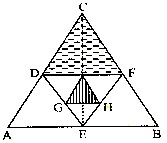
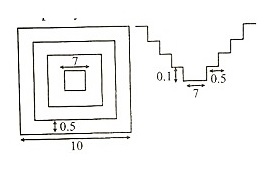
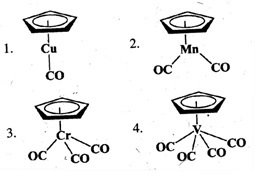
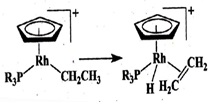
 hydride elimination


 in ppm)


 -unsaturated carbonyl compound, with increasing solvent polarity —
 transitions undergo hypsochromic shift,
 undergo bathochromic shift
 transitions undergo bathochromic shift,
 undergo hypscxhromic shift
 transitions undergo bathochromic shift
 transitions undergo hypsochromic shift


 conrotatory and 6


 is the dimension of -
 respectively. The percentage error in the calculated concentration of aliquot is —


 at 23°C consists of sharp single line. The number of signals observed at low temperature (140°C) in its spectrum
 are respectively—


 results in the formation of with elimination of 2 equivalents of CO. The Mo—Mo bond order in this reaction changes from—


 where—


 respectively. If melting point and H of melting are 300 K and 3 kJ mol-1 respectively, the change in volume on melting is -


 is equal to (
 and a are the internal pressure and the coefficient of thermal expansion, respectively.)


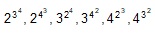


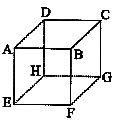


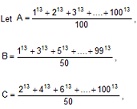








 5– Cp group with nitric oxide is the easiest for


 Hvap ≈41 kJ mol–1. The molar entropy of vaporization at 1 atm pressure is approximately

 n 2 / k


 para for methoxy group is


 A. The molarity X is

 4. Heck coupling


 3, the activation energy is expected to
 1,


 U/
 k–1/2
 .


 2Fe2+ + Sn4+ is
 gN dt. The population of bacterial colony at time t is [N0 = N(t = 0)]


 According to the virial theorem, the average kinetic (T) and potential (V) energies of the above are


 (RH = Rydberg constant) . The degeneracy of the state will be
 The approximate ground-state energy of the system from the linear variational principle is
 7.8(1H, d, J = 8 Hz), 7.0(1H, d, J = 8 Hz), 6.5(1H, s), 5.8(1H, s, D2O exchangeable), 3.9(3 H, s), 2.3(3 H, s).


 ] change to +120º. The optical purity is reduced to 40% after 3 hours. If so, the optical purity of the solution after 1 hour, and its [a]D after 3 hours, respectively, would be





 192 paying 20% less than his friend. What is the full price of the book?


 and


 7.3 (1 H, t, J = 8 Hz), 7.0 (1 H, d, J = 8 Hz), 6.95 (1 H, s), 6.9 (1 H, d, J = 8 Hz), 5.3 (1 H, brs, D2O exchangeable), 4.6 (2 H, s), 3.9 (3 H, s). Structure of the compound is


 208, 172, 51, 37, 32 and 27 ppm in its 13C NMR spectrum. The signals due to the methoxy, Cl, C4 and C5 carbons are


 ; B –


 x < 0


 is


 and y direction with potential
 respectively, the wave functions and eigenvalues of the above two-dimensional harmonic oscillator problem are


 VFCC
 1,


 = 3.14)


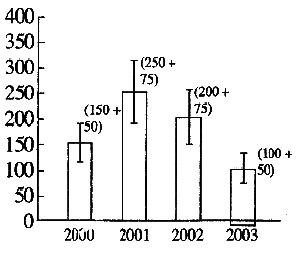
 . In what further time, it will become
 ?



 min
 min
 1000 over the first 400 days would be
 1035 each. On the first object he suffers a loss of 10% while on the second he gains 15%. What is his net loss/gain percentage?

 x – C6H6)
 -bond is formed via the overlap of
 B


 2Sn2+(aq),


 has eigenfunctions of the form exp [iA]. The condition that a full rotation leaves such an eigenfuction unchanged is satisfied for all the values of A


 6 – C6H6)Cr(CO)3] and the reason for it, if any, is/are
 –diketonates like dpmH (dpmH = dipivaloylmethane) are used for the separation of lanthanides because complexes formed with dpmH can be separated by


 5 – C5H5) M'(CO)3]2 obey the 18-electron rule. Identify M and M' and their 1H NMR chemical shifts relative to TMS


